
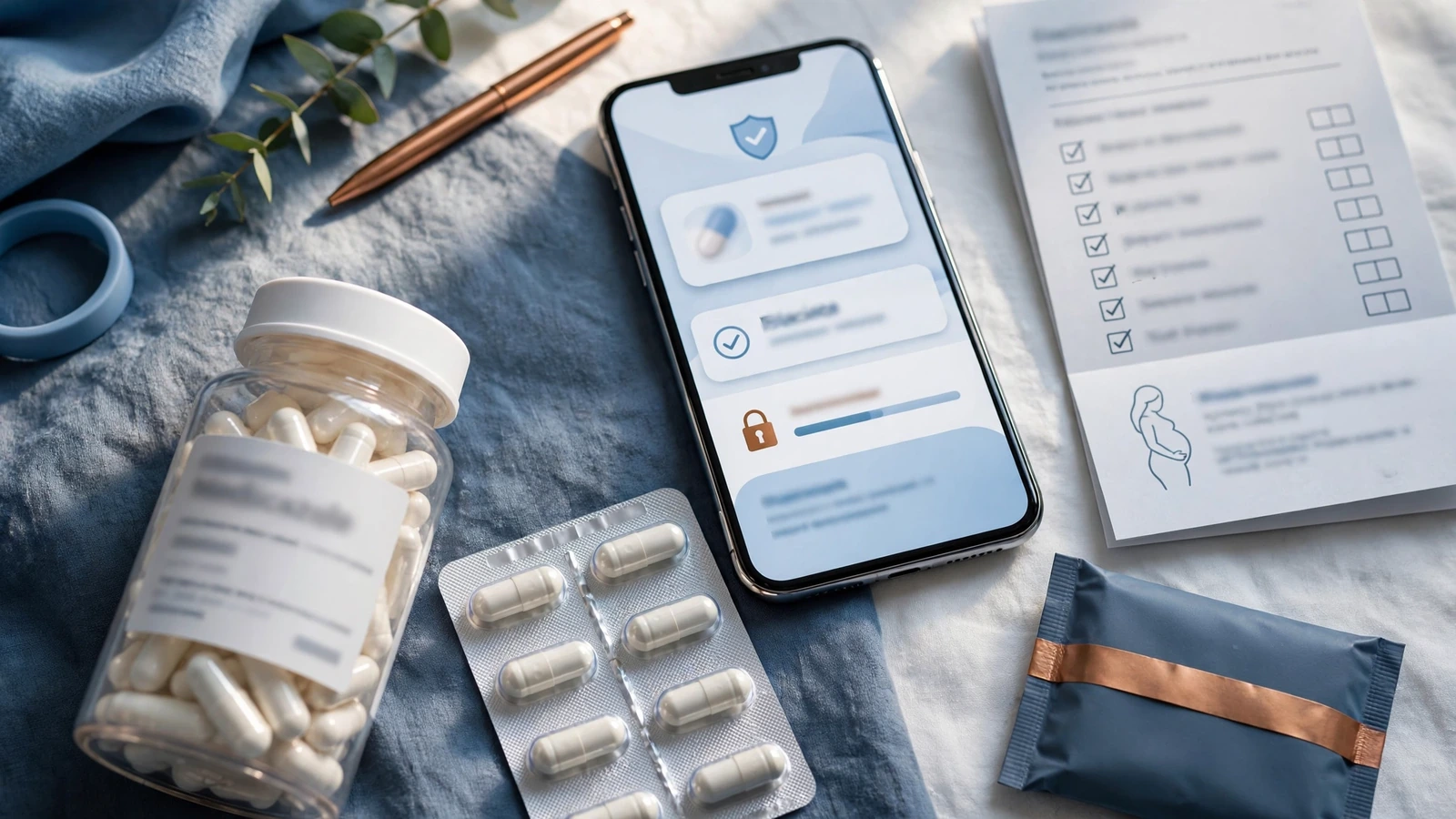
Fluconazole Safety, Interactions, and Precautions
Fluconazole can be appropriate for selected fungal infections, but safe prescribing requires more than confirming a symptom. A clinician or pharmacist should review other medicines, allergies, pregnancy, liver and kidney health, heart-rhythm risks, prior reactions, and the reason treatment is being considered before a prescription decision.

Medically reviewed by
Infectious diseases and antimicrobial stewardship
Medical review completed August 27, 2026
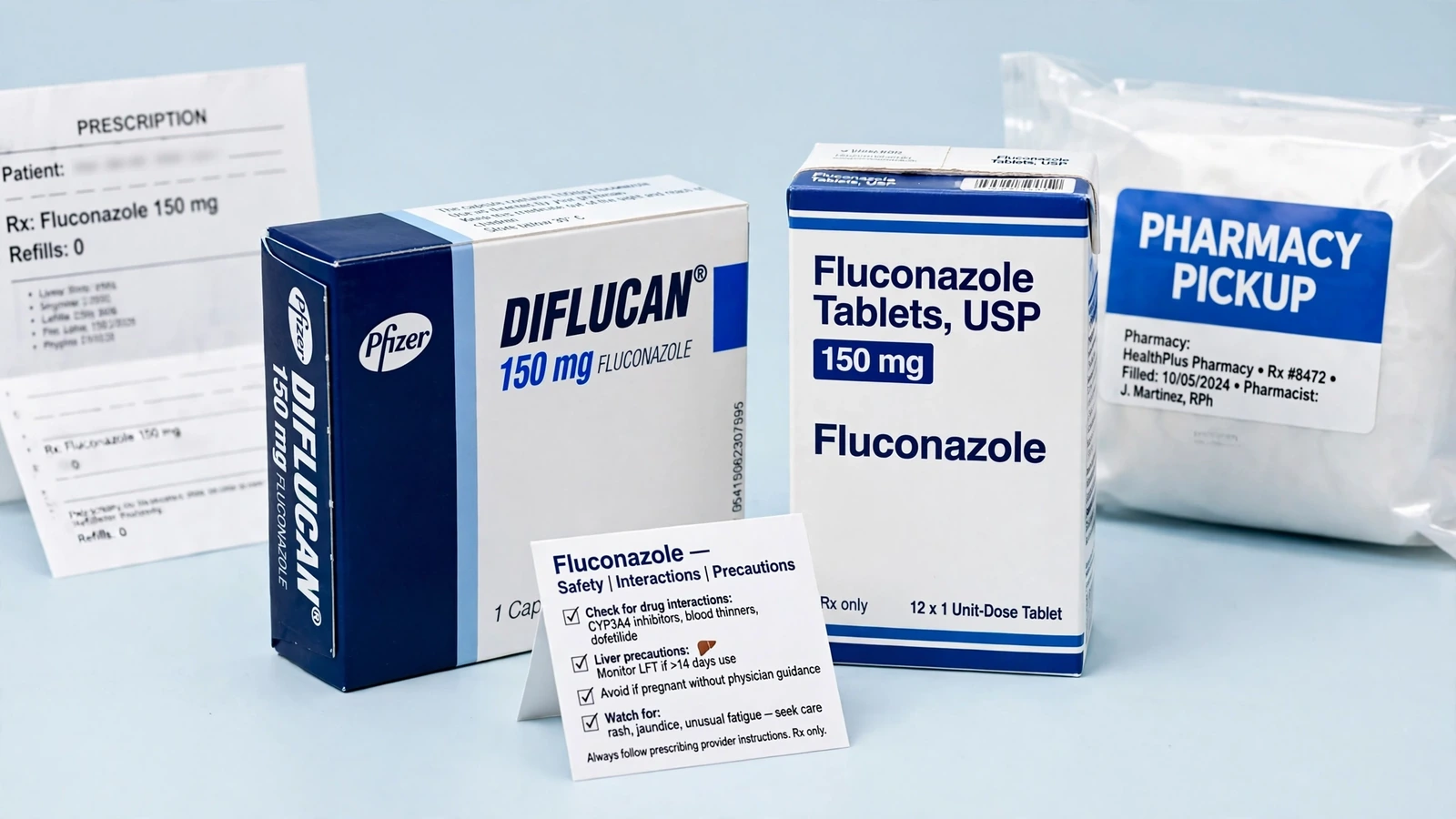
Safety domain and the useful question
| Decision point | What it can mean | Safer action |
|---|---|---|
| Current medicines | Could fluconazole change their levels or effects? | Bring names, strengths, schedules, and prescribers. |
| Liver and kidney health | Does organ function change suitability or monitoring? | Share diagnoses and recent relevant results if available. |
| Heart rhythm | Are there QT-related conditions or interacting medicines? | Report fainting, rhythm history, and the complete medicine list. |
| Pregnancy or breastfeeding | Does this situation require another treatment route? | Tell the clinician before any medicine is selected. |
A safer step-by-step pathway
Make one complete medicine list
Include prescription drugs, over-the-counter products, vitamins, herbs, and occasional medicines.
Add relevant conditions
Report liver or kidney disease, heart-rhythm conditions, allergies, immune conditions, and prior drug reactions.
State pregnancy and breastfeeding information
Do not wait for the clinician to infer it from age or the visit reason.
Ask what to monitor
Understand common effects, serious warning signs, and who to contact if symptoms occur.
Recheck before adding a new medicine
A pharmacist or prescriber can reassess interactions when the medication list changes.
Why fluconazole interactions deserve individual review
Fluconazole affects enzymes involved in processing various medicines. The importance of an interaction depends on the other drug, dose, timing, organ function, and clinical context. A static online list can miss a brand name, combination product, or recently changed medicine, so the safest tool is a complete list reviewed by a clinician or pharmacist.
Pregnancy changes the treatment conversation
For vulvovaginal candidiasis during pregnancy, CDC guidance recommends topical azole therapy and advises against the single oral fluconazole dose used in some nonpregnant patients. Anyone who is pregnant, may be pregnant, or is trying to conceive should say so before treatment rather than relying on general online advice. For more detail on this decision, review Online fluconazole care pathwayReturn to the clinician-led prescription and pharmacy pathway..
Liver, kidney, and heart-rhythm context
Fluconazole is processed and cleared in ways that make organ function relevant. Product information also describes liver toxicity and QT-related precautions. These warnings do not mean every patient is unsafe to treat; they mean the prescriber needs the actual history and medication list before deciding.
Common effects versus urgent warning signs
Minor effects and severe reactions should not be treated as the same category. MedlinePlus and labeling describe symptoms that warrant prompt help, including serious rash, swelling or breathing difficulty, fainting, and signs of liver injury. The prescription instructions should state what to do and how to obtain urgent care.
Why a familiar prior prescription is not automatic clearance
Health conditions, pregnancy status, infection type, and other medicines can change between episodes. A medicine that was appropriate once may not be the correct response to a new symptom pattern. Reassessment is especially important when the earlier diagnosis was untested or symptoms returned soon after treatment. A related clinical question is covered in How Fluconazole Fits Yeast Infection CareRead the focused guide to fluconazole for yeast infection..
The role of the pharmacist
A licensed pharmacist can help reconcile medicine names, identify interaction concerns, explain administration instructions, and clarify what to do after a missed dose or suspected reaction. Pharmacy access is also one practical sign that an online seller operates like a health service rather than an anonymous product vendor.
Build one medication-safety record that can be reused
A safety review works best when the prescriber and dispensing pharmacist receive the same current information. Keep one list with exact prescription names, over-the-counter products, supplements, allergies, recently stopped medicines, and relevant health conditions. Add the date of the review and any monitoring or alternative treatment chosen because of an interaction or risk factor.
The plan should distinguish common, manageable effects from symptoms that need a prompt call or urgent assessment. It should also explain what to do if another clinician starts a medicine while fluconazole remains relevant. Rechecking a changed list is safer than assuming the original screen still applies, particularly when pregnancy status, liver function, kidney function, or rhythm risk has changed. Save the pharmacist's clarification with the prescription instructions so later care teams can understand how a flagged risk was addressed.
Making the medication review reproducible
Use one source of truth for medicines
Combine portal lists, bottle labels, pharmacy records, and supplements into one current record. Mark medicines that were recently stopped or used only as needed. This reduces the chance that different clinicians see incomplete fragments and allows the dispensing pharmacist to repeat the interaction review using the same information.
Ask how uncertainty is managed
An interaction may be avoided with another treatment, managed through monitoring, or judged clinically insignificant in a specific context. Ask the prescriber to explain the chosen response and document it. This is more useful than a binary online warning because it connects the pharmacology to the infection being treated, the alternatives available, and the patient’s organ function and other risks.
Know the contact route before starting
The care plan should distinguish routine questions, suspected side effects, and emergency symptoms. Keep the prescriber and pharmacy contact details with the instructions. If a new medicine is added, a pregnancy is discovered, or a relevant health condition changes, contact a clinician or pharmacist for another review instead of assuming the original clearance remains complete.
Use the linked articles below for a narrower question, then return to this guide to reconnect that answer with diagnosis, treatment safety, and follow-up. This structure matters because a single symptom, test, or medicine fact should not be used in isolation. The complete pathway remains clinician-led and can change when the presentation, pregnancy status, medication list, laboratory evidence, or response to treatment changes. Bring the updated record to every follow-up conversation.
Common mistakes that weaken the decision
- Listing only daily prescriptions and omitting occasional medicines or supplements.
- Assuming a previous fluconazole prescription proves the current symptoms have the same cause.
- Starting treatment before sharing pregnancy possibility.
- Trying to manage severe rash, swelling, fainting, or jaundice through a routine message.
Frequently asked questions
Does fluconazole interact with other medicines?
Yes, clinically important interactions are possible. Give the prescriber and pharmacist a complete list rather than checking only one or two products.
Why does kidney health matter?
Kidney function can affect fluconazole clearance and may influence prescribing decisions. The clinician needs the relevant history and results.
What symptoms need urgent attention?
Trouble breathing, facial swelling, blistering rash, fainting, or signs of liver injury such as yellowing skin or eyes require prompt medical help.
Can I use an old prescription for a new episode?
Do not assume it fits. The diagnosis, health context, and medication list can change, so a new or recurrent episode deserves reassessment.
Where can I verify official safety information?
DailyMed provides current U.S. labeling, and MedlinePlus offers patient-oriented drug information. A pharmacist can interpret it in your context.
Authoritative sources
Sources were checked for this version on August 27, 2026. Links open the official publisher in a new tab.
- CDC STI Treatment Guidelines: Vulvovaginal Candidiasis — Centers for Disease Control and Prevention, 2021-07-22
- Fluconazole Drug Information — MedlinePlus, U.S. National Library of Medicine, 2018-12-15
- Fluconazole Prescribing Information — DailyMed, U.S. National Library of Medicine, accessed 2026-08-27
- BeSafeRx: Know Your Online Pharmacy — U.S. Food and Drug Administration, accessed 2026-08-27