

Administration · missed doses · follow-up
How to Take Azithromycin According to Your Prescription
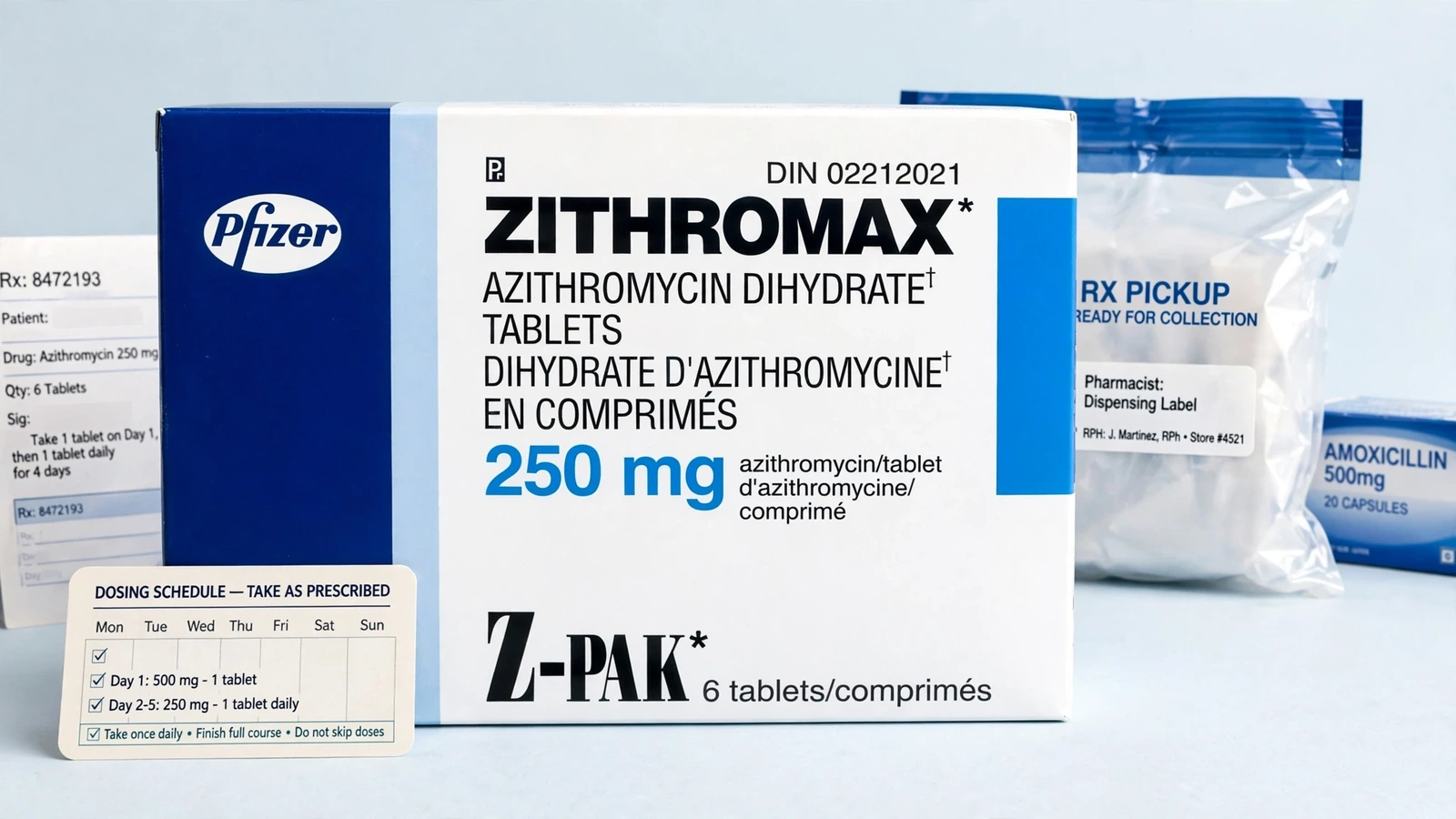
Take azithromycin exactly as the patient-specific prescription label directs. Different infections and formulations use different schedules, so do not copy a dose from another person or an old course. Ask the pharmacist about food, aluminum- or magnesium-containing antacids, a missed dose, or vomiting after a dose, and contact the prescriber before changing or extending treatment.

Medically reviewed by
Infectious diseases and antimicrobial stewardship
Medical review completed August 27, 2026
Use the label as a treatment map
The label connects the diagnosed infection, prescribed formulation, amount, timing, and duration. Reading it before the first dose prevents the most common errors and makes later pharmacist advice specific.
Verify the dispensed product
Match patient name, drug, strength, formulation, directions, quantity, prescriber, and pharmacy before opening the package.
Resolve administration questions
Ask about food, antacid ingredients, measurement devices, missed doses, and vomiting using the exact product and schedule.
Observe response and reactions
Track symptoms, follow the prescribed plan, and seek reassessment for worsening illness, treatment failure, or serious warning signs.
Common administration questions need specific answers
A one-size schedule is unsafe because azithromycin products and indications differ. Use the dispensed information and pharmacist for the actual prescription. For more detail on this decision, review Azithromycin treatment and stewardship.
| Situation | Avoid | Better action |
|---|---|---|
| Missed dose | Automatic double | Follow label or call |
| Vomiting | Repeat immediately | Record timing and ask |
| Antacid use | Guessing spacing | Check ingredients |
| Feeling better | Save leftovers | Follow prescribed plan |
| Not improving | Extend course | Seek reassessment |
This page does not provide a universal azithromycin dose. Dose and duration depend on diagnosis, age, formulation, and other factors. The prescribing information and individual label are the sources for numeric instructions; changing them requires the prescriber or pharmacist.
Start by reading every label field
Confirm that the package is for the intended patient and that the drug name, strength, formulation, directions, and quantity match what the clinician discussed. Review warning labels and the supplied patient information. Call the pharmacy if the tablets, liquid, package, or instructions differ from expectations.
Keep the medicine in its original labeled container so the directions and intended user remain clear. Use only the measurement device supplied or recommended for a liquid formulation. Do not split, crush, or substitute a formulation unless a pharmacist confirms that the specific product allows it.
Food and antacid questions depend on the product
Some azithromycin formulations have administration instructions that differ, and aluminum- or magnesium-containing antacids can create timing considerations. The product label and pharmacist can resolve whether food is allowed or preferred and how to separate a relevant antacid.
Do not avoid needed nutrition, stop another medicine, or create a complicated schedule from a generic interaction page. Bring the antacid package or exact ingredient list. A calcium-only product, combination product, or stomach medicine from another class may not raise the same question. A related clinical question is covered in Antibiotic resistance and misuse.
Missed doses and vomiting are not solved by doubling
Follow the patient information for a missed dose and ask the pharmacist if the next scheduled time is close or the instructions are unclear. Automatically doubling can increase adverse effects and may not restore the intended exposure.
After vomiting, note how long the medicine stayed down and whether tablets were visible. Call for advice before repeating the dose. The answer depends on timing, formulation, and the prescribed regimen. Repeated vomiting or inability to hydrate needs medical assessment.
Completion includes follow-up and safe disposal
Follow the prescribed plan even when symptoms begin to improve, unless a clinician changes it. Do not save tablets for a future illness, give them to another person, or extend the course because symptoms remain. Persistent or worsening symptoms can mean the diagnosis, organism, complication, or treatment needs reconsideration.
Store the product as the pharmacy directs and away from children. If medicine remains after the pharmacist confirms the prescribed plan is complete, use a recognized take-back option or follow official disposal guidance for that product. Record the treatment and any reaction for future care.
- Original labeled container
- Correct measuring device
- No shared medicine
- No automatic doubling
- Follow-up for worsening
- Approved disposal route
Administration questions
Can I take azithromycin with food?
Instructions can differ by formulation. Follow the dispensed label and ask the pharmacist about the exact product rather than applying one rule to every azithromycin prescription.
What if I miss a dose?
Use the patient-specific instructions or call the pharmacist. Do not automatically double a later dose; the safe action depends on the schedule and time remaining before the next dose.
Should I repeat a dose after vomiting?
Record when vomiting occurred and ask the prescriber or pharmacist before repeating. Timing, formulation, and the prescribed regimen determine the answer.
Can I stop when I feel better?
Follow the prescription label and contact the prescriber before changing the plan. Do not stop in order to save tablets or extend treatment with leftovers.
How should I store azithromycin?
Follow the pharmacy label for the exact tablets or liquid, keep it in the original container, and protect it from children and unintended users. Ask the pharmacist about formulation-specific storage.
Primary sources
Clinical statements on this page are bounded by the current prescribing information and U.S. public-health guidance below.
- U.S. National Library of Medicine: Azithromycin tablet, film coated — prescribing information (label updated 2026-06-16)
This educational page does not replace diagnosis, prescribing advice, or urgent medical care. A clinician must decide whether an antibiotic is appropriate for an individual infection and medical history.