

Visit preparation
Your First Sertraline Appointment and Follow-Up Plan
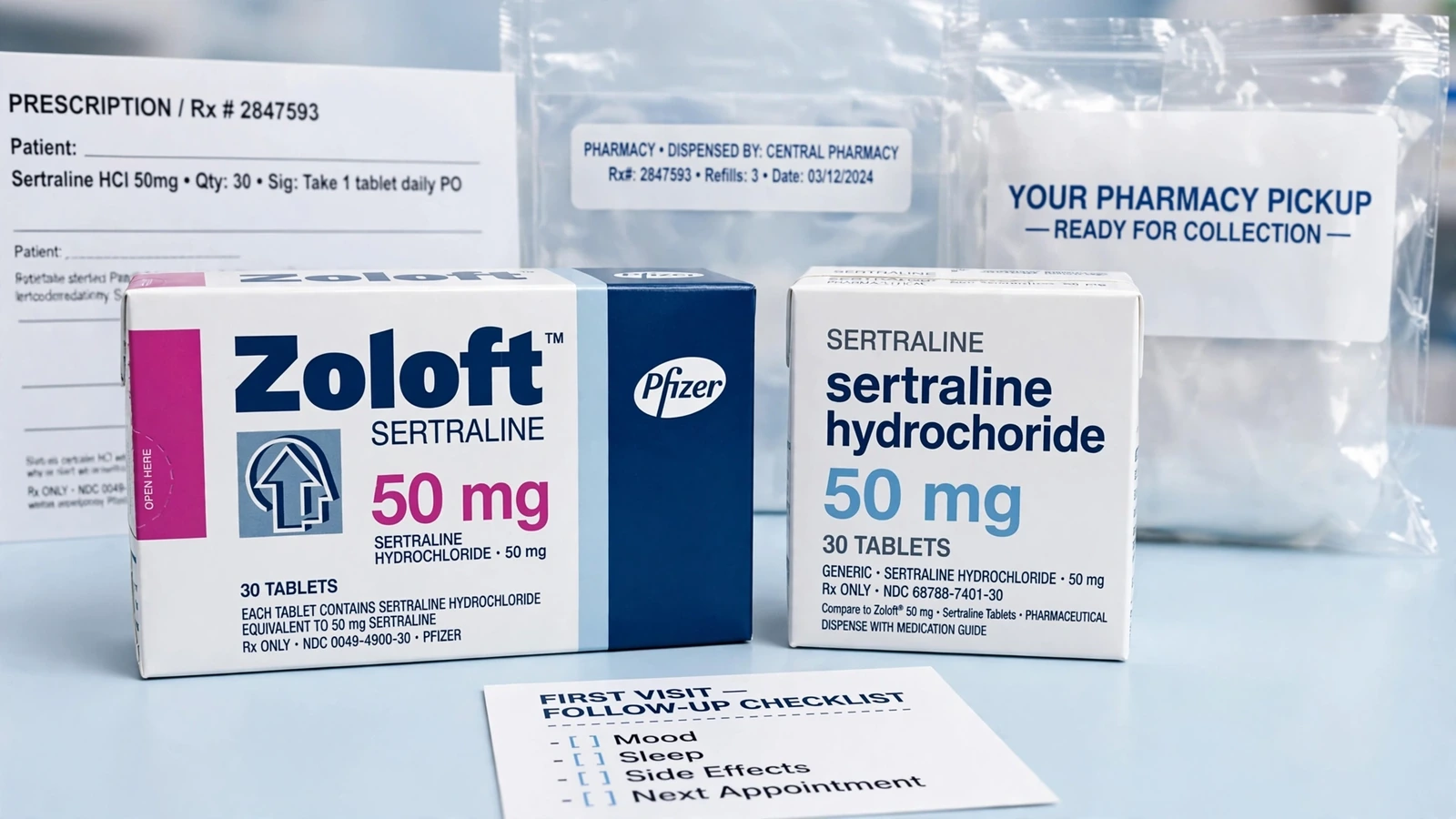
A first sertraline appointment should clarify the working diagnosis, symptom timeline, safety risks, current medicines, prior treatment, and follow-up route. Preparation improves the conversation, but it does not guarantee that sertraline will be recommended.

Medically reviewed by
Psychiatry, depression, and mood-disorder assessment
Medical review completed August 27, 2026
Bring a symptom timeline
Record when symptoms began, how often they occur, what worsens or relieves them, and how work, relationships, sleep, self-care, or school have changed. Include prior episodes and what happened with earlier treatment.
Bring every medicine and substance
List prescriptions, nonprescription products, supplements, recently stopped medicines, alcohol, cannabis, stimulants, and other substances. Exact names and stop dates help identify contraindications and interaction risk.
Expect direct safety questions
The clinician may ask about suicidal thinking, self-harm history, past mania or hypomania, seizures, bleeding, eye disease, pregnancy considerations, and support at home. Honest answers change the plan and the urgency of follow-up.
Leave with a follow-up route
Know who handles routine questions, what happens after hours, how refills are reviewed, and which symptoms need urgent help. A calendar date alone is not enough if no one owns the response between visits.
Avoid preparing for a predetermined answer
Do not rehearse only facts that support a desired prescription, hide an earlier reaction, or omit another prescriber. The goal is an accurate decision, including the possibility that another evaluation or treatment is safer.
Prescription status and the diagnostic boundary
Sertraline is a prescription medicine. Researching sertraline first appointment can prepare an adult for a clinical visit, but it cannot confirm a diagnosis or establish that this medicine is appropriate. The prescriber still needs a symptom timeline, functional impact, previous treatment, relevant medical history, pregnancy considerations when applicable, allergies, substance use, and a candid account of mood and behavioral changes.
The current DailyMed label lists major depressive disorder, obsessive-compulsive disorder, panic disorder, posttraumatic stress disorder, social anxiety disorder, and premenstrual dysphoric disorder among its indications. Those labels describe different clinical patterns. A clinician must distinguish them from bipolar disorder, medicine or substance effects, medical illness, grief, and other explanations before a treatment choice is made.
Contraindications and interaction details to disclose
The checked label lists monoamine oxidase inhibitor use within the defined separation period, pimozide, and known hypersensitivity to sertraline among the contraindication boundaries. Other serotonergic products can raise serotonin-syndrome concern. Aspirin, nonsteroidal anti-inflammatory drugs, antiplatelet medicines, warfarin, and other anticoagulants can add bleeding risk.
Bring exact names for prescriptions, nonprescription pain or cold medicines, supplements, recently stopped products, alcohol, cannabis, stimulants, and other substances. A pharmacy list is useful but may be incomplete. Do not stop another prescribed medicine to make the list look safer; let the prescriber and pharmacist interpret the complete record.
Side effects, monitoring, and urgent care
Commonly reported effects can involve the stomach or bowel, sleep, sweating, tremor, fatigue, appetite, or sexual function. Their timing, persistence, severity, and effect on daily life determine whether routine advice is enough. Follow-up should also ask directly about clinical worsening, suicidal thinking, agitation, unusual energy, reduced need for sleep, impulsivity, confusion, and newly added medicines.
Use urgent help for suicidal intent, a seizure, severe confusion, serious allergic swelling or breathing difficulty, significant bleeding, or a rapidly escalating behavioral change. Fever with marked agitation, muscle rigidity, or coordination change can signal a serious serotonin-related reaction. A standard portal message is not an emergency response.
Build a record that supports the next decision
Keep a concise record of the working diagnosis, the original symptoms and functional goals, the current prescription, missed doses, unwanted effects, new medicines, and the agreed follow-up route. Record what has changed instead of relying on a broad statement that treatment feels better or worse. This makes routine review, transfer between clinicians, pharmacy questions, and refill decisions safer and more specific.
Do not share tablets, restart an old prescription, conceal another product, or make an abrupt change from a general web guide. The prescriber should guide routine changes. Serious or rapidly worsening symptoms move the decision out of routine follow-up and into urgent assessment.
Appointment preparation
| Bring | Purpose | Example |
|---|---|---|
| Symptom timeline | Clarify pattern | Onset and function |
| Medicine list | Check interactions | All products |
| Treatment history | Learn from response | Benefit and effects |
| Questions | Plan continuity | Follow-up route |
Where this page fits in the sertraline pathway
Questions not answered by a checklist
Do I need a diagnosis before the appointment?
No. Bring the symptom history; the clinician evaluates the diagnosis.
Should I list supplements and occasional medicines?
Yes. Products used only as needed can still affect interaction and bleeding review.
What should I know before leaving?
Know the plan, follow-up owner, routine contact route, urgent warning signs, and refill process.
Does preparation guarantee a prescription?
No. It supports an informed clinical decision, which may lead to another recommendation.
Primary sources and review limits
- DailyMed sertraline hydrochloride tablets label, updated August 20, 2026 and checked August 27, 2026.
- MedlinePlus sertraline drug information, checked August 27, 2026.
- FDA online pharmacy safety guidance, checked August 27, 2026.
This educational page does not diagnose a condition, replace a prescribing clinician, or provide emergency care.