

Medication change · Supervised discontinuation
Stopping Trazodone With a Clinical Reduction Plan
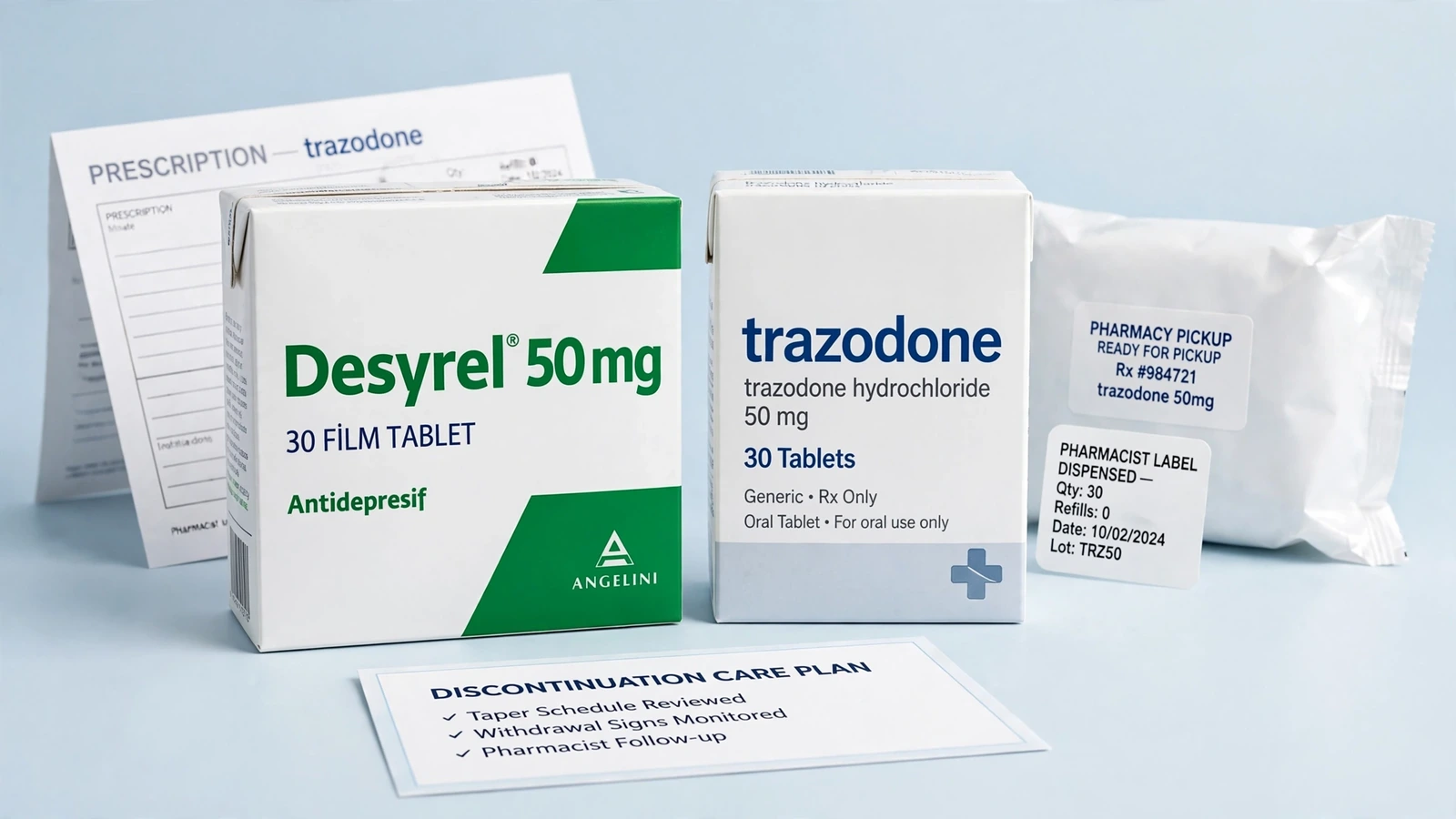
Stopping trazodone should be planned with the prescriber whenever possible. The label advises gradual reduction rather than abrupt cessation, and patient information describes discontinuation symptoms after sudden stopping. The pace depends on the current prescription, treatment duration, response, adverse effects, interaction changes and the condition being treated.

Medically reviewed by
Psychiatry, addiction medicine and clinical informatics
Medical review completed August 27, 2026
Plan a supervised medication change
1. Name the reason
Separate adverse effects, poor response, interaction, cost or completed treatment.
2. Confirm the current prescription
Record strength, schedule, duration, missed doses and other medicines.
3. Set monitoring
Track physical symptoms, sleep, mood, function and safety.
4. Keep contact points
Know when to message, call, seek urgent care or use emergency services.
After a dose reduction, compare patterns
| Pattern | Possible question | Response |
|---|---|---|
| Begins after change | Discontinuation? | Contact prescriber |
| Original symptoms return | Relapse? | Clinical reassessment |
| New high energy | Activation? | Prompt review |
| Immediate danger | Crisis? | Emergency route |
The label advises gradual reduction when possible
DailyMed states that adverse reactions can occur on discontinuation and advises gradually reducing the dosage rather than stopping abruptly whenever possible. That direction is a principle, not a universal calendar. The prescriber applies it to the actual prescription, clinical urgency, treatment history and the reason for stopping.
Patient information names a range of discontinuation symptoms
MedlinePlus describes possible dizziness, nausea, headache, confusion, anxiety, agitation, sleep difficulty, extreme tiredness, seizures, sensory symptoms, unusually excited mood, ringing in the ears and sweating after sudden stopping. A person may have none, some or symptoms from another cause. Timing and severity help the clinician interpret them. For more detail on this decision, review trazodone treatment plan.
Withdrawal and relapse can overlap
Sleep disruption, anxiety, low mood and reduced function can occur during discontinuation and can also signal recurrence of the treated condition. The prescriber may ask when symptoms began relative to dose changes, whether they resemble the original episode and whether physical symptoms appeared. Guessing the cause can lead to repeated unsupervised changes.
The reason for stopping shapes the route
A routine preference, cost barrier or mild adverse effect allows a different planning window from a severe reaction, dangerous interaction or pregnancy-related decision. Even when a rapid change is necessary, the prescriber should guide it. Emergency symptoms take priority over a routine taper discussion.
Keep mood and activation in the monitoring plan
Worsening depression, suicidal thoughts, severe agitation or mania-like symptoms require prompt attention during any medication change. The patient should know the crisis route before reducing. In the United States, call or text 988 for crisis support and call 911 for immediate life-threatening danger. A related clinical question is covered in trazodone alternatives.
Practical records reduce confusion
Keep the written reduction instruction, dates of changes, missed doses, new medicines, symptom log and follow-up appointment together. Use one prescriber and pharmacy record when possible. If the written plan and pharmacy label differ, pause and clarify rather than combining them.
Stopping can lead to a new treatment decision
Discontinuation is not always the end of care. The clinician may discuss psychotherapy, another antidepressant, a different level of care, sleep-specific treatment or monitoring without medication. The next choice should use the diagnosis, prior benefit, adverse effects, preferences and safety history that led to the change.
Schedule the first review before the change begins
A follow-up date creates a point to compare discontinuation symptoms, mood, sleep and function against the plan. It should not be the only contact option. The patient also needs instructions for earlier calls and urgent help. If access or cost is forcing an unplanned stop, say that directly so the care team can address continuity.
Questions readers ask after this review
Can trazodone be stopped suddenly?
The label advises gradual reduction rather than abrupt stopping whenever possible. Ask the prescriber for an individual plan.
What can trazodone withdrawal feel like?
Patient information lists physical, sleep, mood and sensory symptoms; timing and severity should be reported.
How long should a taper take?
There is no safe universal schedule. Current dose, duration, response, symptoms and clinical risk shape the pace.
How can I tell withdrawal from returning depression?
The symptom pattern and timing can overlap, so a clinician should reassess rather than relying on one sign.
What if suicidal thoughts appear while stopping?
Use prompt crisis support. In the U.S., call or text 988; call 911 for immediate life-threatening danger.
Primary and authoritative sources
- DailyMed, U.S. National Library of Medicine: Trazodone hydrochloride tablet prescribing information — label updated August 19, 2026; checked August 27, 2026.
- MedlinePlus, U.S. National Library of Medicine: Trazodone drug information — checked August 27, 2026.
- U.S. Department of Veterans Affairs and Department of Defense: Clinical Practice Guideline for the Management of Major Depressive Disorder — 2022 guideline; checked August 27, 2026.
- National Institute of Mental Health: Depression — reviewed December 2024; checked August 27, 2026.
- Substance Abuse and Mental Health Services Administration: 988 Suicide & Crisis Lifeline — checked August 27, 2026.
Educational information for human care only. This page does not diagnose a condition, guarantee a prescription, select an individual dose, replace a clinician or provide veterinary advice.