

Sleep context · Off-label evidence boundary
Trazodone for Sleep: Evidence and Off-Label Boundaries
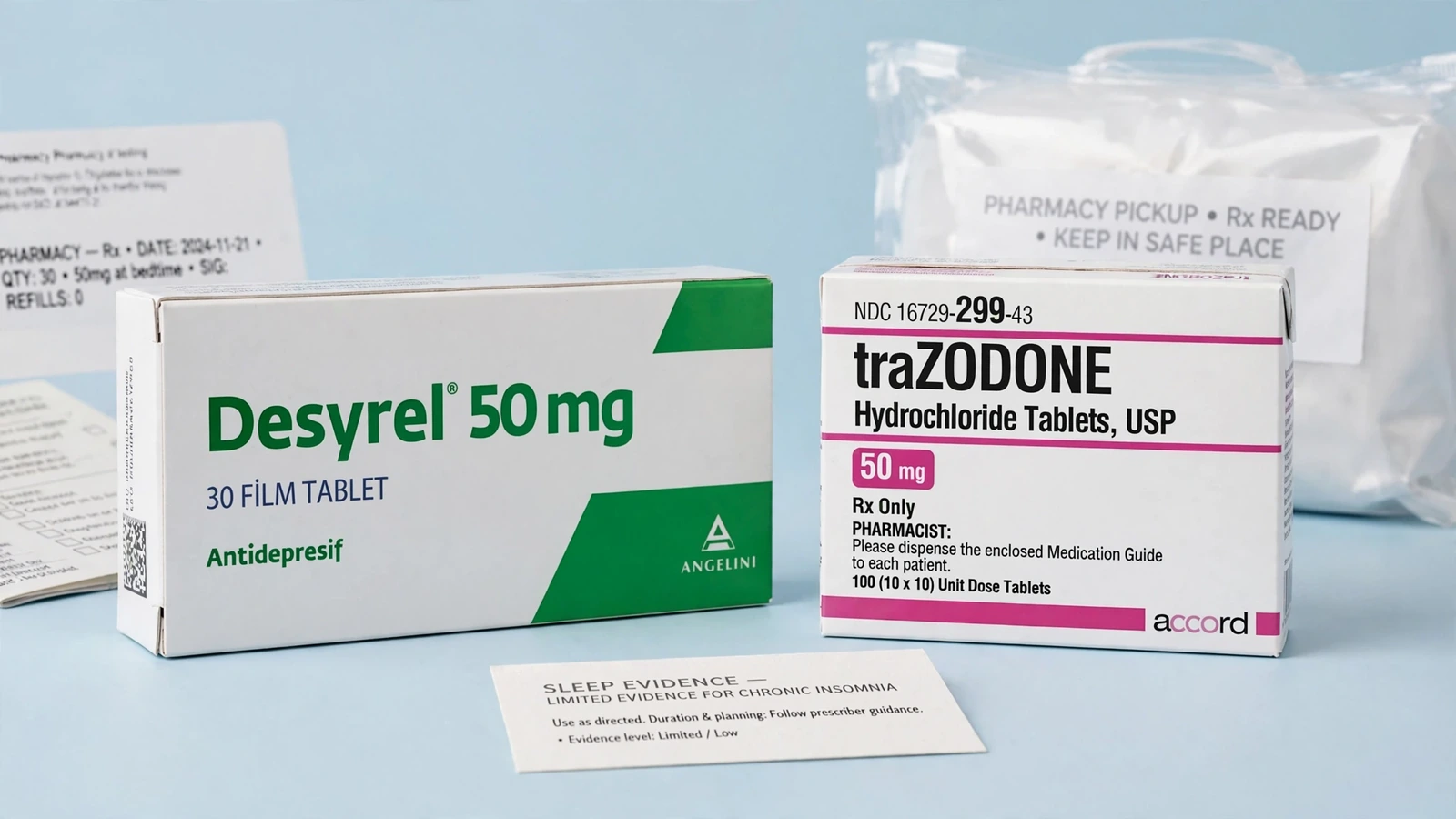
Trazodone is sometimes prescribed off-label for sleep, but the checked U.S. label is for major depressive disorder in adults. A sleep decision should identify the type and cause of insomnia, review daytime impairment and safety, and compare evidence-based insomnia care rather than treating sedation as proof of long-term benefit.

Medically reviewed by
Psychiatry, addiction medicine and clinical informatics
Medical review completed August 27, 2026
Assess sleep before choosing a treatment
1. Define the sleep pattern
Record sleep opportunity, timing, awakenings, duration and daytime effect.
2. Look for causes
Review mood, substances, medicines, pain, breathing symptoms and restless legs.
3. Compare evidence
Discuss CBT-I, behavioral care and medication limits for the diagnosed problem.
4. Monitor daytime safety
Track sedation, dizziness, falls, driving and functional change.
Sleep questions that change the plan
| Pattern | Assessment focus | Possible path |
|---|---|---|
| Trouble falling asleep | Schedule and arousal | CBT-I evaluation |
| Frequent awakenings | Breathing, pain, substances | Cause-specific care |
| Early waking with low mood | Depression assessment | Mental-health pathway |
| Daytime sleepiness | Medication and sleep disorder | Safety review |
The label and off-label use must be stated separately
DailyMed lists adult major depressive disorder as the trazodone indication. MedlinePlus notes that trazodone is sometimes used for insomnia. Both statements can be true: clinicians may prescribe medicines off-label, but the discussion should identify that status, the evidence, alternatives and risks rather than implying FDA approval for insomnia.
Insomnia assessment starts with sleep opportunity
A person who cannot sleep because the schedule allows too little time in bed has a different problem from someone with chronic insomnia despite adequate opportunity. A sleep diary can show timing, awakenings and variability. The clinician also asks how the problem affects concentration, mood, driving, work and safety during the day. For more detail on this decision, review trazodone uses.
Other conditions can look like insomnia
Depression, anxiety, trauma, pain, substance use, medication effects, sleep apnea, restless legs and circadian disruption can all change sleep. Loud snoring, witnessed pauses, gasping, uncomfortable leg sensations or severe daytime sleepiness may point toward a dedicated sleep evaluation. Treating the symptom alone can delay the relevant diagnosis.
Guidelines keep the evidence boundary visible
The AASM pharmacologic guideline issued a weak suggestion against trazodone for sleep-onset or sleep-maintenance insomnia, based on limited evidence and its benefit-harm assessment. The newer VA/DoD chronic insomnia guideline recommends CBT-I. A clinician can still consider individual circumstances, but the choice should acknowledge rather than hide those recommendations.
CBT-I is more than general sleep hygiene
Cognitive behavioral therapy for insomnia is a structured treatment addressing sleep-related behaviors and thoughts. The VA/DoD guideline describes components such as stimulus control, sleep restriction therapy, relaxation or counter-arousal strategies and sleep education. Generic advice to avoid screens is not a substitute for a full CBT-I program. A related clinical question is covered in trazodone clinical review online.
Daytime impairment belongs in the risk discussion
Trazodone may cause drowsiness and affect judgment, thinking and movement. Dizziness and orthostatic symptoms can add fall risk. A person who drives, works at height, operates equipment or cares for others needs a concrete safety conversation. Alcohol and other sedating products can compound impairment.
Reassess when the sleep story changes
Worsening mood, new suicidal thoughts, reduced need for sleep with rising energy, breathing symptoms, falls or escalating substance use can signal a problem beyond routine insomnia. A refill request should not bypass those changes. Immediate danger goes to crisis or emergency services; other major changes deserve prompt clinical review.
Questions readers ask after this review
Is trazodone FDA-approved for insomnia?
No. The checked label is for major depressive disorder in adults; sleep use is off-label.
What does AASM say about trazodone for chronic insomnia?
Its 2017 guideline suggests clinicians not use trazodone for sleep-onset or sleep-maintenance insomnia in adults.
What is CBT-I?
It is a structured insomnia treatment that addresses sleep behavior and sleep-related thoughts, not only general sleep-hygiene tips.
Can depression cause sleep changes?
Yes. Sleep change can be part of depression, so mood, function and safety should be assessed.
When should sleep symptoms prompt another evaluation?
Breathing pauses, severe daytime sleepiness, restless legs, mania-like changes or escalating substance use deserve targeted assessment.
Primary and authoritative sources
- DailyMed, U.S. National Library of Medicine: Trazodone hydrochloride tablet prescribing information — label updated August 19, 2026; checked August 27, 2026.
- MedlinePlus, U.S. National Library of Medicine: Trazodone drug information — checked August 27, 2026.
- American Academy of Sleep Medicine: Clinical Practice Guideline for the Pharmacologic Treatment of Chronic Insomnia in Adults — 2017 guideline; checked August 27, 2026.
- U.S. Department of Veterans Affairs and Department of Defense: Clinical Practice Guideline for Chronic Insomnia Disorder and Obstructive Sleep Apnea — 2025 guideline; checked August 27, 2026.
- National Institute of Mental Health: Depression — reviewed December 2024; checked August 27, 2026.
- Substance Abuse and Mental Health Services Administration: 988 Suicide & Crisis Lifeline — checked August 27, 2026.
Educational information for human care only. This page does not diagnose a condition, guarantee a prescription, select an individual dose, replace a clinician or provide veterinary advice.