

Furosemide Side Effects and Warning Signs
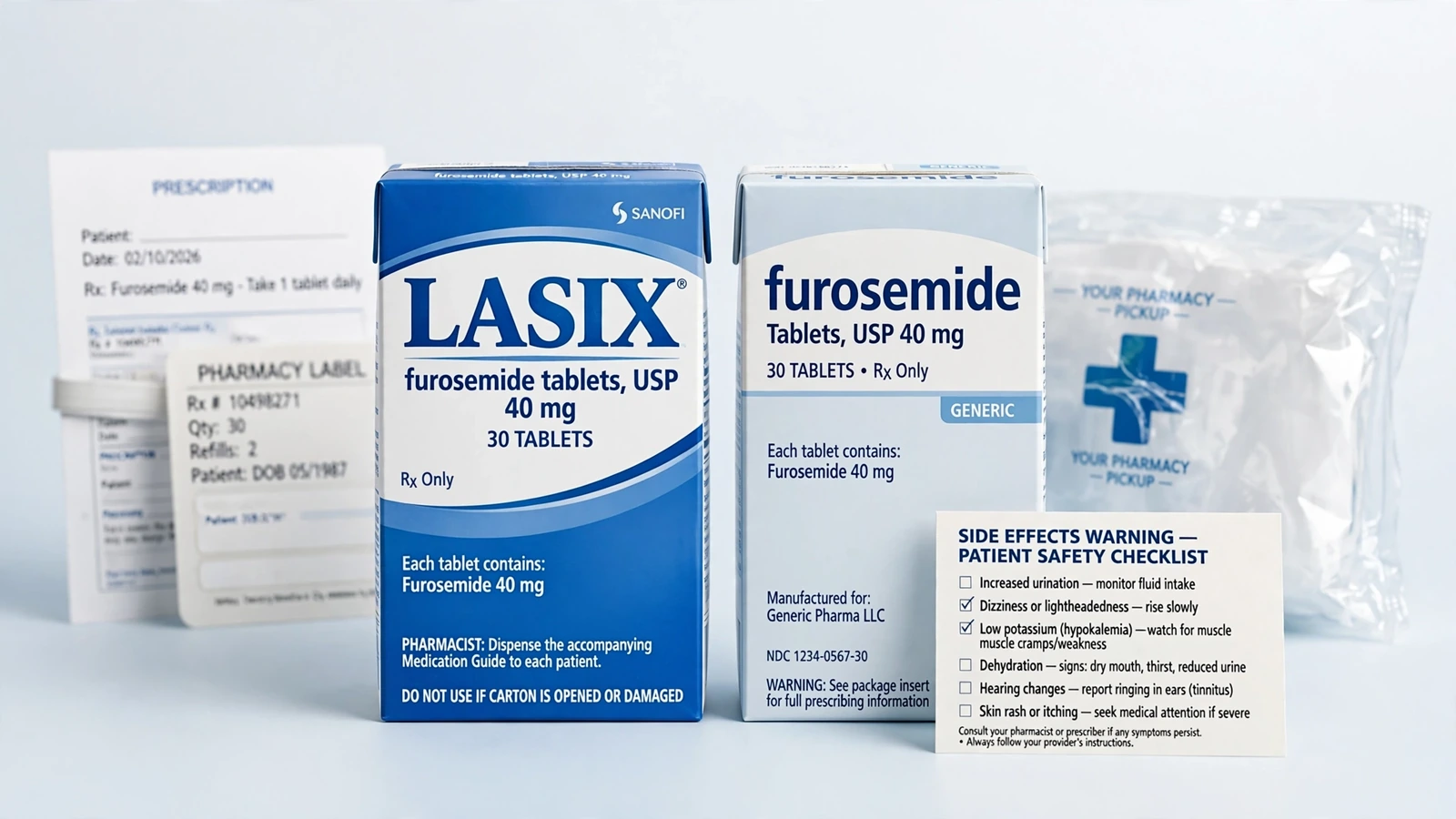
Increased urination can be an expected effect of furosemide, but dizziness, fainting, confusion, severe weakness, very low urine output, a serious rash or allergic reaction, sudden hearing change, or worsening breathing may require prompt assessment. Symptoms should be interpreted with dose, illness, blood pressure, kidney function, electrolytes, and other medicines.

Medically reviewed by
Internal medicine · drug safety · pharmacoepidemiology
Medical review completed August 27, 2026
Expected diuresis still needs practical planning
Many people urinate more after a dose. Follow the prescribed timing and ask how to handle work, travel, or sleep disruption rather than shifting the schedule without guidance. Keep fall risk in mind when getting up quickly, especially at night. An effect can be expected yet still become excessive if it leads to dehydration, faintness, inability to function, or a large unexpected change from the usual pattern.
Volume loss and low blood pressure
Thirst, dry mouth, dizziness on standing, weakness, faintness, reduced urination, or confusion can occur with excessive fluid loss or another acute problem. Vomiting, diarrhea, fever, poor intake, heat, and other blood-pressure medicines can increase risk. Sit or lie down safely if lightheaded and contact the clinical team. Fainting or altered mental status calls for prompt medical evaluation.
Kidney and electrolyte symptoms overlap
Cramps, nausea, weakness, palpitations, fatigue, and confusion can reflect electrolyte changes, kidney issues, illness, or unrelated conditions. Do not diagnose a potassium problem from symptoms or start a supplement without testing and review. Report the timing, severity, recent dose or medicine changes, fluid intake, and associated symptoms so the clinician can choose the right next step. For more detail on this decision, review Furosemide Safety and Monitoring GuideReturn to the parent guide..
Hearing and allergic warning signs
The prescribing information describes tinnitus and hearing impairment among important warnings, with risk influenced by clinical factors and certain interacting drugs. Report a new hearing change or ringing promptly. Hives, facial or throat swelling, difficulty breathing, or a rapidly spreading severe rash can indicate a serious reaction and requires urgent medical attention. Do not take another dose while waiting for online advice in an emergency.
Separate routine questions from emergencies
A mild, stable concern can often be discussed with the prescriber or pharmacist, while severe or rapidly worsening symptoms need urgent care. Chest pain, severe breathlessness, fainting, confusion, a severe allergic reaction, or very low urine output with illness should not wait for a refill review. Keeping a written escalation plan makes this distinction easier when symptoms occur.
Describe the change precisely when asking for help
Report onset, severity, relation to the dose, blood pressure when available, urine pattern, intake, weight or swelling when requested, and any new medicine or acute illness. This helps the clinician distinguish expected diuresis from excessive volume loss, an interaction, worsening underlying disease, or an unrelated emergency. Do not test the symptom by skipping or doubling doses unless the treating clinician has already supplied a written action plan. A related clinical question is covered in Furosemide and Kidney Function MonitoringRead a related guide in this same topic branch..
Use the correct level of care
A routine message is not appropriate for severe breathing difficulty, chest pain, fainting, confusion, a serious allergic reaction, or rapid deterioration. Hearing change, persistent dizziness, cramps, weakness, reduced urination, or worsening swelling should also be reported promptly even when they are not immediately severe. Keep the medicine label and complete list available for the clinician or emergency team.
A practical decision pathway
Notice
Describe the symptom, timing, severity and relationship to the dose or recent illness.
Stabilize
Sit safely for dizziness and avoid driving; use emergency help for severe symptoms.
Contact
Use the clinician or pharmacist route appropriate to the urgency.
Document
Record instructions, testing and any approved medicine change.
Decision table
| Symptom pattern | Possible level | Action |
|---|---|---|
| Expected increased urination without distress | Routine | Follow the label and planned monitoring |
| Persistent cramps, nausea, rash or dizziness | Clinician review | Contact the care team and provide context |
| New tinnitus or hearing change | Prompt review | Contact a clinician promptly |
| Fainting, severe allergy, confusion or severe breathlessness | Emergency | Seek urgent medical help |
Frequently asked questions
Is increased urination normal with furosemide?
It is an expected pharmacologic effect for many people, but a marked change with dizziness, weakness, reduced later urine output, or inability to function should be reviewed.
What should I do about dizziness?
Sit or lie down safely and contact the care team. Fainting, chest pain, severe weakness, or neurologic symptoms needs prompt evaluation.
Can furosemide affect hearing?
The prescribing information includes tinnitus and hearing impairment warnings. Report a new hearing change promptly.
Do muscle cramps mean low potassium?
Not necessarily. Cramps have multiple causes; laboratory and clinical review are needed before adding supplements.
Which reactions are emergencies?
Severe breathing difficulty, facial or throat swelling, fainting, confusion, chest pain, or a rapidly spreading severe rash warrants urgent care.
Primary sources
Medical content reviewed August 27, 2026. References were checked on the dates shown.
- Furosemide tablet — prescribing information — U.S. National Library of Medicine, DailyMed. Updated June 23, 2026.
- Furosemide — U.S. National Library of Medicine, MedlinePlus. Accessed August 27, 2026.