

Interaction review
Sertraline Interactions: Contraindications, Bleeding, and Serotonin Risk
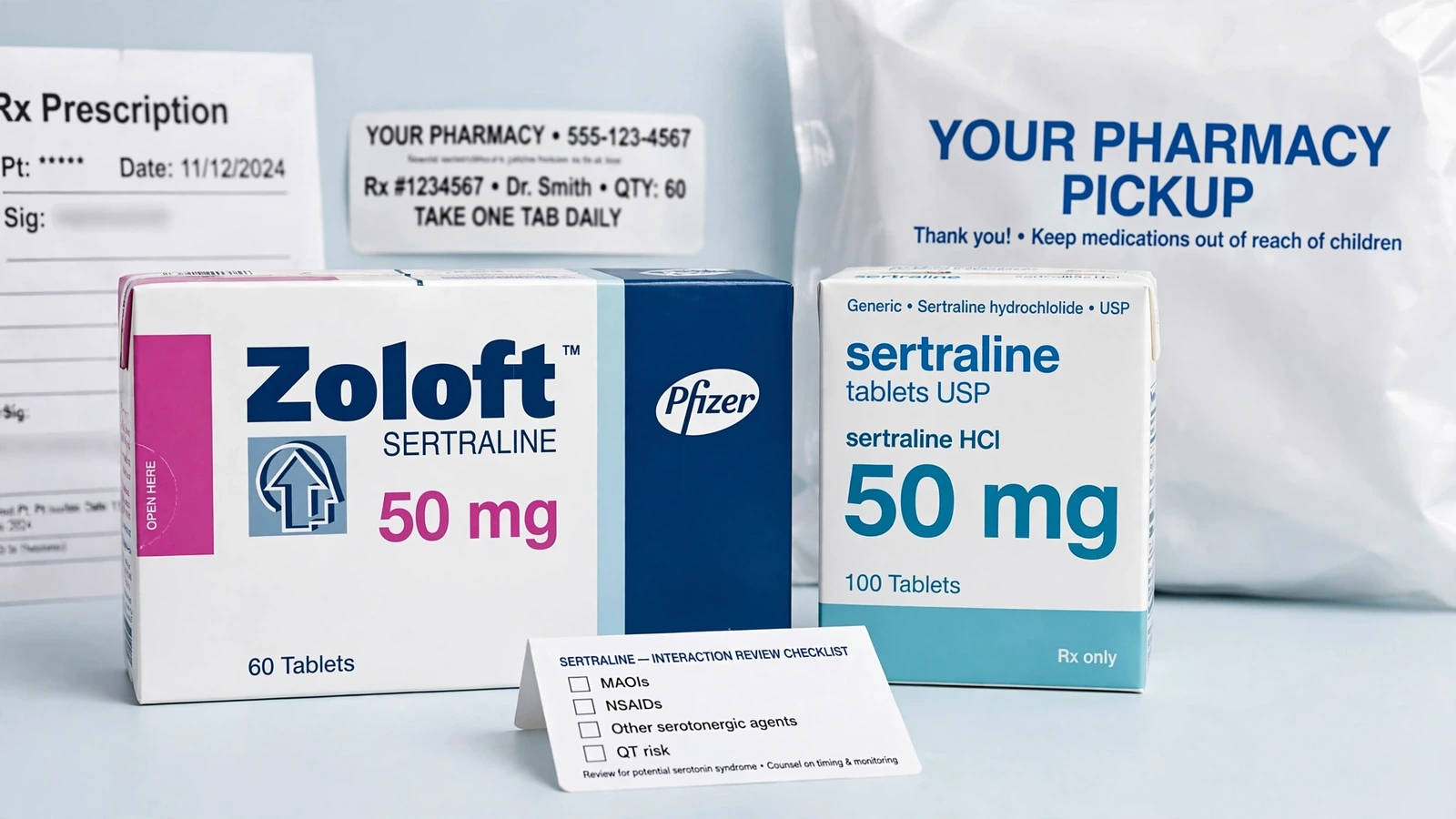
Sertraline interactions require a complete list of prescriptions, nonprescription medicines, supplements, recently stopped drugs, and substances. The label contraindicates certain combinations and warns that other serotonergic or bleeding-risk products can change the safety plan.

Medically reviewed by
Psychiatry, depression, and mood-disorder assessment
Medical review completed August 27, 2026
Contraindications require timing details
The label contraindicates use with monoamine oxidase inhibitors and within the defined separation interval because of serotonin-syndrome risk. It also lists pimozide and known hypersensitivity to sertraline. The clinician needs exact names and stop dates, not a general statement that another medicine was taken recently.
Serotonergic products can accumulate risk
Other antidepressants, some pain or migraine medicines, certain cough products, supplements, and recreational substances may affect serotonin. This page does not declare every combination unsafe; it explains why a clinician and pharmacist need the complete list before a change.
Bleeding risk crosses prescription boundaries
The label warns that aspirin, nonsteroidal anti-inflammatory drugs, antiplatelet agents, warfarin, and other anticoagulants can increase bleeding concern. Over-the-counter pain relievers therefore belong in reconciliation. Unusual bruising or bleeding should be reported promptly, and severe bleeding needs urgent care.
Recently stopped products still matter
An interaction review includes medicines that are no longer in the daily pill organizer. Separation periods, long effects, and discontinuation symptoms can influence the plan. Bring bottles or a written list with dates when possible.
Common reconciliation failures
Do not call supplements harmless by default, omit as-needed medicines, use another person's product, or assume two prescribers share the same record. Tell the pharmacist and sertraline prescriber about every change.
Prescription status and the diagnostic boundary
Sertraline is a prescription medicine. Researching sertraline interactions can prepare an adult for a clinical visit, but it cannot confirm a diagnosis or establish that this medicine is appropriate. The prescriber still needs a symptom timeline, functional impact, previous treatment, relevant medical history, pregnancy considerations when applicable, allergies, substance use, and a candid account of mood and behavioral changes.
The current DailyMed label lists major depressive disorder, obsessive-compulsive disorder, panic disorder, posttraumatic stress disorder, social anxiety disorder, and premenstrual dysphoric disorder among its indications. Those labels describe different clinical patterns. A clinician must distinguish them from bipolar disorder, medicine or substance effects, medical illness, grief, and other explanations before a treatment choice is made.
Contraindications and interaction details to disclose
The checked label lists monoamine oxidase inhibitor use within the defined separation period, pimozide, and known hypersensitivity to sertraline among the contraindication boundaries. Other serotonergic products can raise serotonin-syndrome concern. Aspirin, nonsteroidal anti-inflammatory drugs, antiplatelet medicines, warfarin, and other anticoagulants can add bleeding risk.
Bring exact names for prescriptions, nonprescription pain or cold medicines, supplements, recently stopped products, alcohol, cannabis, stimulants, and other substances. A pharmacy list is useful but may be incomplete. Do not stop another prescribed medicine to make the list look safer; let the prescriber and pharmacist interpret the complete record.
Side effects, monitoring, and urgent care
Commonly reported effects can involve the stomach or bowel, sleep, sweating, tremor, fatigue, appetite, or sexual function. Their timing, persistence, severity, and effect on daily life determine whether routine advice is enough. Follow-up should also ask directly about clinical worsening, suicidal thinking, agitation, unusual energy, reduced need for sleep, impulsivity, confusion, and newly added medicines.
Use urgent help for suicidal intent, a seizure, severe confusion, serious allergic swelling or breathing difficulty, significant bleeding, or a rapidly escalating behavioral change. Fever with marked agitation, muscle rigidity, or coordination change can signal a serious serotonin-related reaction. A standard portal message is not an emergency response.
Build a record that supports the next decision
Keep a concise record of the working diagnosis, the original symptoms and functional goals, the current prescription, missed doses, unwanted effects, new medicines, and the agreed follow-up route. Record what has changed instead of relying on a broad statement that treatment feels better or worse. This makes routine review, transfer between clinicians, pharmacy questions, and refill decisions safer and more specific.
Do not share tablets, restart an old prescription, conceal another product, or make an abrupt change from a general web guide. The prescriber should guide routine changes. Serious or rapidly worsening symptoms move the decision out of routine follow-up and into urgent assessment.
Interaction review lanes
| Product group | Needed detail | Reason |
|---|---|---|
| MAO inhibitors | Name and stop date | Contraindication timing |
| Serotonergic products | Dose pattern and changes | Syndrome risk |
| Bleeding-risk medicines | All routine and as-needed use | Bleeding concern |
| Supplements or substances | Exact product | Unseen interaction |
Where this page fits in the sertraline pathway
Questions not answered by a checklist
Why include over-the-counter pain relievers?
Some can add bleeding concern and may not appear in a prescription record.
Do recently stopped medicines matter?
Yes. Timing can affect contraindication and interaction decisions.
Can a pharmacist help check interactions?
Yes. A pharmacist can review the product list, but the prescribing clinician still needs the same information.
Is every serotonergic combination forbidden?
No. Risk and management vary, which is why the combination needs professional review rather than a blanket rule.
Primary sources and review limits
- DailyMed sertraline hydrochloride tablets label, updated August 20, 2026 and checked August 27, 2026.
- MedlinePlus sertraline drug information, checked August 27, 2026.
- FDA online pharmacy safety guidance, checked August 27, 2026.
This educational page does not diagnose a condition, replace a prescribing clinician, or provide emergency care.