

Yeast Infection vs Bacterial Vaginosis: Key Differences
Yeast infection and bacterial vaginosis can both cause vaginal discomfort or discharge, but they arise from different biological changes and need different treatment. Odor, itching, discharge, and irritation may guide the discussion, yet symptoms overlap enough that examination and testing are often the safer way to distinguish them.

Medically reviewed by
Infectious diseases and antimicrobial stewardship
Medical review completed August 27, 2026
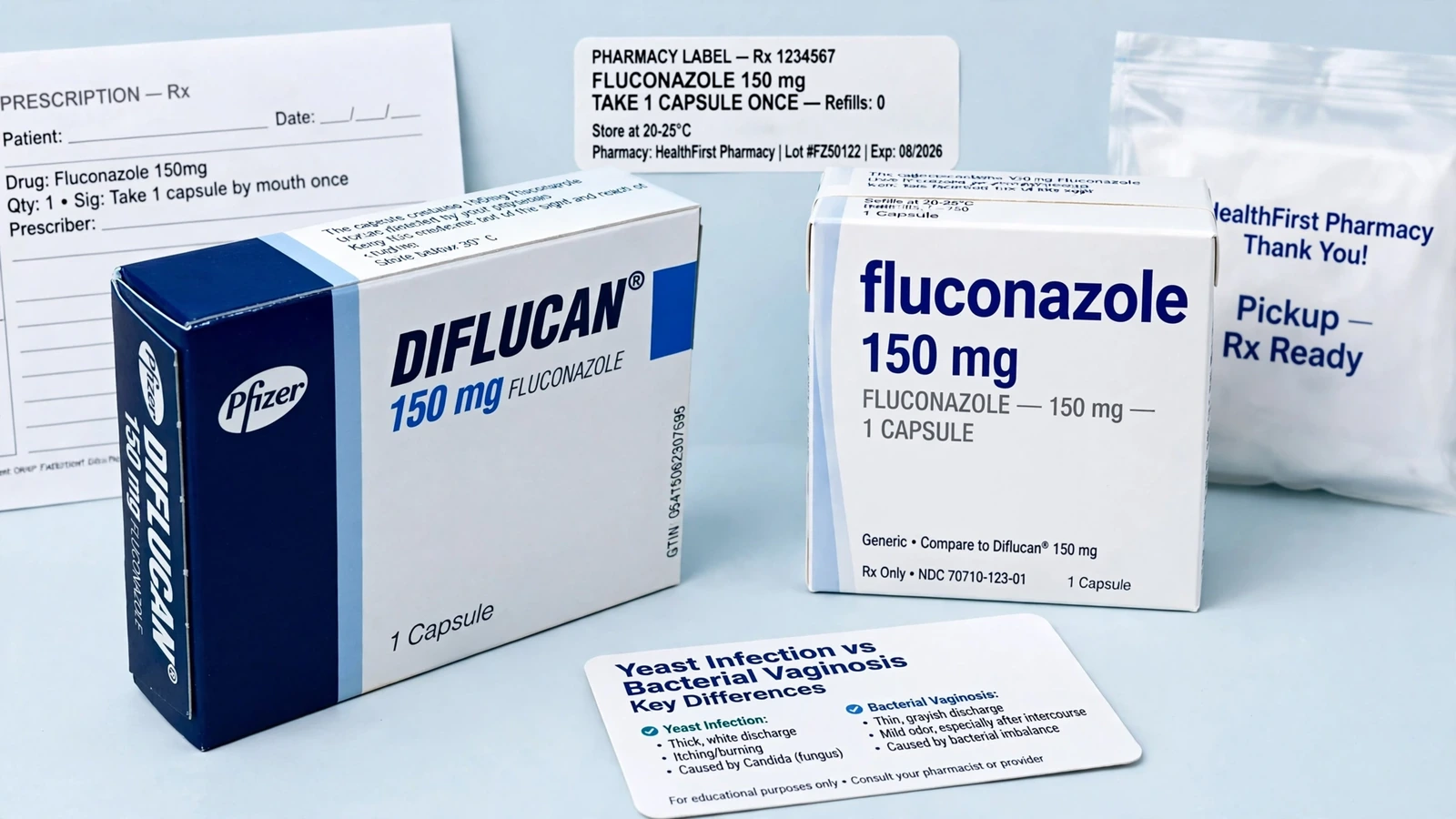
Feature comparison
| Decision point | What it can mean | Safer action |
|---|---|---|
| Itching and external soreness | Often reported with candidiasis. | Can occur with irritation or other conditions too. |
| Odor | Strong odor is less typical of candidiasis. | A fish-like odor can occur with bacterial vaginosis. |
| Discharge | May be thick, but appearance varies. | May be thin, but appearance alone is not diagnostic. |
| Testing | Microscopy or culture may support candidiasis evaluation. | pH and microscopy or other validated testing may support BV evaluation. |
A safer step-by-step pathway
Describe symptoms without choosing a label
Report odor, discharge, itching, burning, pain, bleeding, sores, and timing.
Add risk and health context
Include pregnancy possibility, sexual health concerns, recent medicines, diabetes, and prior episodes.
Let the clinician choose tests
The right test depends on the full pattern and care setting.
Use cause-specific treatment
Antifungal treatment does not treat bacterial vaginosis, and BV treatment is not candidiasis treatment.
Return if the course is unexpected
Persistence, recurrence, or new symptoms can change the diagnosis.
Different causes require different treatment
Vulvovaginal candidiasis involves yeast, while bacterial vaginosis reflects a change in vaginal bacterial balance. Calling both a generic infection hides the most important distinction: medicine aimed at one does not reliably treat the other. The evaluation should establish the cause before repeated treatment.
Why odor and discharge are clues, not verdicts
A clinician uses symptom combinations and examination findings to guide testing. Strong odor may increase suspicion for bacterial vaginosis, while marked itching and external soreness may fit candidiasis, but individual variation and other diagnoses prevent either clue from functioning as a home confirmation test. For more detail on this decision, review Yeast Infection Symptoms and Evaluation GuideReturn to the parent clinical guide..
What testing contributes
Vaginal pH, microscopy, culture, or other validated methods can provide evidence that symptoms alone cannot. The choice depends on resources and presentation. Testing is particularly valuable when the episode is first, unclear, recurrent, severe, pregnancy-related, or unresponsive to prior treatment.
Other conditions remain in the differential
Trichomoniasis, cervicitis, dermatitis, contact irritation, urinary disease, and other conditions can overlap with yeast or BV symptoms. Pelvic pain, fever, sores, bleeding, or a significant sexual health concern should broaden the evaluation rather than being forced into one of two labels.
How pregnancy affects the decision
Pregnancy makes accurate evaluation and treatment selection especially important. Patients should disclose pregnancy possibility before using prescription or nonprescription products. General comparison pages cannot account for trimester, other conditions, examination findings, and the clinician's treatment judgment. A related clinical question is covered in Online Yeast Infection Evaluation: What Clinicians CheckContinue with this related question in the same clinical branch..
What to do after treatment
Expected improvement and follow-up timing depend on the diagnosis and plan. If symptoms persist, return, or change, do not assume the original condition is still present. Reassessment can determine whether the diagnosis was incomplete, treatment was unsuitable, or a different condition has emerged.
Use the comparison to choose the next step, not to self-confirm
A comparison chart is most helpful when it shows why overlap matters. Itching, discharge, irritation, and odor can shift suspicion, yet none of them independently proves candidiasis or bacterial vaginosis. New pelvic pain, fever, bleeding, sores, pregnancy, or a significant sexual-health concern changes the evaluation beyond a two-condition comparison.
If symptoms are persistent, recurrent, or unlike a previously confirmed episode, bring the full timeline and any prior results rather than selecting treatment from appearance alone. The practical decision is whether history is enough for a clinician-led plan or whether examination and testing are needed to identify the cause before another medicine is used.
Common mistakes that weaken the decision
- Choosing treatment based only on discharge color or thickness.
- Assuming odor always means bacterial vaginosis or itching always means yeast.
- Using leftover medicine intended for a different diagnosis.
- Ignoring persistent symptoms because one feature improved.
Frequently asked questions
Can I have yeast infection and bacterial vaginosis at the same time?
More than one condition can contribute to symptoms. A clinician can decide which tests are needed rather than treating based on a single label.
Does thick discharge prove candidiasis?
No. Appearance can guide questions but does not confirm the cause.
Does odor prove bacterial vaginosis?
No. Odor can be a clue, but evaluation and testing are more reliable.
Will fluconazole treat bacterial vaginosis?
Fluconazole is an antifungal and is not a treatment for bacterial vaginosis.
When is testing especially important?
Testing is useful for first, uncertain, recurrent, severe, pregnancy-related, or treatment-resistant presentations.
Authoritative sources
Sources were checked for this version on August 27, 2026. Links open the official publisher in a new tab.
- CDC STI Treatment Guidelines: Vulvovaginal Candidiasis — Centers for Disease Control and Prevention, 2021-07-22
- Diseases Characterized by Vulvovaginal Itching, Burning, Irritation, Odor or Discharge — Centers for Disease Control and Prevention, 2021-07-22
- About Bacterial Vaginosis — Centers for Disease Control and Prevention, 2023-12-11
- Treatment of Candidiasis — Centers for Disease Control and Prevention, 2024-04-24