

Safety and monitoring guide
Sildenafil Safety, Interactions, and Monitoring
Sildenafil safety depends on more than choosing a dose. Nitrates and riociguat are contraindicated; cardiovascular status, blood pressure, other medicines, kidney and liver function, and selected eye or blood conditions may alter the plan. Monitoring means recognizing common effects, urgent warning signs, and changes that require a clinician or pharmacist review.

Medically reviewed by
Urology and men’s health · erectile dysfunction and male reproductive health
Medical review completed August 27, 2026
A medicine can be familiar and still require careful screening. Sildenafil changes vascular signaling and can lower blood pressure. Its risks are shaped by the person taking it, the medicines around it, the circumstances of sexual activity, and the source of the product. This guide separates three practical tasks: screening before use, observing what happens after use, and knowing when routine follow-up is no longer enough.
Absolute interaction checkpoints
Organic nitrates used for angina and recreational nitrites such as poppers must not be combined with sildenafil. The combination can produce a dangerous blood-pressure drop. Riociguat, a soluble guanylate-cyclase stimulator, is also contraindicated. A person who uses any of these products needs a clinician-led alternative plan rather than a timing experiment.
Occasional medicines count. Someone may not think of nitroglycerin carried for emergencies as a current medicine because it is not used daily. It still belongs at the top of the list. If chest pain occurs after sildenafil, emergency clinicians must know about the recent dose so they can choose appropriate treatment.
Blood pressure and cardiovascular status
Sildenafil can add to the blood-pressure effects of alpha-blockers and antihypertensive medicines. That does not make every combination prohibited, but it makes stability, starting approach, symptoms, and prescriber coordination important. Dizziness, lightheadedness, or fainting should not be dismissed, especially when several blood-pressure-lowering factors are present.
Sexual activity itself increases cardiovascular demand. A history of chest pain with activity, fainting, severe exercise limitation, recent cardiovascular events, or advice to avoid sexual activity needs direct clinical evaluation. An online form cannot safely convert those findings into a routine refill.
Medicines that may change sildenafil exposure
Strong CYP3A inhibitors can increase sildenafil exposure, while other products may reduce or complicate response. Prescription medicines, over-the-counter products, supplements, and recreational substances all belong in the review. Grapefruit questions should be directed to the clinician or pharmacist because the answer depends on the complete regimen.
Avoid stacking products sold for sexual performance. Supplements may contain undeclared prescription ingredients, and taking another PDE5 inhibitor can amplify adverse effects. A licensed pharmacy and a single coordinated prescription plan make it easier to identify what was actually taken if a problem occurs. For more detail on this decision, review Sildenafil, nitrates, and blood pressure.
Health conditions that change the discussion
Kidney or liver impairment, advanced age, blood-cell disorders associated with priapism, penile deformity, bleeding concerns, eye disease, or prior sudden vision loss may affect risk assessment or prescribing. This list is not a self-disqualification tool. It is a prompt to provide the clinician with specific history rather than answering a broad question with no details.
Dehydration, acute illness, new surgery, or a major change in health can also make an old prescription less representative of the current situation. Ask whether the plan still applies after a hospitalization, new diagnosis, or major medicine change.
Common effects and observation
Patient information lists effects such as headache, flushing, indigestion or heartburn, nasal congestion, nausea, dizziness, light sensitivity, and changes in color vision. The pattern matters: onset, severity, duration, recurrence, and relationship to other medicines help the clinician interpret it. A common label does not mean a severe symptom should be ignored.
Keep a short record rather than relying on memory. Note the dose from the pharmacy label, time taken, food context, other medicines, response, and symptoms. Do not use the record to calculate your own changes; use it to give the prescriber and pharmacist accurate information.
| Finding | Action | Timing |
|---|---|---|
| Mild expected effect | Record and monitor | Routine |
| Persistent troubling effect | Contact clinician | Prompt |
| Chest pain or collapse | Emergency care | Immediate |
| Erection over four hours | Emergency care | Immediate |
Urgent and emergency warning signs
A painful or prolonged erection lasting more than four hours is an emergency because delayed treatment can damage tissue. Sudden vision loss and sudden hearing decrease or loss also need urgent assessment. Chest pain, collapse, severe breathing difficulty, or a severe allergic reaction require emergency care. Do not take another dose or wait for a routine portal response.
When contacting emergency services, identify sildenafil and the approximate time it was taken. Bring the container or a photo of the label if that does not delay care. This is particularly important when chest pain might otherwise be treated with a nitrate. A related clinical question is covered in Sildenafil side effects and warning signs.
What monitoring can realistically do
Routine monitoring is not a promise that every rare event can be predicted. It is a structured way to notice changes, keep the medicine list current, reassess benefit and tolerability, and make sure the product came from a licensed source. Follow-up is especially useful after a new prescription, a dose change, a new medicine, or a change in cardiovascular health.
A clinician may decide that the balance remains reasonable, that instructions need clarification, that another treatment is more suitable, or that evaluation should move in person. Patients should not feel pressured to continue a medicine that provides little benefit or creates unacceptable effects. Bring the labeled container to follow-up when the manufacturer or tablet has changed, so product questions can be separated from clinical response.
Interaction screen
Treat nitrates, riociguat, blood-pressure medicines, and other ED products as explicit review items.
Symptom boundary
Separate common effects from chest pain, sudden sensory loss, allergic reaction, or priapism.
Product integrity
Use a licensed pharmacy and verify any unexpected label, tablet, or package change.
Pharmacy safety is part of medicine safety
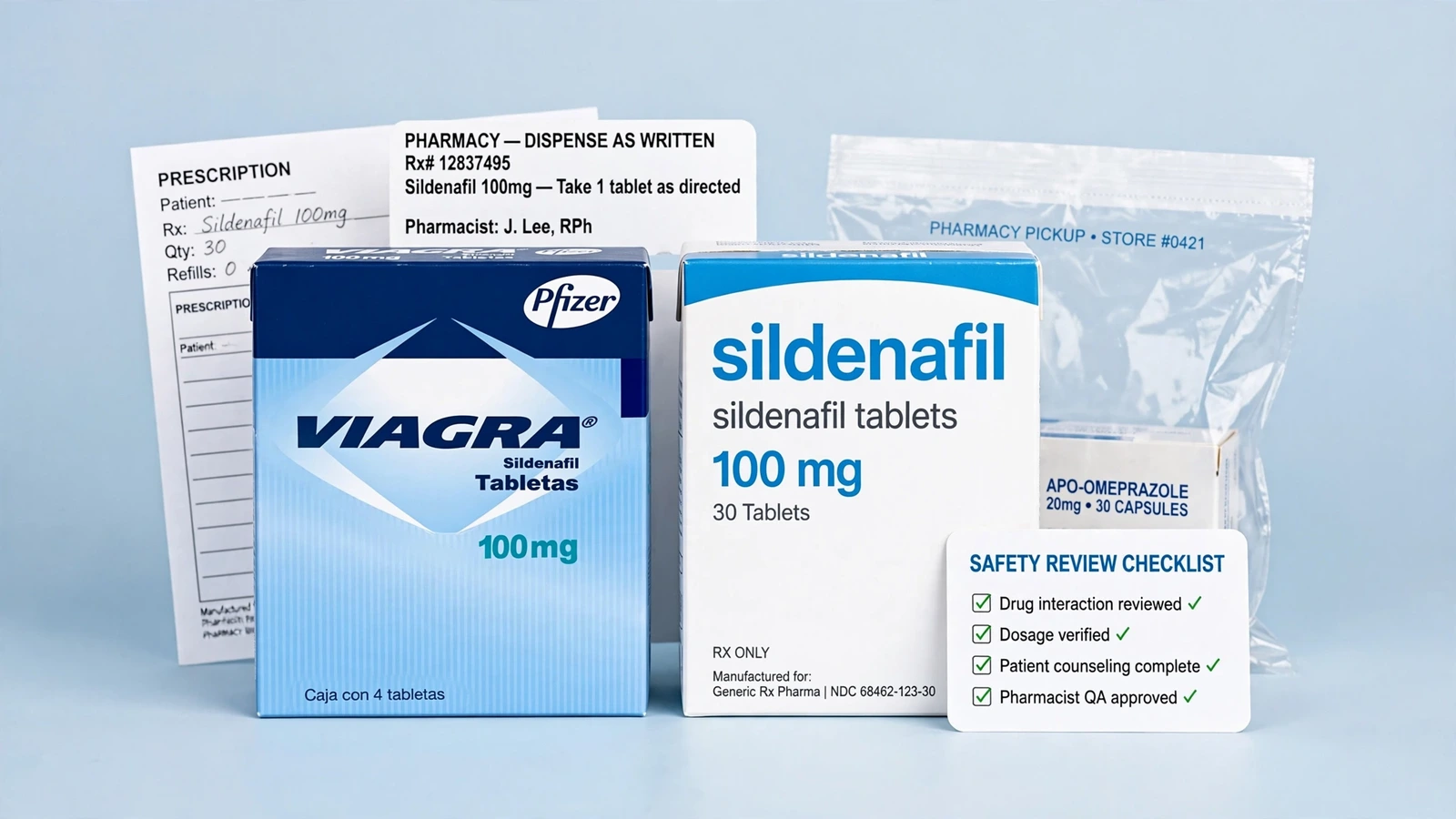
An unsafe online pharmacy can defeat a careful clinical plan by supplying a counterfeit, expired, contaminated, incorrectly dosed, or poorly stored product. FDA recommends confirming a prescription requirement, U.S. contact details, licensed pharmacist access, and state-board licensure. Packaging that is broken, unexplained, foreign-language, or missing expiration information is a reason to stop and verify.
Contact the dispensing pharmacist when appearance changes or the label is unclear. Do not compare tablets only with an online photograph because approved generics can differ in color and shape. The pharmacy can identify the manufacturer and confirm whether the product matches the prescription.
Safety review continues across refills. A prescription written months ago may not reflect a new diagnosis, hospitalization, or medicine. Before requesting another supply, check whether the pharmacy and prescriber have the current list and whether any new symptoms change the plan. Refill convenience should not make clinically important changes invisible.
A practical monitoring routine
- Keep one current medicine list.
- Follow the pharmacy label exactly.
- Record benefit and unexpected symptoms.
- Report health or medicine changes.
- Use emergency care for red flags.
Questions people ask
Can sildenafil be used with blood-pressure medicine?
Some combinations may be prescribed, but the specific medicines, stability, blood pressure, and symptoms require clinician review. Nitrates are contraindicated.
Are headaches always harmless?
Headache is a listed effect, but severe, persistent, or unusual symptoms should be discussed. Emergency symptoms need urgent care regardless of whether another effect is common.
What health changes should trigger review?
New heart symptoms, fainting, major blood-pressure changes, surgery, hospitalization, kidney or liver changes, and new medicines are important reasons to contact the prescriber.
Should another dose be taken after a serious symptom resolves?
Do not take another dose until an appropriate clinician has assessed the event and advised what to do.
Primary sources
- DailyMed prescribing information
- MedlinePlus sildenafil information
- FDA online-pharmacy safety guidance
Sources were reviewed on August 27, 2026. External sources open in a new tab.
This educational page does not diagnose erectile dysfunction, determine whether sildenafil is appropriate, or replace individualized care. Sildenafil for erectile dysfunction is prescription medicine. A qualified clinician and licensed pharmacist should review your health history, current medicines, and the product you receive.