

Dose decisions · Label-based boundaries
Trazodone Dosage Decisions and Administration Checks
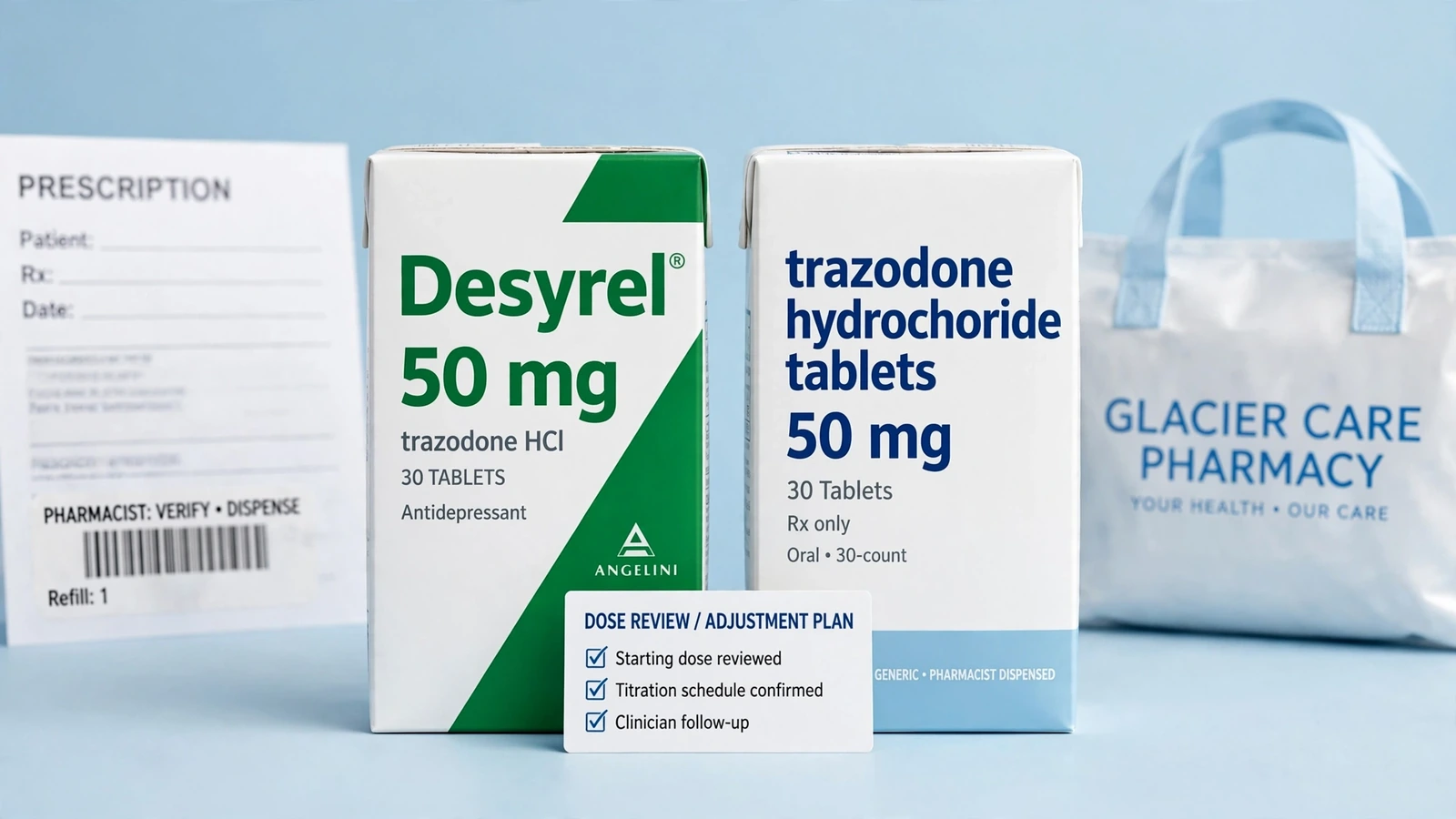
A trazodone dosage is selected and adjusted by a prescriber using the labeled framework, the treated condition, response, tolerability, interactions and medical history. The pharmacy label is the patient’s instruction. Online dose tables cannot safely account for why the medicine was prescribed, how long it has been used or what else the person takes.

Medically reviewed by
Psychiatry, addiction medicine and clinical informatics
Medical review completed August 27, 2026
Check a dose without self-adjusting
1. Read the pharmacy label
Use the exact strength, schedule and administration directions issued for you.
2. Check the context
Confirm the indication, current response, adverse effects and other medicines.
3. Resolve discrepancies
Ask the pharmacist or prescriber when bottle, portal or memory differ.
4. Document changes
Keep the new instruction and follow-up point together.
Dose questions and the right contact
| Question | Best contact | Avoid |
|---|---|---|
| Label unclear | Dispensing pharmacist | Guessing |
| Too sedating | Prescriber promptly | Skipping repeatedly |
| Missed dose | Label or pharmacist | Doubling |
| Want to stop | Prescriber | Abrupt cessation |
The labeled framework belongs to adult MDD
The current DailyMed label describes dose selection for major depressive disorder in adults, including gradual adjustment based on clinical response and intolerance. Those numbers apply within the prescribing information, not as a general instruction for insomnia or another off-label use. The diagnosis and treatment setting remain part of every dose decision.
Food instructions can affect administration
DailyMed and MedlinePlus direct taking trazodone shortly after a meal or light snack. The patient should follow the exact pharmacy label because formulations and directions can differ. If nausea, sedation or another effect leads someone to alter meal timing or skip doses, the prescriber or pharmacist should help resolve the problem. For more detail on this decision, review trazodone safety.
Tablet splitting follows the scored product and prescription
The label explains that scored tablets may be divided along the score line. That does not mean every tablet should be split or that splitting creates a new self-selected dose. Confirm the dispensed product, prescribed strength and pharmacist instructions. Do not use household estimates for fragments that the label does not support.
Missed doses should not trigger doubling
MedlinePlus advises taking a missed dose when remembered unless it is almost time for the next dose, then skipping it and continuing the regular schedule. It says not to take a double dose. When the schedule is uncertain or multiple doses were missed, contact the pharmacist or prescriber for instructions tied to the actual prescription.
Sedation and dizziness can change the plan
The label notes that drowsiness may lead a clinician to alter how the prescribed daily amount is distributed or to reduce it. That is a prescriber decision because the same symptoms can affect driving, falls and adherence. Alcohol, other sedating medicines and blood-pressure effects may compound the problem. A related clinical question is covered in trazodone side effects.
Interactions may require clinician-led adjustment
Strong CYP3A4 inhibitors or inducers can affect trazodone exposure, and other medicines can add serotonin, rhythm, bleeding or sedation risk. A person should not compensate by changing the dose independently. Give the prescriber and pharmacist exact medicine names, start dates and stop dates before the adjustment is considered.
Stopping has its own dosing plan
DailyMed advises gradual reduction rather than abrupt stopping whenever possible, and MedlinePlus describes discontinuation symptoms after sudden cessation. The pace depends on current dose, treatment duration, symptoms, prior changes and clinical risk. A taper found online cannot distinguish withdrawal from returning depression or another condition.
Special situations need prescriber interpretation
Liver or kidney disease, older age, pregnancy context, low blood pressure, falls and several interacting medicines can change how cautiously a clinician approaches treatment. The label and patient information identify issues to review, but they do not provide a self-service adjustment formula. Bring the relevant diagnoses, laboratory information and recent symptoms to the dose conversation.
Questions readers ask after this review
What is the usual trazodone dosage?
The label contains an adult MDD framework, but the prescriber selects an individual dose based on diagnosis, response, tolerability and interactions.
Should trazodone be taken with food?
The checked label directs taking tablets shortly after a meal or light snack; follow the pharmacy label for your prescription.
Can I split a trazodone tablet?
Only use the score line and instructions for the dispensed tablet and prescription. Ask the pharmacist if uncertain.
What if I miss a dose?
MedlinePlus says not to double. Follow the prescription instructions or ask the pharmacist when timing is unclear.
Can I reduce the dose to stop side effects?
Contact the prescriber. Side effects, interactions and the treated condition determine the safest response.
Primary and authoritative sources
- DailyMed, U.S. National Library of Medicine: Trazodone hydrochloride tablet prescribing information — label updated August 19, 2026; checked August 27, 2026.
- MedlinePlus, U.S. National Library of Medicine: Trazodone drug information — checked August 27, 2026.
Educational information for human care only. This page does not diagnose a condition, guarantee a prescription, select an individual dose, replace a clinician or provide veterinary advice.