
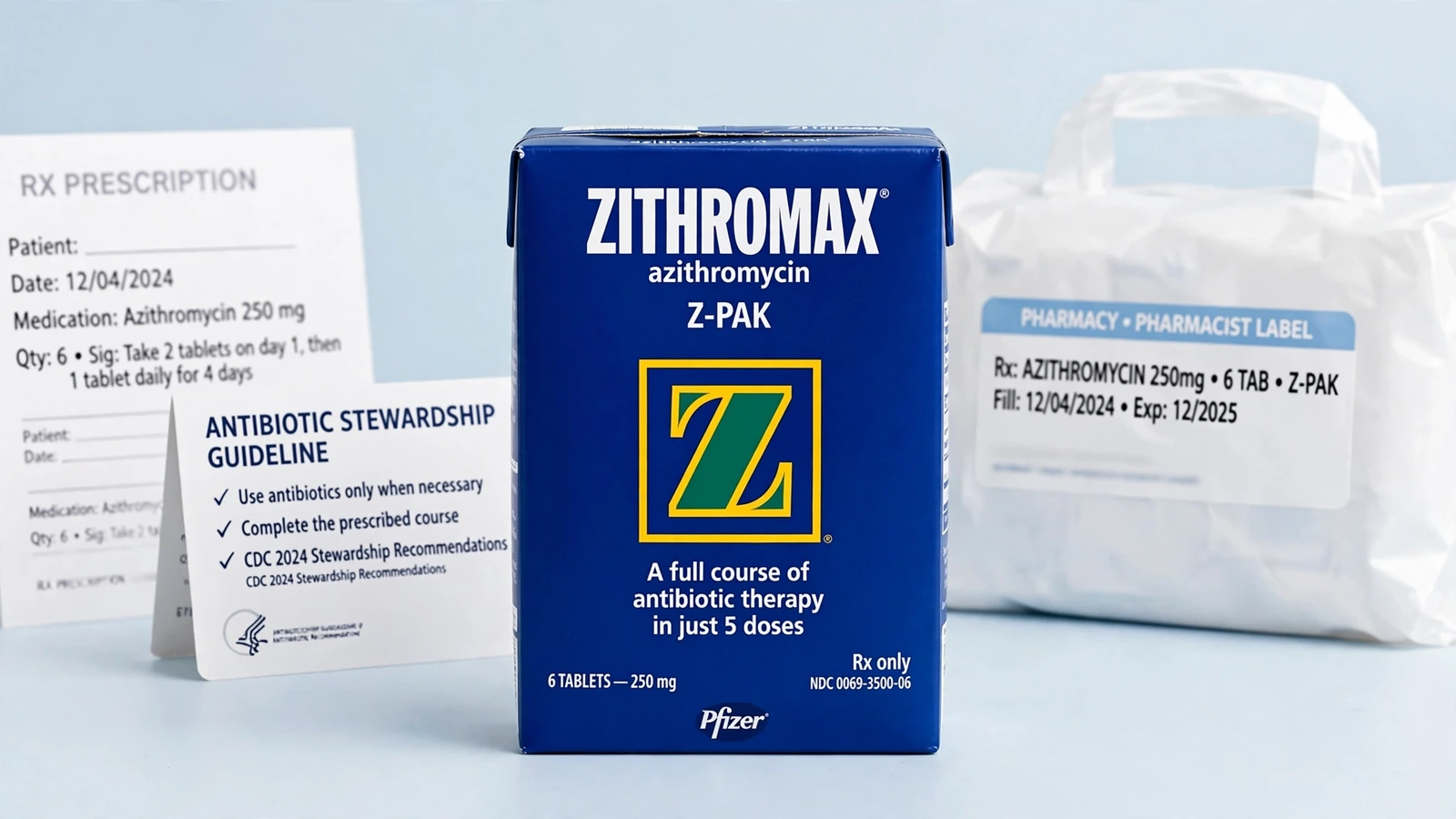
Zithromax, Z-Pak, and generic azithromycin describe related product identities, but the name on a request is not enough to confirm what a pharmacy will dispense. Compare the active ingredient, dosage form, labeled strength, quantity, directions, manufacturer, coverage response, and final pharmacy record against the prescription before accepting a fill.
For the surrounding payment, pharmacy, and product questions, use the complete azithromycin cost and online access overview. It keeps this product-identity check in its proper place after a clinician has made a prescribing decision.
Start with fields, not appearance
Match these records before comparing package names
A brand name, a familiar package nickname, and a generic label can appear in different places during the same access process. The useful comparison is therefore documentary. It asks whether the written order, claim response, dispensing label, and physical package describe the same patient-specific fill without inferring directions from color, shape, or marketing language.
Keep the comparison narrow. It does not decide whether azithromycin fits the infection, whether treatment should begin, or whether another antibiotic would be preferable. Those are clinical decisions. This page helps a patient notice administrative or product-record differences early enough for the prescriber, pharmacist, or insurance plan to explain them.
- Patient name matches the prescription
- Active ingredient reads azithromycin
- Dosage form matches the order
- Strength and quantity match
- Directions match the pharmacy label
- Manufacturer is recorded for questions
Do not treat a different tablet appearance as proof of an error, and do not treat familiar packaging as proof that every field is correct. Manufacturers and presentations can differ. The pharmacist can identify the dispensed product from the prescription record, label, and product identifiers rather than from memory or an online photograph.
One medicine record, several labels
What do Zithromax, Z-Pak, and generic azithromycin identify?
Zithromax identifies a brand presentation, Z-Pak identifies a familiar package presentation, and generic azithromycin uses the medicine name rather than a brand label. None of those terms replaces the prescription. The dispensing record still has to confirm the patient, active ingredient, dosage form, labeled strength, quantity, directions, and pharmacy responsible for the fill.
| Name or record | What it identifies | What must still match | Who can clarify |
|---|---|---|---|
| Zithromax | Brand presentation | Every prescribed field | Pharmacist or prescriber |
| Z-Pak | Package presentation | Contents and directions | Dispensing pharmacist |
| Generic azithromycin | Nonbrand presentation | Drug and order details | Dispensing pharmacist |
| Prescription | Clinical order | Patient-specific directions | Prescriber |
| Pharmacy label | Dispensed product | Order and package | Dispensing pharmacist |
The comparison should not stop at the largest word on the carton. Record the manufacturer, dosage form, labeled strength, quantity, and directions as separate fields. If the pharmacy offers a different presentation, ask which field changed and why. An unexplained change is a reason to pause the fill, not a reason to decide independently that the product is interchangeable.
Before accepting a substitution or quoted amount, compare insurance and cash-payment questions for azithromycin with the pharmacy or plan. A coverage response may refer to a product, pharmacy network, or claim rule that is not obvious from the package name alone.
Follow the record through fulfillment
Which Zithromax and generic azithromycin access details can change?
A brand or package request can produce a different claim response, cash quote, availability answer, or pharmacy message than a generic request. That administrative difference does not determine clinical value. It tells the patient which product the quote covers and which questions must return to the pharmacist, insurance plan, or prescriber before dispensing proceeds.
- Read the order. Copy each prescribed field without abbreviating it.
- Read the quote. Identify the product and pharmacy it covers.
- Read the label. Match the dispensed record before payment.
- Save the answer. Keep the pharmacist’s clarification with the receipt.
The first price shown may belong to a different product record than the final fill. A plan may process one presentation differently, a pharmacy may need to obtain a particular product, or the quoted amount may exclude a service or delivery charge. Ask for the product name and dosage form attached to the amount. A number without those fields cannot be compared cleanly.
Availability also needs precise language. “In stock” should identify the pharmacy and the product record, while “can be ordered” should distinguish a pending supply answer from a completed fill. Neither statement is a promise that the prescription is clinically appropriate or that a plan will pay. The access record should preserve those separate decisions.
If a plan response or pharmacy message uses only a brand or package term, ask whether it refers to the prescribed active ingredient and dosage form. If the response names a different strength, quantity, or set of directions, the pharmacy should reconcile that difference before the patient accepts the medication. A patient should not repair the mismatch by changing the label instructions.

Clinical boundaries remain in force
Common errors that turn a label check into self-treatment
The CDC’s Core Elements of Outpatient Antibiotic Stewardship, updated August 3, 2026, keeps diagnosis, appropriate use, and follow-up ahead of convenience. A brand or generic label is therefore an access detail after the clinical decision, not a reason to start, repeat, share, or store an antibiotic for a future illness.
Pause when the records disagree
When should a product-name difference stop the process?
A product-name difference should pause dispensing when the active ingredient, dosage form, labeled strength, quantity, directions, patient name, or prescription source does not match the record. The patient should also pause when the pharmacy cannot identify the manufacturer, explain the quoted product, provide pharmacist access, or document why the presentation changed.
When the product identity is clear, licensed-pharmacy checks for the selected azithromycin product remain a separate safeguard. The FDA’s online pharmacy safety information supports checking the prescription requirement, U.S. address and telephone, licensed pharmacist access, and state-board record.
Ask the pharmacist
Product and dispensing record
Ask the pharmacist to identify the dispensed active ingredient, dosage form, labeled strength, quantity, manufacturer, directions, and product identifiers. Request a corrected label or a documented explanation when those fields do not agree with the prescription or the pharmacy’s prior message.
Return to the prescriber
Clinical order or authorization
Return to the prescriber when the pharmacy needs a changed order, when a different dosage form or strength is proposed, or when the claim response creates a clinical question. The patient should not approve a new direction, product, or antibiotic based on price or package familiarity.
Save the written prescription details, claim response, pharmacy answer, final label, and receipt together. That record helps distinguish a harmless presentation change from a true discrepancy. It also gives the clinician or pharmacist the exact information needed if the product, payment, or fulfillment question has to be revisited.
Questions after the first comparison
Package and access questions worth documenting
Does the name Z-Pak define my directions?
No. A package nickname does not replace the patient-specific pharmacy label and prescription. Follow only the directions on the verified dispensing record. If those directions differ from what the prescriber explained, pause and ask the pharmacist and prescriber to reconcile the record.
Can a different tablet appearance mean the pharmacy made an error?
Appearance alone cannot answer that question. Check the active ingredient, dosage form, labeled strength, manufacturer, product identifiers, quantity, and directions. A pharmacist can determine whether the appearance reflects a different manufacturer or a dispensing problem before the medication is taken.
Why can the quoted amount change when the product name changes?
The quote may be tied to a particular product record, pharmacy network, benefit rule, cash arrangement, or availability response. Ask which product the amount covers, whether other charges are separate, and whether the claim was processed for the same dosage form and prescription details.
What if the pharmacy offers a product not named on the request?
Ask the pharmacist to explain the proposed product and match every prescribed field. If a changed order or authorization is needed, the question returns to the prescriber. Do not accept, reject, or alter the product based only on the carton name or price.
What should I keep after the fill is complete?
Keep the prescription summary, claim or cash quote, pharmacy contact details, dispensing label, manufacturer record, receipt, and any written clarification. These documents make later cost, product-identity, adverse-effect, or refill questions easier to explain without relying on memory or package appearance.
Primary references
Sources used for the clinical and pharmacy boundaries
- Azithromycin prescribing information — DailyMed, U.S. National Library of Medicine; updated June 16, 2026.
- FDA online pharmacy safety information — U.S. Food and Drug Administration; accessed August 27, 2026.
- Core Elements of Outpatient Antibiotic Stewardship — Centers for Disease Control and Prevention; updated August 3, 2026.