

Furosemide Electrolyte Monitoring and Symptoms
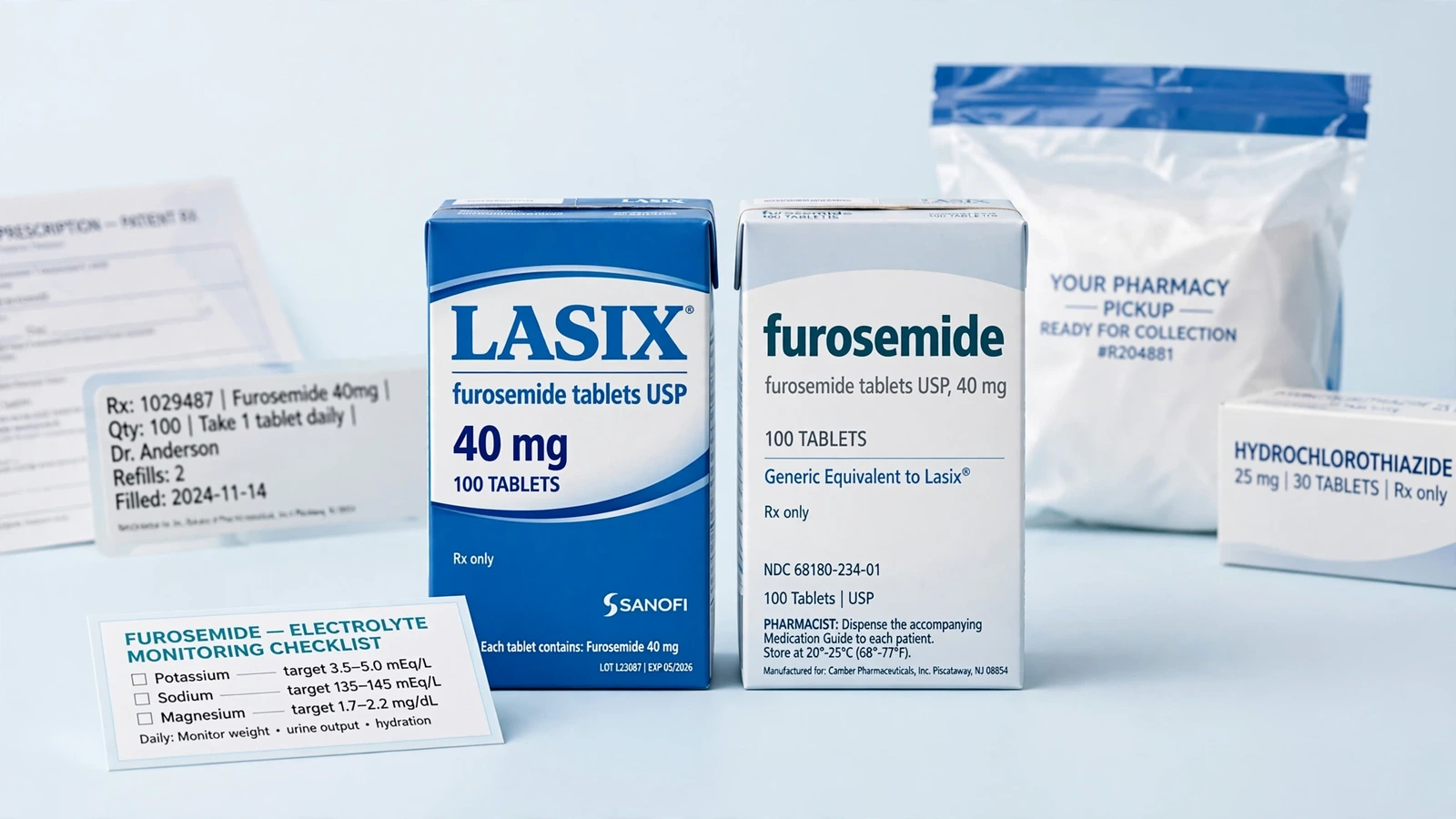
Furosemide can contribute to fluid and electrolyte changes, so clinicians may monitor sodium, potassium, magnesium, calcium, and related laboratory measures when appropriate. Symptoms such as cramps, weakness, palpitations, nausea, or confusion are not specific and should not be self-treated with supplements.

Medically reviewed by
Internal medicine · drug safety · pharmacoepidemiology
Medical review completed August 27, 2026
Electrolytes work as a system
Sodium, potassium, magnesium, calcium, bicarbonate, fluid balance, and kidney function influence one another. A clinician chooses tests based on the condition, medicines, dose, symptoms, and prior results. The same symptom can occur with different abnormalities or with no electrolyte problem at all. Laboratory testing and clinical assessment are safer than trying to infer a deficiency from a cramp or a food craving.
Potassium deserves context in both directions
Furosemide may contribute to potassium loss, but kidney disease, other prescriptions, supplements, and salt substitutes can also raise potassium. That is why automatically taking a potassium tablet or using a potassium-containing salt substitute can be harmful. The clinician considers the result, heart rhythm risk, kidney function, and complete medication list before recommending replacement or a regimen change.
Acute losses and poor intake matter
Vomiting, diarrhea, fever, heavy sweating, or poor intake can compound fluid and electrolyte changes. Report the duration, ability to keep fluids down, urine pattern, dizziness, and current dosing. Do not use a generic internet hydration recipe when fluid or sodium limits are part of the underlying heart, liver, or kidney plan. The clinical team can decide whether testing or temporary instructions are needed. For more detail on this decision, review Furosemide Safety and Monitoring GuideReturn to the parent guide..
Symptoms that deserve prompt attention
Marked weakness, fainting, confusion, severe cramps, persistent vomiting, or a new irregular or racing heartbeat can signal a clinically important problem but cannot confirm its cause. Chest pain, severe breathlessness, fainting, or altered mental status warrants urgent evaluation. Less severe new symptoms should still be reported, particularly after a dose change or illness.
Make monitoring actionable
Ask which laboratory tests are due, the target date, who will review them, and what symptoms should trigger an earlier check. Bring the actual supplement and salt-substitute labels because names alone may hide potassium, sodium, or magnesium content. Keep results with dates and note major medication or illness changes so trends can be interpreted accurately.
Do not diagnose an electrolyte change from symptoms alone
Cramps, weakness, nausea, palpitations, dizziness, and confusion can have several causes. Record when symptoms occur, the furosemide schedule, illness, intake changes, and all medicines and supplements, then allow the clinician to choose and interpret testing. Starting potassium, magnesium, sodium products, or salt substitutes without results and individualized advice can create a different problem. A related clinical question is covered in Furosemide and Kidney Function MonitoringRead a related guide in this same topic branch..
Close the result-to-action loop
A laboratory result should have a named reviewer and a documented response. Ask whether the plan is unchanged, whether repeat testing is needed, and which symptoms should trigger earlier contact. Keep the result beside any dose, diet, fluid, or medicine instruction so a later clinician can see what was decided rather than finding an isolated number without context. Record the date on which the care team communicated that decision.
A practical decision pathway
List
Include prescriptions, OTC products, vitamins, supplements and salt substitutes.
Test
Complete the clinician-selected laboratory panel on schedule.
Interpret
Review results with symptoms, kidney function, illness and dose.
Adjust safely
Change medicine, diet or supplements only with individualized guidance.
Decision table
| Signal | Possible contexts | Safer response |
|---|---|---|
| Muscle cramps | Electrolytes, exertion, circulation or other causes | Report persistent or severe symptoms; do not guess a supplement |
| Palpitations | Rhythm, electrolytes, medicines, anxiety or illness | Prompt review; urgent care if severe or with chest pain/fainting |
| Nausea or poor intake | Illness, medicine effect or volume change | Contact the team if persistent or unable to hydrate |
| Confusion or profound weakness | Potentially serious systemic problem | Seek prompt medical evaluation |
Frequently asked questions
Which electrolytes may be checked?
Clinicians often consider sodium and potassium and may check magnesium, calcium, bicarbonate or other measures based on the situation.
Do cramps prove low potassium?
No. Cramps have many causes, and symptoms cannot identify a specific electrolyte abnormality.
Can I use a salt substitute?
Ask the clinician or pharmacist first. Many salt substitutes contain potassium and may be unsafe with kidney disease or certain medicines.
What symptoms need urgent care?
Fainting, confusion, severe weakness, chest pain, severe breathlessness, or a sustained abnormal heartbeat needs prompt assessment.
When are electrolyte checks especially important?
The clinician may monitor more closely after dose changes, acute illness, hospitalization, kidney changes, or addition of interacting medicines.
Primary sources
Medical content reviewed August 27, 2026. References were checked on the dates shown.
- Furosemide tablet — prescribing information — U.S. National Library of Medicine, DailyMed. Updated June 23, 2026.
- Furosemide — U.S. National Library of Medicine, MedlinePlus. Accessed August 27, 2026.