

Furosemide Interactions and Medication Review
A furosemide interaction review must include prescriptions, over-the-counter products, supplements, and recent medicine changes. Important contexts in the prescribing information include lithium, NSAIDs, some blood-pressure medicines, sucralfate, and other drugs that affect kidneys, blood pressure, electrolytes, or hearing.

Medically reviewed by
Internal medicine · drug safety · pharmacoepidemiology
Medical review completed August 27, 2026
Build the list from containers, not memory alone
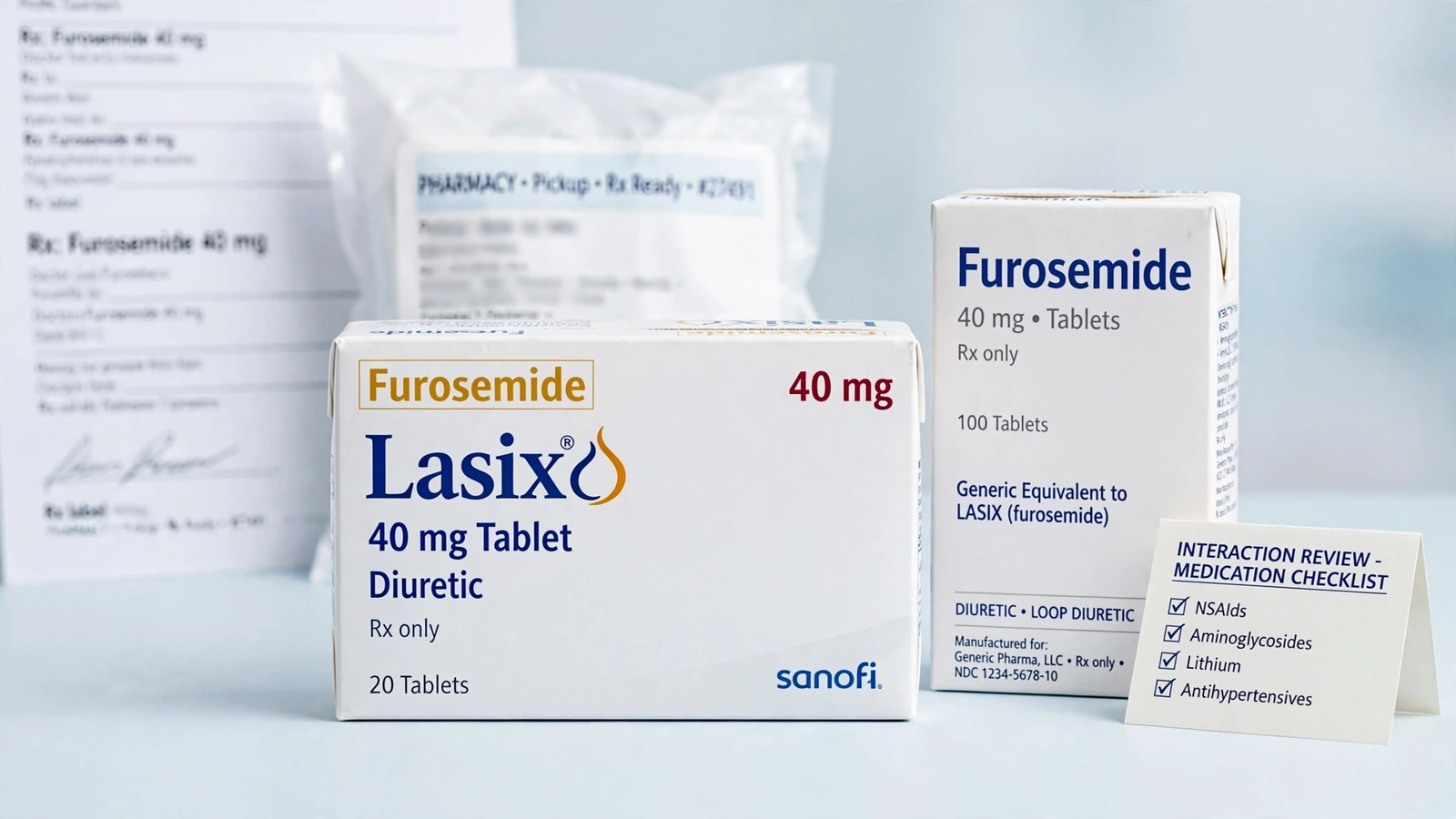
Bring prescription bottles, over-the-counter packages, supplement labels, injections or infusions, and medicines used only occasionally. Record dose, schedule, reason, prescriber, and recent changes. Brand and generic duplication is common, and “as needed” products can be missed even though they affect kidney function or blood pressure. A photograph can support the list, but actual use still needs to be described.
NSAIDs can change the clinical picture
The prescribing information notes that nonsteroidal anti-inflammatory drugs can reduce the diuretic and antihypertensive effects of furosemide and contribute to kidney concerns in some settings. Common OTC availability does not make these products irrelevant. Report ibuprofen, naproxen, and prescription anti-inflammatory medicines, including how often they are used. Do not stop a prescribed product without discussing the indication and alternatives.
Lithium needs specific clinician oversight
Furosemide can reduce renal lithium clearance and increase the risk of lithium toxicity according to the label. Anyone using lithium should make sure the prescriber and pharmacist know before furosemide is started, stopped, or changed. Monitoring and dose decisions belong to the treating clinicians. New tremor, marked drowsiness, confusion, vomiting, or coordination problems deserves prompt medical review rather than self-adjustment. For more detail on this decision, review Furosemide Prescription Continuity and Refill ReviewReturn to the parent guide..
Blood-pressure and kidney-active combinations require context
ACE inhibitors, angiotensin receptor blockers, and other blood-pressure medicines can combine with diuresis to produce significant pressure or kidney changes in susceptible situations. This does not mean the combination is always wrong; it means dose, timing, illness, blood pressure, renal function, and electrolytes need oversight. Report dehydration, faintness, acute gastrointestinal illness, or a newly added medicine promptly.
Timing and hearing-risk interactions matter
The label advises that sucralfate and oral furosemide should not be taken within two hours because sucralfate can reduce absorption. It also warns about combining furosemide with certain ototoxic drugs, including aminoglycoside antibiotics, except in life-threatening situations. Do not create a spacing plan from memory; ask the pharmacist to reconcile the exact products, route, and instructions. Report tinnitus or hearing change promptly.
Turn the medicine list into a reconciled plan
Use exact prescription and nonprescription names, strengths, schedules, indications, and recent starts or stops. Include supplements and salt substitutes, and identify more than one brand that may contain the same ingredient. A pharmacist or clinician can then decide whether a concern requires avoidance, monitoring, timing changes, or another treatment rather than leaving the patient with an unexplained interaction alert. A related clinical question is covered in Lasix Refill Continuity: What a Review RechecksRead a related guide in this same topic branch..
Record the decision for the next prescriber
Write down which combination was reviewed, what response was chosen, whether laboratory or symptom monitoring is needed, and who owns follow-up. If another medicine is added or an acute illness changes kidney function, blood pressure, or intake, request another review. Do not stop a necessary medicine, separate doses, or add a supplement solely from a general interaction list.
A practical decision pathway
Collect
Gather every prescription, OTC product, supplement and salt substitute.
Reconcile
Confirm actual use, reason, prescriber and recent changes.
Screen
Review kidney, blood-pressure, electrolyte, absorption and hearing-related interactions.
Coordinate
Document clinician or pharmacist instructions before changing timing or dose.
Decision table
| Medicine context | Why it matters | Safer next step |
|---|---|---|
| NSAIDs | May affect diuretic response and kidney risk | Report product and frequency to the clinician |
| Lithium | Clearance and toxicity risk may change | Ensure coordinated monitoring and prescribing oversight |
| Blood-pressure medicines | Combined pressure and kidney effects are possible | Review symptoms, readings, labs and illness |
| Sucralfate | Can reduce oral furosemide absorption | Ask the pharmacist about label-directed spacing |
| Ototoxic drugs | Hearing risk may increase | Prompt specialist review and report hearing changes |
Frequently asked questions
Can ibuprofen interact with furosemide?
NSAIDs such as ibuprofen may reduce diuretic or blood-pressure effects and contribute to kidney concerns in some settings. Report OTC use to the clinician.
Why is lithium important to mention?
Furosemide may reduce lithium clearance and increase toxicity risk, so coordinated prescribing and monitoring are important.
Can I take sucralfate at the same time?
The prescribing information advises separating oral furosemide and sucralfate by at least two hours. Confirm the exact schedule with a pharmacist.
Which antibiotics matter for hearing risk?
The label highlights aminoglycosides and other ototoxic drugs. The exact risk depends on the medicine and clinical context, so prompt review is needed.
Should I stop a medicine after an interaction warning?
Do not stop prescribed treatment solely from an automated warning. Contact the clinician or pharmacist for a coordinated decision.
Primary sources
Medical content reviewed August 27, 2026. References were checked on the dates shown.
- Furosemide tablet — prescribing information — U.S. National Library of Medicine, DailyMed. Updated June 23, 2026.
- Furosemide — U.S. National Library of Medicine, MedlinePlus. Accessed August 27, 2026.