

Medication safety · What changes the plan
Trazodone Safety, Interactions and Warning Signs
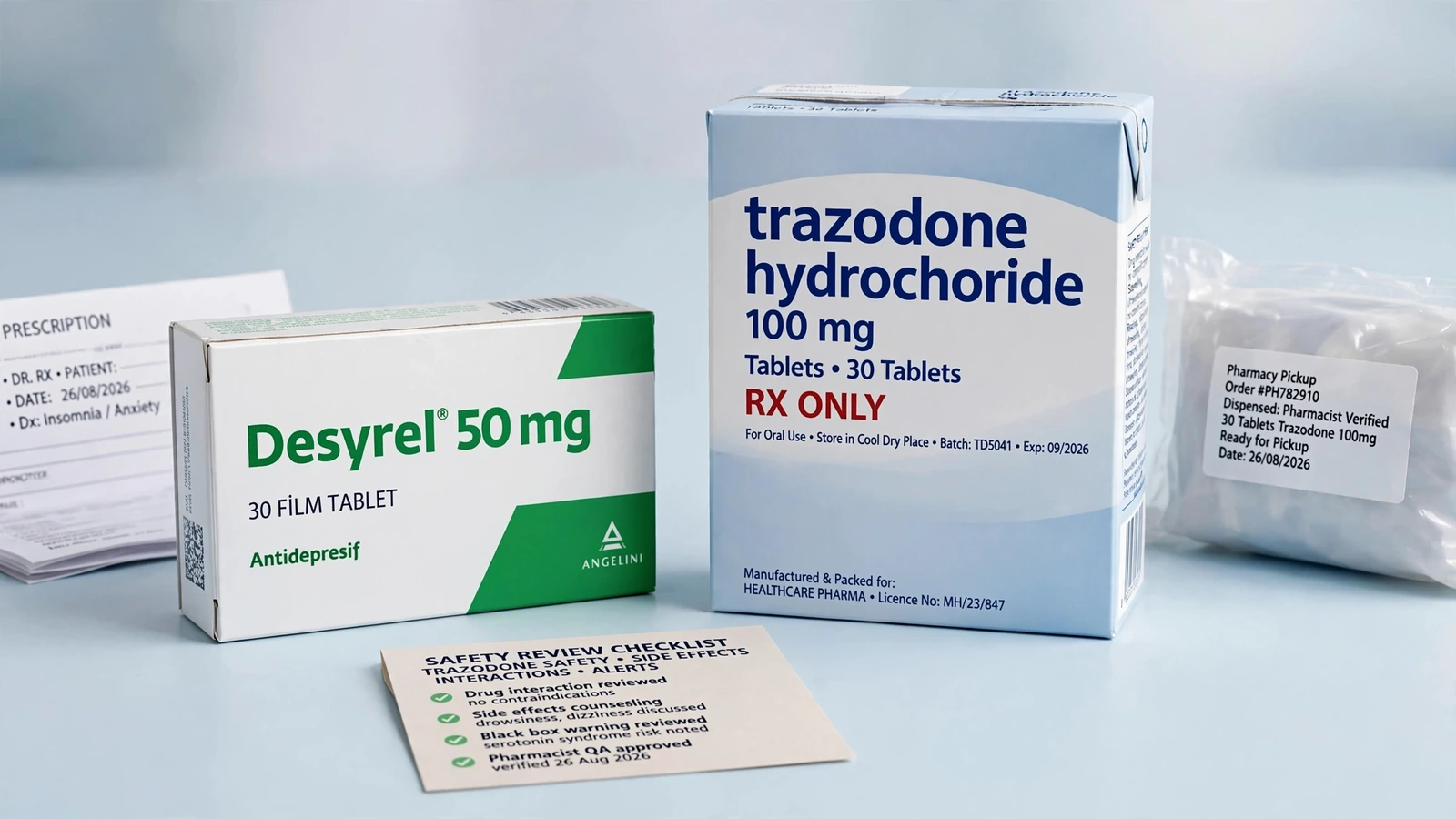
Trazodone safety depends on more than a list of common side effects. The clinician needs exact medicines, recent stop dates, heart and fainting history, bleeding risk, mood changes and the person’s daily safety demands. Some effects can be monitored; others require prompt or emergency assessment.

Medically reviewed by
Psychiatry, addiction medicine and clinical informatics
Medical review completed August 27, 2026
Build a safety review that can change the decision
1. Name every product
Include prescriptions, recent medicines, over-the-counter products, vitamins, herbs, alcohol and other substances.
2. Map medical history
Record fainting, rhythm problems, bleeding, liver or kidney issues, pregnancy context and prior reactions.
3. Separate severity
Distinguish expected, disruptive, prompt-review and emergency symptoms before treatment begins.
4. Keep the route open
Know how to reach the prescriber and pharmacist when symptoms or medicines change.
Symptom response by urgency
| Situation | Action | Why |
|---|---|---|
| Mild, expected effect | Record and discuss | May affect tolerability |
| Persistent dizziness | Prompt prescriber contact | Falls or blood pressure |
| Severe agitation with fever | Urgent assessment | Possible serotonin syndrome |
| Immediate danger or seizure | Emergency services | Time-sensitive risk |
Common effects still matter when they alter daily safety
Drowsiness, dizziness, tiredness and other non-emergency effects may still affect driving, falls, shift work and adherence. A clinician can ask when the effect occurs, how severe it is and whether another medicine or substance adds to it. The response may involve timing, dose or treatment changes, but those decisions should not be improvised from a generic web page.
The boxed warning requires active mood monitoring
The trazodone label carries the antidepressant boxed warning about suicidal thoughts and behaviors in pediatric and young adult patients and directs close monitoring for worsening and emerging symptoms. The label also states that trazodone is not approved for pediatric patients. Any new suicidal thinking, planning, attempt or immediate danger needs prompt crisis or emergency action.
Serotonin syndrome is an interaction and symptom problem
Trazodone can contribute to serotonin syndrome, especially with other serotonergic medicines, although the syndrome can also occur when such agents are used alone. Agitation, confusion, fever, sweating, fast heart rate, blood-pressure changes, rigidity, tremor, incoordination, nausea, vomiting or diarrhea in a concerning combination need urgent clinical assessment.
Heart rhythm and blood-pressure history belong in the intake
The label warns that trazodone can prolong the QT interval and cause cardiac arrhythmias. Orthostatic hypotension and syncope can also occur. A history of long QT syndrome, arrhythmia, fainting, recent heart attack or medicines that affect rhythm or blood pressure may change the plan. New fainting or an abnormal heartbeat deserves prompt evaluation.
Bleeding risk depends on the rest of the medication list
The prescribing information warns that drugs that interfere with serotonin reuptake can increase bleeding risk, especially when combined with aspirin, nonsteroidal anti-inflammatory drugs, antiplatelet medicines, warfarin or other anticoagulants. Unusual bruising, persistent bleeding, blood in vomit or stool, or other concerning signs should not be dismissed as a routine antidepressant effect. For more detail on this decision, review human trazodone prescription pathway.
MAOIs create a firm contraindication window
Trazodone is contraindicated with monoamine oxidase inhibitors and within the label’s stated separation period. Linezolid and intravenous methylene blue can also matter in this context. Recent stop dates are therefore as important as current medicines. A patient should not calculate or shorten the separation period without the prescribing clinicians coordinating the change.
Mania or hypomania can reveal a different treatment need
Antidepressant treatment can activate mania or hypomania in a person with bipolar disorder. A personal or family history of bipolar disorder and prior periods of unusually elevated mood, less need for sleep, pressured speech, racing thoughts or risky behavior should be discussed before treatment. New activation after starting or changing treatment requires prompt contact.
Priapism is uncommon but time-sensitive
The label warns about priapism, a painful prolonged erection that can cause lasting harm without urgent treatment. It is not a symptom to wait on until a routine follow-up. History of conditions affecting the shape of the penis or blood disorders may be relevant to risk and should be included in the medical history.
Alcohol and sedating products can compound impairment
Trazodone may enhance the response to alcohol, barbiturates and other central nervous system depressants. The safe question is not whether one drink or one product is universally allowed. It is which substances are used, how often, what other sedating medicines are present and what activities such as driving or operating equipment follow.
Pregnancy, breastfeeding and organ function require individual review
Pregnancy or breastfeeding context, liver disease and kidney disease can affect the risk discussion even when they are not the reader’s main search intent. These topics need clinician review rather than a yes-or-no internet rule. The same is true when an older adult has falls, low blood pressure or several medicines that can compound sedation. A related clinical question is covered in trazodone dosage.
Safety follow-up is a shared record
The patient can track symptoms and timing, the prescriber can interpret changes in the treatment context, and the pharmacist can identify dispensing and interaction issues. Each role sees a different part of the picture. A reliable pathway makes those contacts visible instead of leaving the patient with a bottle and no route for questions.
A written action plan reduces delay
Before treatment, separate routine questions from symptoms that need same-day contact, urgent assessment or emergency services. Keep the prescriber, pharmacy, crisis line and local emergency route available outside the patient portal. A person who becomes confused, faint or acutely unsafe may not be able to search through old messages, so trusted support can also know the plan.
New medicines require a fresh safety check
A stable trazodone routine can become less stable when another prescriber adds treatment, an infection requires an antibiotic, pain care changes or a supplement is started. Update the medication list at the moment of change. Waiting for the next annual review can miss a short but important interaction window, especially when serotonin, rhythm, bleeding or sedation risks overlap.
Common mistakes that weaken a safety review
Do not omit supplements because they feel natural, use an old medication list, hide occasional alcohol or substance use, or wait until the next refill to report fainting and severe mood changes. These omissions can alter the interaction and urgency assessment. Accurate disclosure supports safer decisions and does not guarantee that a prescription will be continued.
The pharmacy can add a second safety perspective
A licensed pharmacist can reconcile the dispensed products, explain administration directions and identify interaction alerts. That review complements the prescriber’s diagnostic and treatment judgment. Keep both contacts available when a new medicine, side effect or refill discrepancy appears.
Questions readers ask after this review
What are serious trazodone warning signs?
Examples include new suicidal thoughts, fainting, abnormal heartbeat, severe serotonin-syndrome symptoms, seizure, serious bleeding or a painful prolonged erection.
Can trazodone interact with over-the-counter products?
Yes. NSAIDs, aspirin, supplements and other nonprescription products can matter, so provide exact names to the clinician and pharmacist.
Why does fainting history matter?
Trazodone can be associated with orthostatic hypotension, syncope and rhythm concerns, so prior fainting may change the assessment.
Should alcohol be included in the review?
Yes. Alcohol and other central nervous system depressants can add to impairment and should be discussed honestly.
Where should suicidal thoughts be handled?
Do not wait on a medication message. In the U.S., call or text 988; call 911 for immediate life-threatening danger.
Primary and authoritative sources
- DailyMed, U.S. National Library of Medicine: Trazodone hydrochloride tablet prescribing information — label updated August 19, 2026; checked August 27, 2026.
- MedlinePlus, U.S. National Library of Medicine: Trazodone drug information — checked August 27, 2026.
- Substance Abuse and Mental Health Services Administration: 988 Suicide & Crisis Lifeline — checked August 27, 2026.
Educational information for human care only. This page does not diagnose a condition, guarantee a prescription, select an individual dose, replace a clinician or provide veterinary advice.