
Brand and generic access comparison
Diflucan vs generic fluconazole is mainly a product-identity, dispensing, and payment comparison, not a contest over which medicine is stronger. FDA-approved generic versions use the same active ingredient and must meet FDA standards for equivalence, while appearance, inactive ingredients, manufacturer, package details, cash quotes, plan responses, and pharmacy stock can differ.
This comparison begins after a clinician has decided that fluconazole is appropriate. Put product questions into the full sequence through the complete fluconazole cost and access overview, which separates clinical assessment, prescription details, payment, and fulfillment.
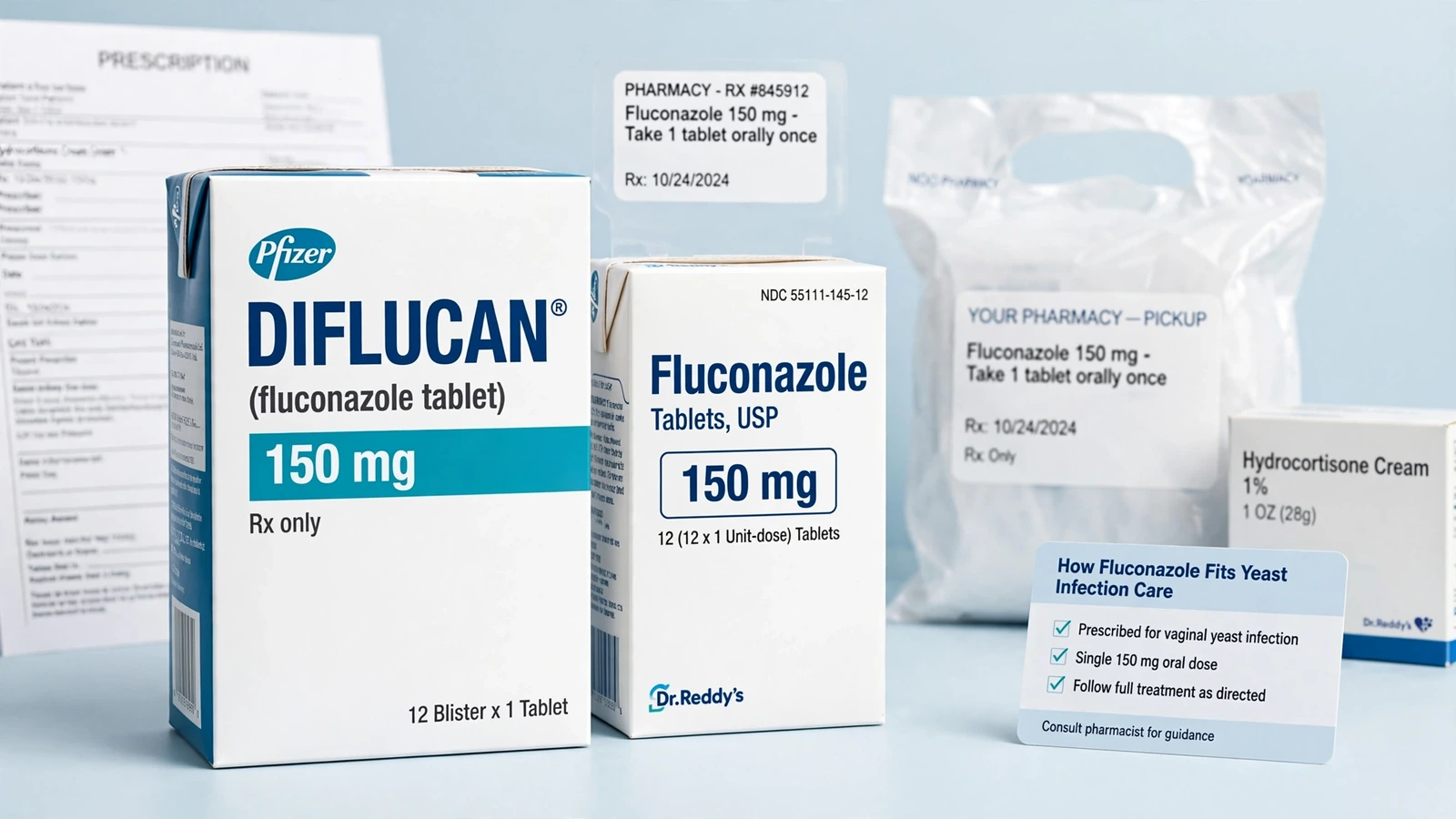
Start with identity
Diflucan vs generic fluconazole under the FDA standard
DailyMed identifies Diflucan as fluconazole and lists it as a human prescription drug. A generic fluconazole label also names fluconazole as the active ingredient and carries prescription labeling. That shared active ingredient matters, but it is only the start of a usable comparison. The exact dosage form, route, prescription directions, manufacturer, and package still need to match the record being discussed.
FDA’s generic-drug standard requires an approved generic to match its reference product in active ingredient, strength, dosage form, route, quality, and performance, with bioequivalence demonstrated during approval. The agency also explains that allowable differences can include appearance and certain inactive ingredients. Those differences do not create a general brand-versus-generic ranking, but they can create practical questions for a patient with a documented ingredient concern or a medication that looks unfamiliar.
| Comparison point | Diflucan | FDA-approved generic | What to confirm |
|---|---|---|---|
| Active ingredient | Fluconazole | Fluconazole | Printed label identity |
| Approval basis | Reference brand product | Equivalent approved product | FDA-listed product |
| Appearance | Brand-specific presentation | May look different | Color, shape, imprint |
| Inactive ingredients | Brand label list | Manufacturer-specific list | Relevant sensitivities |
| Payment record | Brand claim or cash quote | Generic claim or cash quote | Same prescription details |
| Dispensing record | Brand manufacturer and package | Named manufacturer and package | Pharmacy label match |
The table is a document-matching tool. It does not authorize a substitution and cannot determine whether fluconazole fits a symptom pattern. When a quote describes “fluconazole” without the manufacturer, dosage form, route, or prescription details, ask the pharmacy to identify the exact product. When a plan response uses a brand or generic category, ask whether the response applies to the product the pharmacy expects to dispense.
Three documents may use different levels of detail without necessarily contradicting one another. The prescription may identify the active ingredient, the plan record may group products into a coverage category, and the pharmacy label may name a specific manufacturer. The comparison becomes reliable only after those records point to the same dosage form, route, directions, and intended fill. If one record is broader, ask the organization that created it to clarify its meaning rather than filling in the missing detail by assumption.
A manufacturer change can occur between fills even when the active ingredient remains the same. That change deserves a calm identity check, especially when the tablet appearance, package, or inactive-ingredient list differs. Keep the previous label until the pharmacist has confirmed the new product. The old and new records give the pharmacist a precise starting point and are more useful than asking whether every generic product looks identical.
Two decisions that should not be merged
Clinical equivalence and the final amount owed answer different questions. One concerns whether an FDA-approved generic meets the required standard; the other depends on the compared product, pharmacy, plan, claim route, and timing. Treating a price difference as evidence about expected clinical performance confuses the two records.
Product identity
Confirm what the label represents
Match active ingredient, dosage form, route, manufacturer, and prescription directions. If the appearance changed, compare the new label with the prior record and ask the pharmacist to explain the difference. A brand name alone does not replace these checks.
Payment route
Compare the same product details
Request a cash quote and a plan estimate using the same prescription and product identity. Then separate medication cost from clinical-service or delivery charges. Compare insurance and cash-price factors when the plan and pharmacy records need to be reconciled.
Before accepting the fill
Check the product record, not just the name
A pharmacy quote is most useful when it can be traced to a specific product. Keep the prescription, plan response, pharmacy quote, and dispensing label together. The checklist below prevents a familiar brand name or a generic label from hiding a mismatch in the details that actually govern the fill.
- Exact product name on the prescription
- Active ingredient and prescribed dosage form
- Route and directions from the prescription
- Manufacturer and package identifier
- Inactive ingredients relevant to known sensitivities
- Plan formulary and pharmacy-network response
- Cash quote for identical prescription details
- Licensed pharmacist contact for unresolved questions
Common mistakes include comparing quotes for different products, treating a generic category as a complete label, assuming insurance automatically produces the lowest amount, and accepting a changed tablet without checking the pharmacy record. Each mistake can be resolved by naming the exact product and asking which document supports the answer.
A short comparison log can prevent the same question from being answered differently by the plan, pharmacy, and clinical service. Record the date, organization, contact channel, product name used in the conversation, and the next action promised. Do not place medical history or payment credentials into an unverified message thread. The purpose of the log is narrower: it preserves which product was discussed and which organization owns the unresolved question.
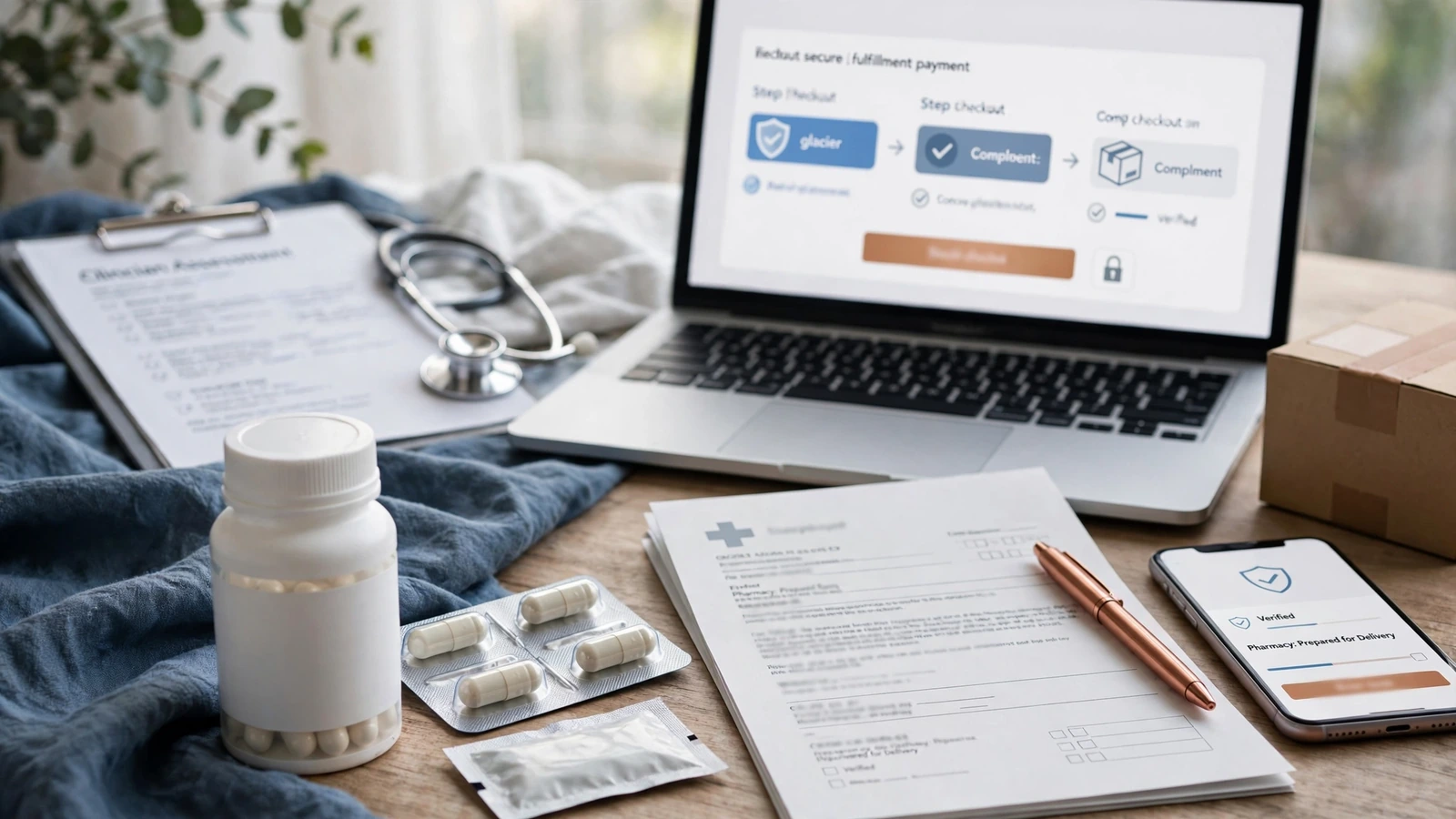
Move from product comparison to a verified fill
The useful end point is not choosing a name in isolation. It is receiving the prescribed product from a verifiable pharmacy with the label, payment record, and pharmacist access aligned. Work in order so an unresolved product question does not become a payment or delivery problem later.
-
Match the prescription
Confirm ingredient, dosage form, route, and directions.
-
Name the product
Record brand or generic manufacturer and package details.
-
Align the quote
Compare cash and plan estimates for identical records.
-
Verify fulfillment
When the product identity is clear, licensed-pharmacy checks before dispensing remain a separate safeguard before sharing payment or health details.
If any step produces conflicting information, pause there. A pharmacist can clarify a changed manufacturer, appearance, or inactive-ingredient list. A prescriber can decide whether a requested substitution matches the clinical plan. An insurer can explain a formulary or claim response, but it cannot decide whether the medicine is suitable for an individual.
The completed fill should close the loop. Compare the dispensed label with the prescription and the product named in the payment record, then retain the receipt and pharmacy contact information. If the manufacturer or package differs from the earlier quote, ask for an explanation before use. If the amount differs, determine whether the change came from the product, the plan response, or a separate service charge rather than attributing it to the brand or generic name alone.
Diflucan vs generic fluconazole cost questions
FDA explains that generic competition often lowers prices, but that general pattern is not a quote for a particular prescription. The amount presented to one person can depend on the exact product, pharmacy, stock, plan, network, deductible stage, claim status, and any separate service or delivery charge. A brand quote from one route and a generic quote from another are not a controlled comparison.
Cash
Ask what the amount includes
Record the quoted product, pharmacy, quantity on the prescription, and any separate fee. A cash amount may change with stock or manufacturer, so date the record and confirm it again before fulfillment.
Coverage
Read the plan response precisely
HealthCare.gov directs members to the plan’s formulary and pharmacy network. Ask whether the displayed product is covered, whether a plan rule applies, and whether the quoted pharmacy is in network.
Substitution
Keep cost separate from authorization
A less expensive quote does not itself authorize a product change. Ask the pharmacist how the prescription will be filled and route any clinical uncertainty back to the prescriber.
Questions that arise after the comparison
Is generic fluconazole always less expensive than Diflucan?
No single result applies to every pharmacy or benefit plan. Generic competition often affects prices, but the final amount depends on the exact product, pharmacy, plan response, network, and claim route. Compare the same prescription details at the same point in time, then ask which product the estimate represents.
Why can a generic tablet look different?
FDA allows certain differences in appearance and inactive ingredients while requiring approved generic products to meet its equivalence and quality standards. Check the manufacturer, imprint, label, and ingredient list. A pharmacist should explain an unexpected change before the medicine is used.
Can the pharmacy change the product automatically?
Substitution depends on the prescription, the products involved, applicable rules, and the pharmacist’s professional responsibilities. Ask what will be dispensed and why. If the prescriber specified a product or there is a clinical concern, the pharmacist may need to contact the prescriber before completing the fill.
Does a brand name change the interaction risk?
The active ingredient remains fluconazole, so a brand label does not remove contraindications, interactions, or adverse-effect concerns tied to that ingredient. Product-specific inactive ingredients can differ. Keep the medication list current and ask the prescriber or pharmacist to check any relevant ingredient concern.
What should I keep after the pharmacy fills it?
Keep the dispensing label, manufacturer and package information, receipt or claim response, pharmacy contact details, and the current prescription instructions. These records help a pharmacist investigate a changed appearance, a payment discrepancy, a suspected product problem, or a later refill question.
Primary sources used for this comparison
- U.S. Food and Drug Administration: Generic Drug Facts
- U.S. Food and Drug Administration: Generic Drugs Questions and Answers
- DailyMed: Diflucan fluconazole prescribing information
- DailyMed: Fluconazole Tablets USP prescribing information
- HealthCare.gov: Getting prescription medications
- U.S. Food and Drug Administration: BeSafeRx online pharmacy information