

How Long Finasteride Takes for Hair Loss: A Tracking Guide
Finasteride does not produce an overnight hair change. Hair cycles, baseline severity, consistency, and the way photographs are taken all affect what a person notices. A useful timeline defines what to record and when to reassess, without promising a result or encouraging dose changes.

Medically reviewed by
Urology and men’s health · medication safety and reproductive considerations
Medical review completed August 27, 2026
A practical decision pathway
Baseline
Capture repeatable images and goals.
Early period
Follow directions and record interruptions.
Review point
Compare consistent images and symptoms.
If uncertain
Revisit diagnosis, adherence, and expectations.
| Time point | Useful action | Avoid |
|---|---|---|
| Before starting | Photos, goals, medicine list | Relying on memory |
| Between reviews | Brief dated notes | Daily hair counting |
| Scheduled review | Matched images and symptom discussion | Changing dose from a forum |
| Safety concern | Contact clinician promptly | Waiting only for a result milestone |
Why the timeline is measured in months
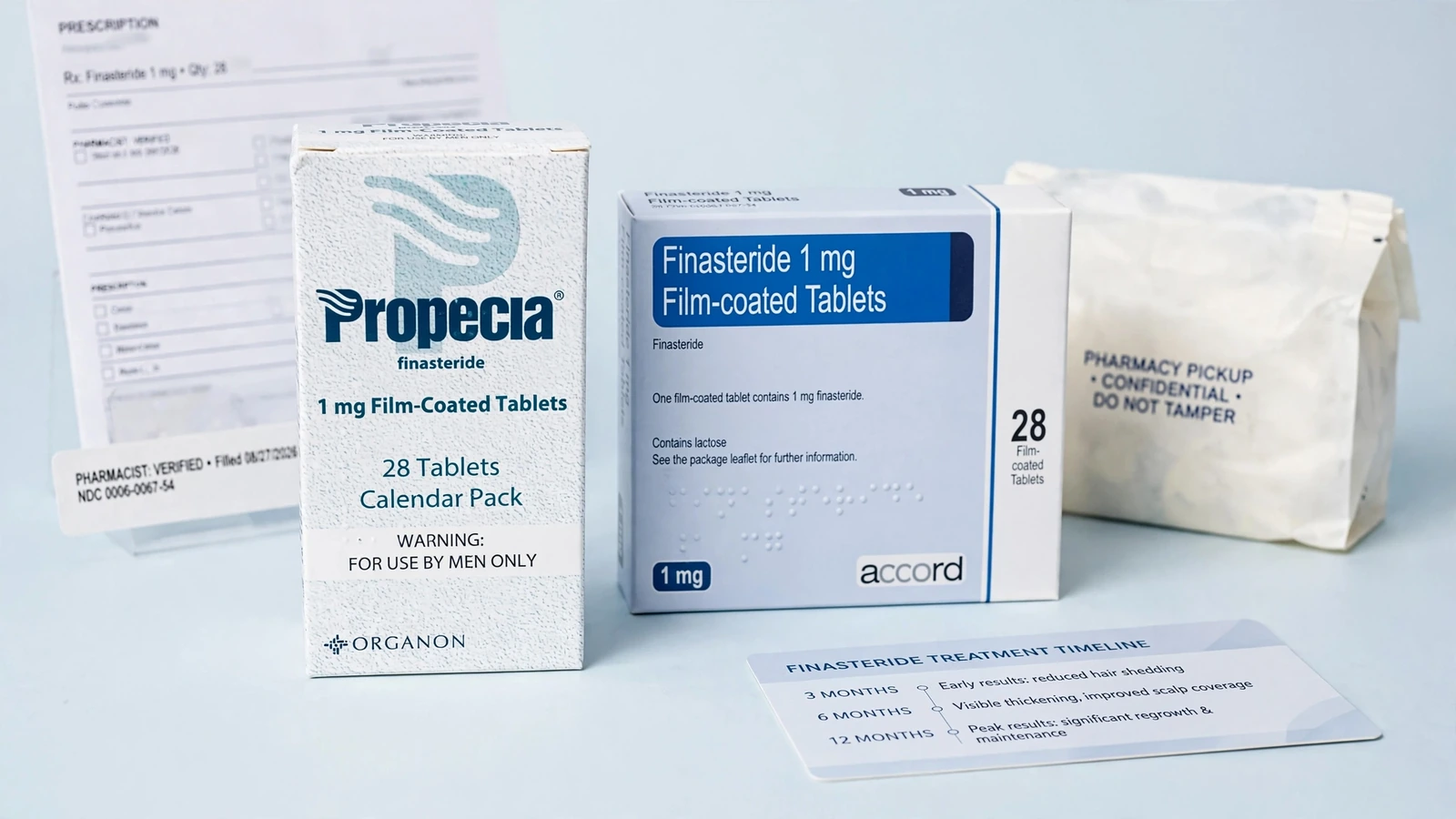
Hair follicles cycle through growth and rest, so a treatment effect cannot be judged like relief from a pain medicine. The DailyMed label notes that daily use for three months or more may be necessary before benefit is observed and that continued use is recommended to sustain benefit. That label boundary is population guidance, not an individual promise. Some people will not see a meaningful cosmetic change.
Short-term mirror checks are especially unreliable. A haircut, damp hair, overhead lighting, or camera exposure can change how density looks. Build a record before treatment and compare at the clinician’s chosen interval.
Create a defensible baseline
Take photographs before the first dose from the same front, temple, top, and crown positions. Use a fixed distance, neutral background, dry hair, the same hairstyle, and similar light. Record the date, current shedding impression, scalp symptoms, and any other treatment. Do not apply digital sharpening or hair-filling filters.
A baseline also includes treatment goals. If the aim is to slow visible progression, stability may be meaningful even without dramatic regrowth. If the goal is restoration of a specific hairline, the clinician should address whether medication alone can reasonably meet it. For more detail on this decision, review Finasteride Hair Loss Treatment: Diagnosis, Options, and Tracking.
What to record between reviews
Log interruptions, missed doses, new medicines, illness, major weight change, and new symptoms. Do not count every shed hair; the method is inconsistent and often increases anxiety. A concise monthly note is usually more useful than dozens of daily observations.
Report troubling adverse effects when they occur rather than waiting for a photography date. The timeline for efficacy is not a reason to delay a safety conversation. Emergency symptoms or immediate danger require urgent care.
When apparent nonresponse needs reassessment
If progress photographs suggest continued loss, a clinician may revisit the diagnosis, duration, adherence, photo quality, and other causes. The answer is not automatically a higher dose or an additional compounded product. Never change a prescribed schedule based on an internet timeline.
A treatment can also be impractical even when biologically reasonable. Cost, refill access, anxiety, or unwanted effects may prevent sustained use. Those factors belong in the decision because long-term plans need to be workable. A related clinical question is covered in What a Male Pattern Hair Loss Evaluation Looks For.
Make comparisons fair
Use the same camera when possible and avoid portrait-mode blur, filters, flash changes, or freshly applied hair fibers. Label files by date and view. Keep the original files so a clinician can distinguish true density change from editing or compression.
A haircut can make density look better or worse, so note major styling changes. If treatment is interrupted, record the dates rather than assuming the timeline continued unchanged. These small controls make the eventual review more informative and reduce the temptation to respond to photographic noise.
Choose a limited set of outcomes before starting: perceived shedding, matched photographic density, treatment burden, and unwanted effects. Adding a new outcome whenever results feel disappointing makes the decision impossible to evaluate. The prescriber can help define what would count as enough benefit to continue.
A timeline is a decision aid, not a promise
The same number of months can lead to different decisions for different people. Baseline severity, progression, adherence, side effects, expectations, and photo quality all matter. Use the elapsed time to organize a review, not to demand a specific cosmetic outcome.
If anxiety about checking becomes disruptive, reduce unscheduled comparisons and use the agreed photo dates. Treatment should not require constant self-surveillance. Bring concerns to the clinician even when the next formal photo review is not due.
Frequently asked questions
Can finasteride work in a few days?
Visible hair change should not be expected in days.
What does the label say about timing?
The checked label notes that three months or more of daily use may be necessary before benefit is observed.
How often should I take photos?
Use the interval agreed with the clinician, with identical setup.
Should I double a missed dose?
Do not improvise; follow the label and prescriber instructions.
Primary and clinical sources
- DailyMed / U.S. National Library of Medicine: Finasteride 1 mg prescribing information — Label updated November 23, 2022; checked August 27, 2026.
- American Academy of Dermatology: What is male pattern hair loss, and can it be treated? — Checked August 27, 2026.
Educational information only. This page does not diagnose hair loss, provide individualized dosing, guarantee a prescription, or replace urgent or in-person care when needed.