

Medication and physiology review
Metformin Drug Interactions Beyond a Name Search
Metformin drug interactions are not limited to one pair of medicine names. The review should include products that affect kidney function, blood flow, acid-base balance or metformin accumulation, plus other glucose-lowering medicines that can change hypoglycemia risk. Alcohol, over-the-counter products, supplements and contrast procedures also belong on the list.

Medically reviewed by
General internal medicine and preventive medicine
Medical review completed August 27, 2026
A practical route through this decision
Collect
Use bottles, labels and a current list with strength, directions and reason for use.
Classify
Identify kidney, acid-base, glucose and procedure-related concerns. For more detail on this decision, review Metformin Safety Across Symptoms, Kidneys and Medicines.
Coordinate
Ask one clinician or pharmacist to reconcile the complete list after changes. A related clinical question is covered in Metformin Side Effects and Tolerability Signals.
| Category | Why it matters | Information needed |
|---|---|---|
| Kidney-active medicines | Can alter clearance | Recent renal context |
| Carbonic anhydrase inhibitors | Can affect acid-base balance | Exact product and dose |
| Insulin or secretagogues | Can raise low-glucose risk | Readings and symptoms |
| Alcohol | Can raise acidosis risk | Pattern and amount |
Start with exact products
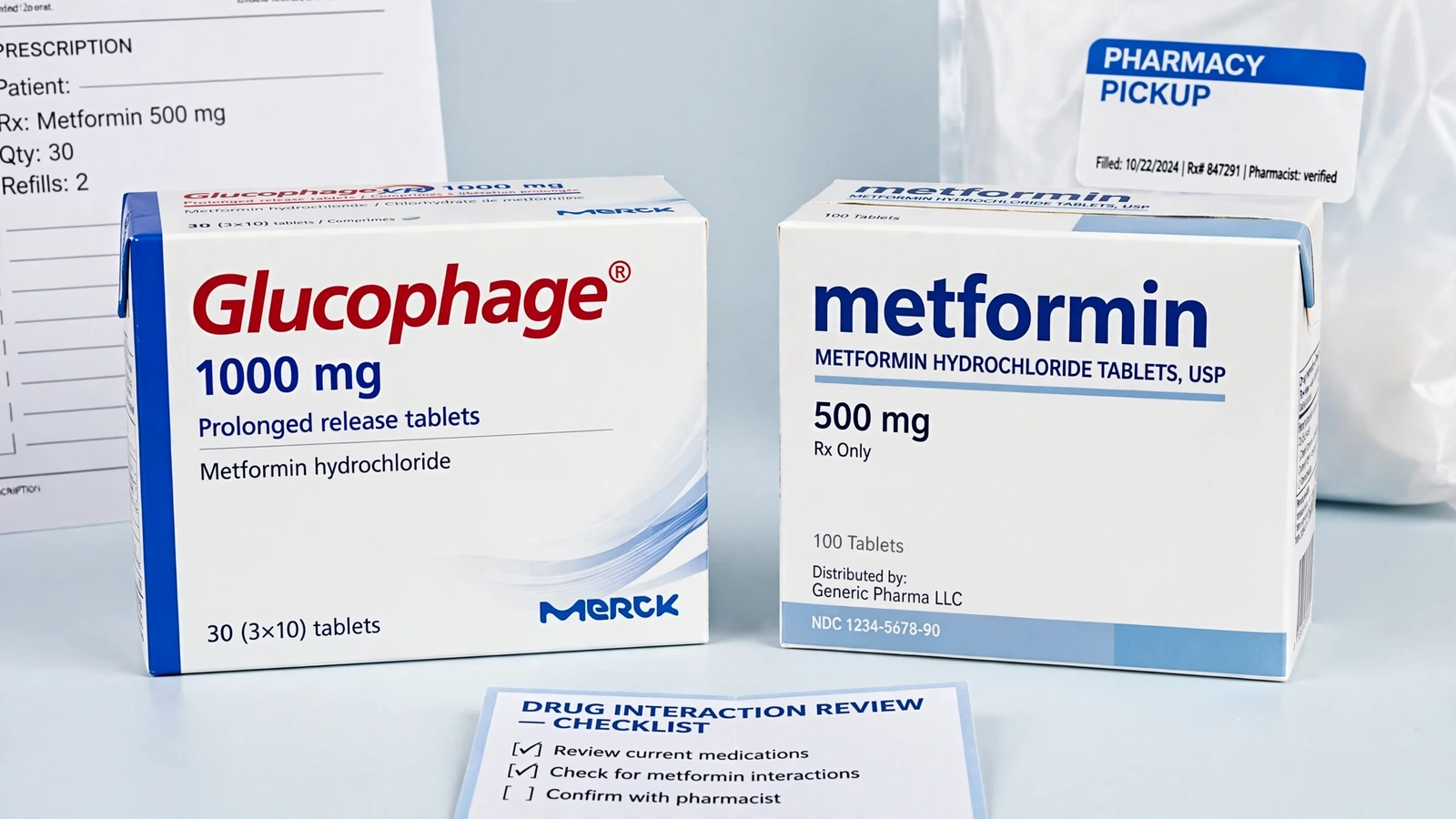
Brand names can hide multiple active ingredients, and combination diabetes tablets can already contain metformin. Record the exact label, strength and directions. Include recent antibiotics, pain medicines, diuretics, contrast exposure, vitamins and herbal products. A partial list can produce a falsely reassuring interaction screen.
Kidney effects create indirect interactions
The metformin label warns that medicines affecting renal function, hemodynamics or metformin accumulation may increase lactic-acidosis risk. The concern may arise through a change in kidney function rather than a direct chemical interaction. Acute illness and dehydration can amplify that context.
Acid-base effects deserve specific attention
Carbonic anhydrase inhibitors can lower serum bicarbonate and cause a non-anion-gap metabolic acidosis. DailyMed identifies this class as a reason for more frequent monitoring when used with metformin. The exact product and indication should be reviewed rather than assuming every medicine in a broad class behaves identically.
Low glucose depends on the whole regimen
Metformin alone generally has a low hypoglycemia risk, but insulin and medicines that increase insulin release can change that risk. Report symptoms and readings with timing, meals, activity and all diabetes medicines. Do not assume metformin is the only relevant product because its name appears in the search.
Alcohol and procedures are part of the list
Excessive alcohol intake can increase the risk of metformin-associated lactic acidosis. Iodinated contrast procedures may require a temporary plan based on kidney function and other factors. Honest disclosure helps the clinician give safer instructions; it is not a reason to hide the request or stop medicine without guidance.
Timing and purpose improve interaction interpretation
List when each product was started, stopped or changed and why it is used. A temporary medicine during infection has a different context from a long-term prescription, and the illness itself may affect hydration or kidney function. Symptom timing can help the pharmacist decide whether the concern is a direct interaction, additive adverse effects, duplicate therapy or the underlying condition.
Use one reconciled list across care settings
Keep one version that includes prescriber, formulation, strength and directions, then update it after urgent care, hospital discharge and specialist visits. Bring it to the pharmacy. If two records conflict, do not choose one by memory; contact the responsible clinician. Medication reconciliation is most useful when the discrepancy is resolved and the reason for the final plan is documented.
Who needs faster review
A new medicine combined with reduced urine output, persistent vomiting, severe diarrhea, marked weakness, breathing difficulty, confusion, repeated low glucose or a planned procedure should not wait for an annual visit. Contact the clinical team promptly or use urgent care according to severity. Stable questions about supplements or routine refills can usually go to the pharmacist or prescriber without emergency care.
Questions readers raise after the main review
Can I use an online interaction checker?
It can help identify questions, but it cannot replace a clinician or pharmacist who knows kidney function, diagnoses, doses, timing and the full regimen.
Do supplements count as metformin interactions?
They belong on the list. Supplements can affect glucose, the gastrointestinal tract, kidneys or other medicines, and product composition can vary.
Does metformin interact with insulin?
The combination may be prescribed, but low-glucose risk can be higher when metformin is used with insulin or insulin-releasing medicines. Follow the monitoring plan.
Why does alcohol matter?
Excessive alcohol intake can increase lactic-acidosis risk. Share the actual pattern with the clinician so the advice is individualized.
Should I stop metformin when an antibiotic is prescribed?
Not automatically. Provide the exact antibiotic, reason for treatment, illness severity, hydration and kidney context to the prescriber or pharmacist.
Primary sources used for this page
- DailyMed: Metformin Hydrochloride Tablets prescribing information. Label updated January 29, 2025; checked August 27, 2026.
- MedlinePlus: Metformin drug information. Revised February 15, 2024; checked August 27, 2026.
Medical information is educational and does not replace diagnosis, prescribing, procedure instructions or emergency care from a clinician who knows the complete record.