

Renal and procedure safety
Metformin Kidney Function and Contrast Decisions
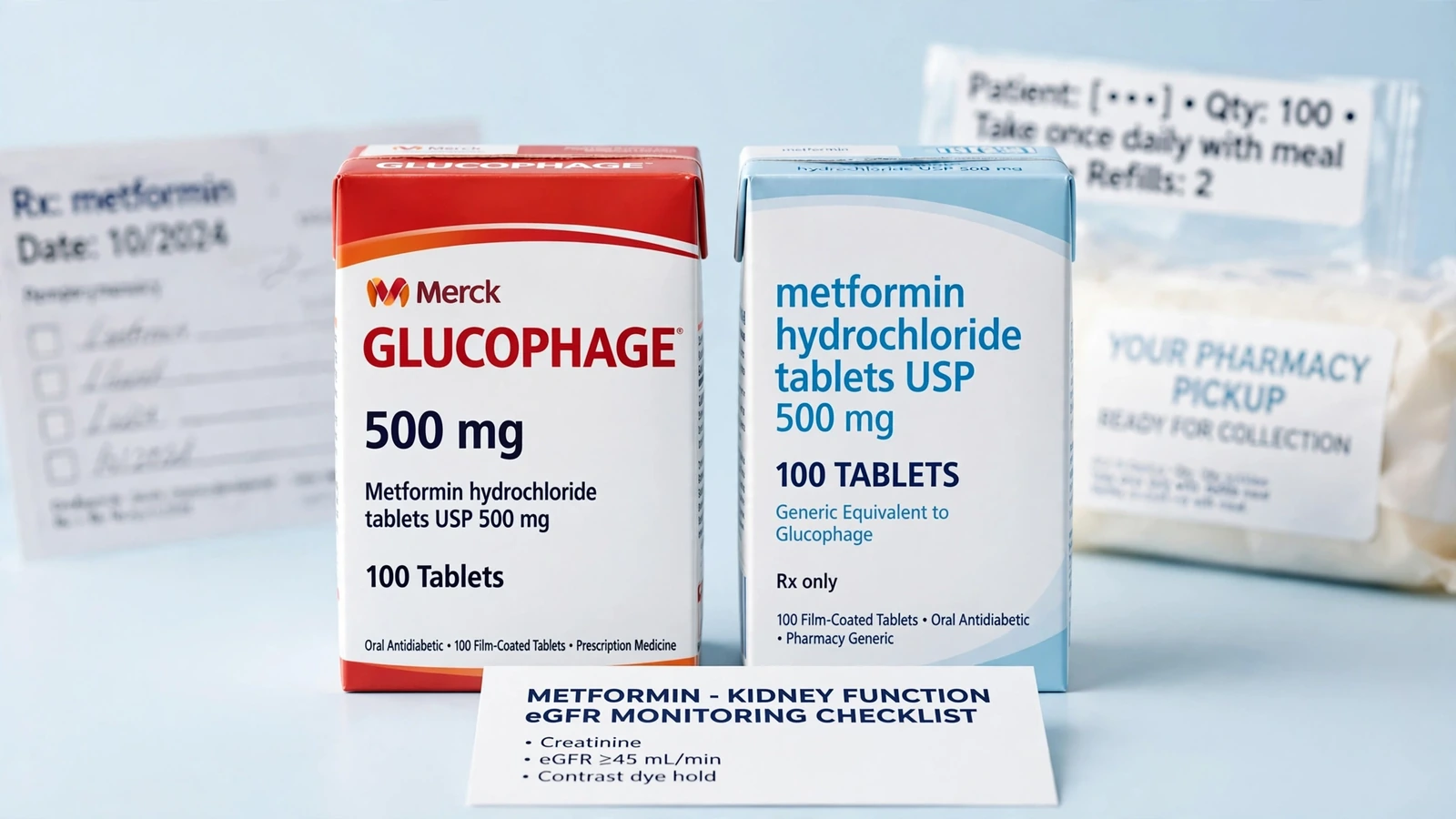
Metformin kidney function review uses estimated glomerular filtration rate, or eGFR, before treatment and periodically afterward. Current labeling says not to use metformin when eGFR is below 30 mL/min/1.73 m² and does not recommend starting it at 30 to 45. Contrast procedures and acute illness require an individualized plan from the responsible clinical team.

Medically reviewed by
General internal medicine and preventive medicine
Medical review completed August 27, 2026
A practical route through this decision
Baseline
Confirm a current eGFR and the clinical setting in which it was measured.
Change
Report dehydration, infection, hospital care, heart failure or new kidney concerns. For more detail on this decision, review Metformin Safety Across Symptoms, Kidneys and Medicines.
Procedure
Give the imaging team the medicine list and follow its hold and restart plan. A related clinical question is covered in Metformin Side Effects and Tolerability Signals.
| eGFR context | Label direction | Clinical task |
|---|---|---|
| Before treatment | Assess renal function | Confirm baseline |
| 30 to 45 | Starting not recommended | Review alternatives |
| Below 30 | Contraindicated | Do not use |
| Falling below 45 | Reassess benefit and risk | Individual review |
Why eGFR is used
The FDA revised metformin warnings to use eGFR because it better represents kidney function than serum creatinine alone. A number still needs context. Age, body size, acute illness, trend and timing can matter, and the person interpreting it must know whether the result is stable or was measured during a changing clinical event.
The label gives boundaries, not a home algorithm
DailyMed states that metformin is contraindicated below an eGFR of 30, that initiation is not recommended between 30 and 45, and that benefits and risks should be reassessed if eGFR later falls below 45. Those statements guide prescribers. They do not authorize a patient to start, stop or restart treatment from a portal result alone.
Acute illness can make an old result less reassuring
Vomiting, diarrhea, fever, reduced fluid intake, serious infection, heart failure or hospital care can change kidney perfusion and overall risk. A result from months earlier may not describe the current situation. Report the illness and medicine list promptly so the team can decide whether testing or a temporary change is needed.
Contrast imaging needs procedure-specific instructions
The label provides conditions in which metformin may need to be stopped at or before iodinated contrast and says kidney function should be reevaluated before restarting in the relevant group. The route of contrast, eGFR and other risk factors matter. The imaging or procedure team must give the exact plan.
Diabetic kidney screening is broader
NIDDK describes blood testing for filtration and urine testing for albumin when screening for diabetic kidney disease. That broader complication screening is not identical to deciding whether metformin is safe on a given day. Both questions belong in diabetes care, but they may require different tests and follow-up.
Bring the right facts to the imaging team
Provide the exact metformin product, last dose, known eGFR result and date, kidney history, recent dehydration or acute illness, heart or liver problems and the type of procedure if known. Do not decide from the word “contrast” alone. The team can identify whether the label’s hold and reassessment conditions apply and document the restart instruction.
A kidney trend can change the broader diabetes plan
Declining filtration may influence more than metformin. Other medicines, blood pressure treatment, hydration advice and diabetic kidney screening may also need review. Keep the renal question connected to the full care plan rather than treating one threshold as the only meaningful outcome.
Questions readers raise after the main review
What kidney test is used for metformin?
Current U.S. labeling uses eGFR. The prescriber interprets the result and trend alongside acute illness and other risk factors.
Can metformin be started with an eGFR of 40?
The current label says initiation is not recommended when eGFR is between 30 and 45 mL/min/1.73 m². A clinician should review the treatment options.
Does every contrast scan require stopping metformin?
No single rule fits every scan. The label identifies situations based on eGFR, route and other risks. Follow the imaging team’s specific instructions.
Is a normal creatinine enough?
The current label uses eGFR rather than serum creatinine alone. The timing and stability of kidney function also matter.
When should metformin symptoms be treated as urgent?
Seek urgent care for trouble breathing, profound weakness, marked sleepiness, feeling unusually cold, persistent vomiting, fainting, confusion, or a slow or irregular heartbeat. These symptoms need direct assessment, especially during dehydration, serious infection, kidney problems, or another acute illness.
Primary sources used for this page
- DailyMed: Metformin Hydrochloride Tablets prescribing information. Label updated January 29, 2025; checked August 27, 2026.
- FDA Drug Safety Communication: metformin and reduced kidney function. Issued April 8, 2016; checked August 27, 2026.
- NIDDK: Diabetic kidney disease. Checked August 27, 2026.
- MedlinePlus: Metformin drug information. Revised February 15, 2024; checked August 27, 2026.
Medical information is educational and does not replace diagnosis, prescribing, procedure instructions or emergency care from a clinician who knows the complete record.