

Acute change planning
Metformin Missed Doses and Sick-Day Decisions
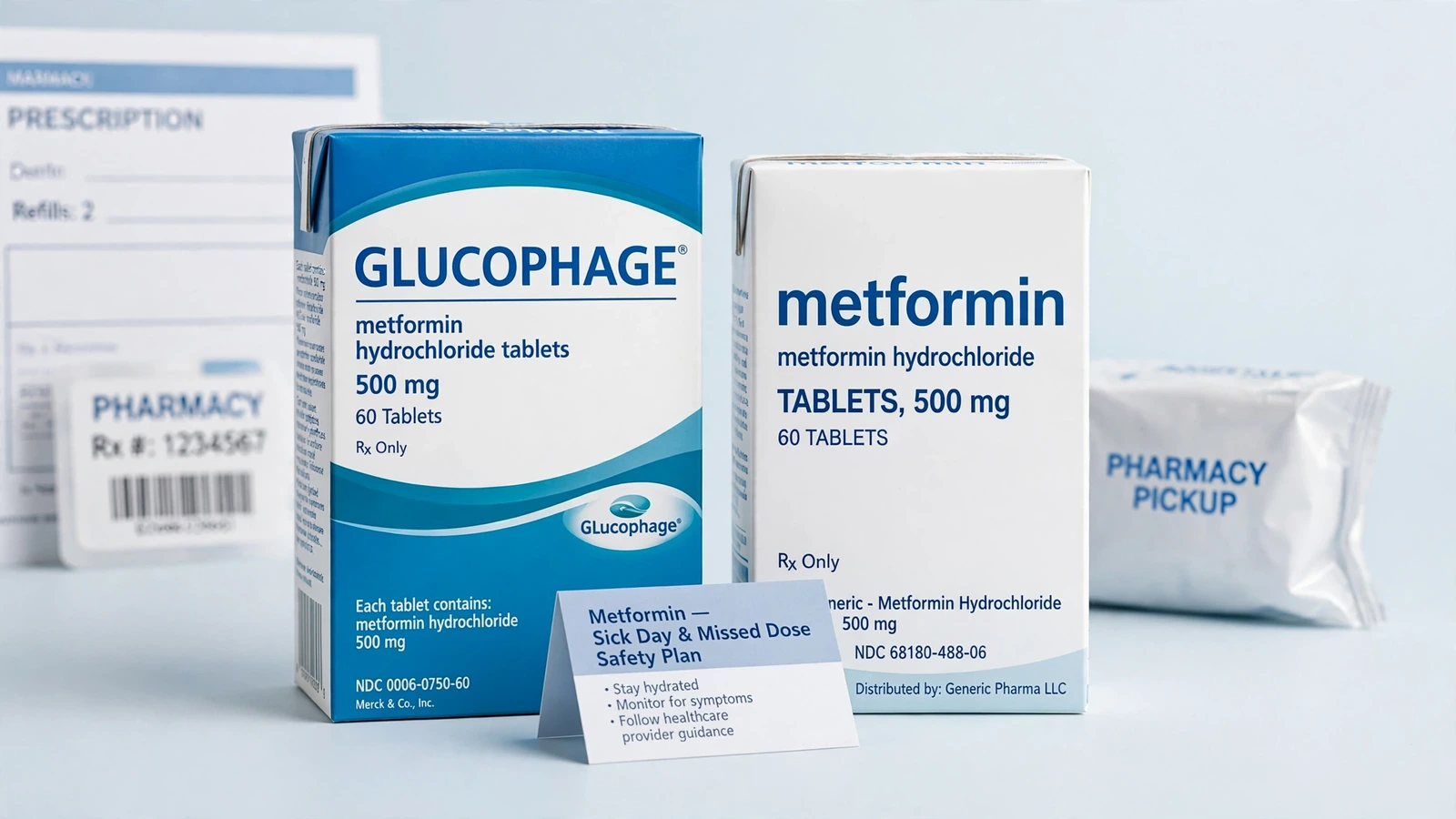
For a metformin missed dose, official patient information says to take it when remembered unless it is almost time for the next dose, then skip it and do not double. Illness is different: vomiting, diarrhea, fever or reduced fluid intake can change kidney safety. Contact the clinical team for an individualized sick-day plan.

Medically reviewed by
General internal medicine and preventive medicine
Medical review completed August 27, 2026
A practical route through this decision
One missed dose
Check the label and how close the next scheduled dose is; never double.
Repeated missed doses
Identify whether symptoms, routine, cost or confusion is causing the pattern. For more detail on this decision, review Metformin Monitoring Through Routine and Acute Changes.
Sick day
Report fluids, vomiting, diarrhea, fever, readings, kidney history and other medicines. A related clinical question is covered in Metformin Monitoring and Follow-Up Records That Matter.
| Situation | Immediate principle | Next contact |
|---|---|---|
| Remembered early | Follow label directions | Pharmacist if unclear |
| Near next dose | Skip; do not double | Resume prescribed plan |
| Vomiting or diarrhea | Assess hydration and severity | Clinical team promptly |
| Confusion or breathing trouble | Possible emergency | Emergency services |
A missed dose is a timing question
MedlinePlus gives a general rule: take the missed dose when remembered unless it is almost time for the next one, in which case it should be skipped. Do not take a double dose. The actual schedule and formulation still matter, so the prescription label or pharmacist is the best source when timing is unclear.
Repeated misses point to a system problem
One forgotten dose and a recurring pattern need different responses. Repeated misses can arise from gastrointestinal symptoms, an inconvenient schedule, refill delays, cost, shift work, unclear formulation or memory problems. Record the pattern and reason. Solving the cause is safer than repeatedly improvising how to “catch up.”
Illness can change kidney risk
Serious infection, severe diarrhea, vomiting, fever or markedly reduced fluid intake can increase dehydration and alter kidney function. Official patient information tells people to contact their clinician in these situations. A plan may depend on current kidney status, other medicines, glucose readings and the severity of illness.
Sick-day instructions must be individualized
A generic list cannot determine whether a person should pause or continue metformin during every illness. The clinical team needs to know fluid intake, urine output, vomiting or diarrhea, fever, glucose and ketone information if part of the existing plan, kidney disease, pregnancy and other medicines. Ask for written instructions before the next illness when possible.
Know the emergency boundary
Confusion, fainting, trouble breathing, profound weakness, marked sleepiness, feeling unusually cold, persistent vomiting or severe glucose symptoms should not wait for a portal reply. Use urgent or emergency care. A person who cannot keep fluids down or is rapidly worsening also needs direct assessment.
Build the plan before the next illness
At a stable visit, ask whom to contact after hours, which symptoms require urgent care, what glucose or ketone information to collect if already part of the plan, and how other diabetes medicines are handled. Write the answer in plain language. Preparation reduces the chance of using a generic internet rule during a stressful illness.
Restart decisions need a clear endpoint
If the clinical team advises a temporary hold, ask what must happen before restarting: improved intake, resolved vomiting, a kidney result, a procedure-team message or another specific condition. Record who will confirm it. Do not let “hold for now” become an indefinite gap or an automatic restart without the expected check.
Questions readers raise after the main review
What should I do after one missed metformin dose?
Take it when remembered unless it is almost time for the next dose. If it is close, skip the missed dose. Do not double. Follow the product label and pharmacist instructions.
Should I take metformin if I am vomiting?
Vomiting can cause dehydration and change kidney safety. Contact the clinical team promptly for individualized instructions, and seek urgent care if symptoms are severe or fluids cannot be kept down.
Can I restart metformin when I feel better?
Follow the plan given by the responsible clinician. The right time can depend on hydration, kidney function, the illness and other medicines.
What should a sick-day note include?
Record vomiting, diarrhea, fever, fluid intake, urine changes, glucose information requested by the care team, other medicines and the time of the last metformin dose.
When should metformin symptoms be treated as urgent?
Seek urgent care for trouble breathing, profound weakness, marked sleepiness, feeling unusually cold, persistent vomiting, fainting, confusion, or a slow or irregular heartbeat. These symptoms need direct assessment, especially during dehydration, serious infection, kidney problems, or another acute illness.
Primary sources used for this page
- MedlinePlus: Metformin drug information. Revised February 15, 2024; checked August 27, 2026.
- DailyMed: Metformin Hydrochloride Tablets prescribing information. Label updated January 29, 2025; checked August 27, 2026.
Medical information is educational and does not replace diagnosis, prescribing, procedure instructions or emergency care from a clinician who knows the complete record.