

Long-term follow-up
Metformin Monitoring and Follow-Up Records That Matter
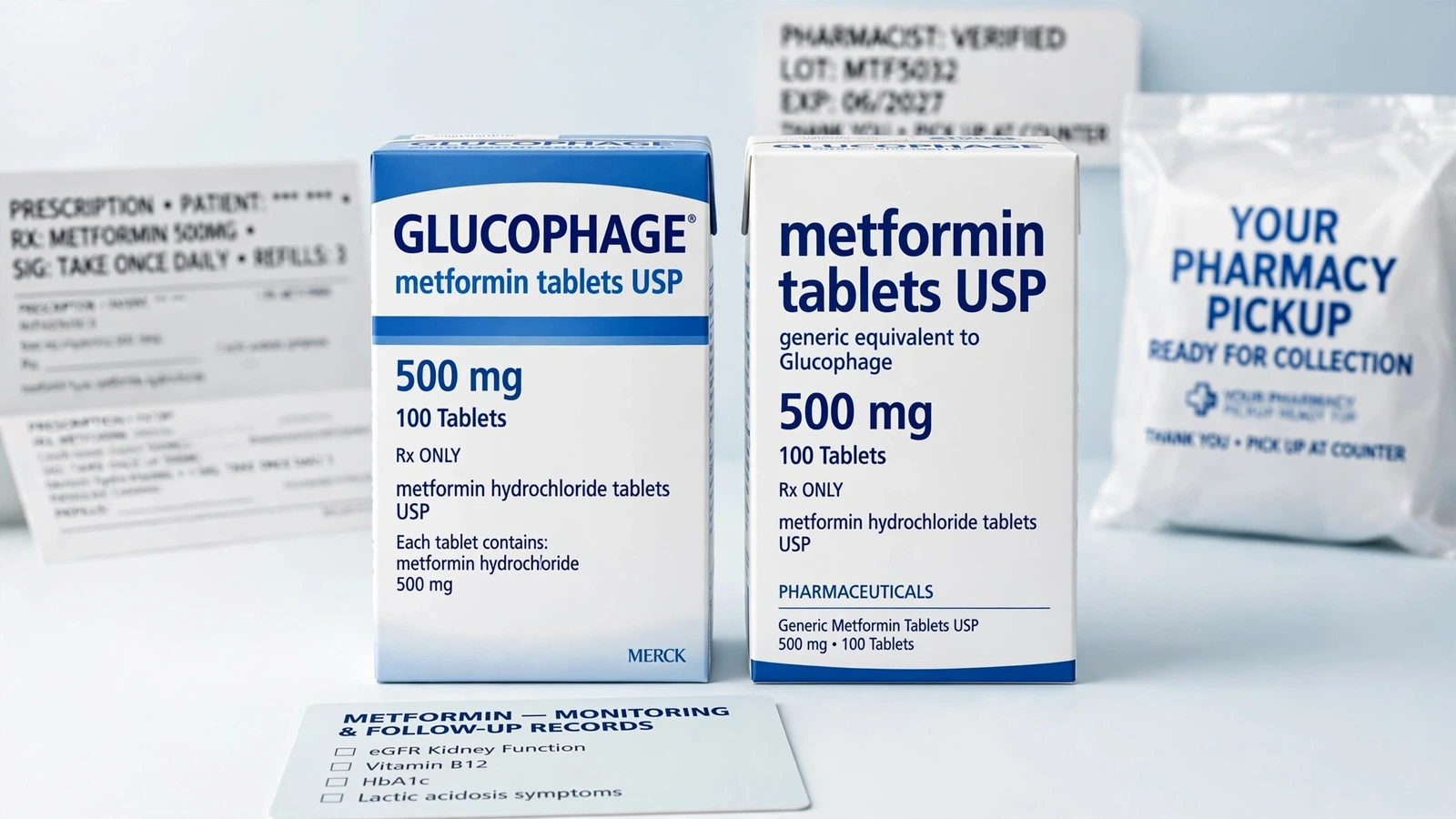
Metformin monitoring and follow-up should connect kidney trends, glucose response, side effects, vitamin B12 concerns, medication changes and recent procedures. Bring the actual prescription details and the records requested by the care team. The goal is to decide whether the plan remains safe, useful and practical, not simply to renew the same tablet.

Medically reviewed by
General internal medicine and preventive medicine
Medical review completed August 27, 2026
A practical route through this decision
Before the visit
Collect labels, results, readings, symptoms, recent care and upcoming procedures.
During the review
Connect each finding to a safety, response or access question. For more detail on this decision, review Metformin Monitoring Through Routine and Acute Changes.
After the visit
Confirm the formulation, directions, monitoring plan and who owns the next step. A related clinical question is covered in Metformin Missed Doses and Sick-Day Decisions.
| Record | Question answered | Common gap |
|---|---|---|
| eGFR trend | Is renal context stable? | Old result only |
| A1C | How has average glucose changed? | No target context |
| Symptom timeline | Is tolerability changing? | No dates |
| Refill history | Is access interrupting use? | Hidden rationing |
A follow-up should close open loops
If a prior visit ordered kidney testing, changed the formulation, discussed gastrointestinal effects or set a glucose-monitoring plan, begin by checking whether that action happened and what it showed. An unresolved task can make the next prescription decision less safe. Write down who will review new results and when.
Kidney trends matter more than an isolated label
The prescribing information requires renal assessment before and periodically during treatment. Bring the actual eGFR result and date if available. Note illness, dehydration, hospital visits, heart failure or new medicines around the test, because a changing clinical setting can alter interpretation.
A1C needs an individualized goal
A1C helps describe average glucose over several months, but goals differ and the test can be less reliable in some conditions. Pair it with symptoms, adherence, requested home readings, other diabetes medicines and significant health changes. A number without context can lead to the wrong explanation.
Symptoms need dates and consequences
Record diarrhea, nausea, appetite change, fatigue, numbness, tingling or other concerns with start date, frequency and effect on food or fluid intake. Add any self-directed skipped doses. This helps the team decide whether the issue is formulation, adherence, dehydration, vitamin B12, another medicine or an unrelated condition.
Access problems belong in the medical record
A delayed refill, insurance denial, changed pharmacy or unclear product can interrupt therapy. Tell the team rather than rationing silently. Bring a photograph or label of the dispensed product if the formulation is uncertain. The follow-up should document the practical fix and the clinical implications.
Follow-up should produce a usable summary
At the end of the review, confirm the exact metformin formulation and directions, which laboratory or home data will be collected, the date or condition for the next review, and the symptoms that require earlier contact. Record any access problem and who will solve it. A summary turns scattered information into continuity and gives the next clinician a reliable starting point.
Do not let normal results erase symptom review
A stable A1C or eGFR does not automatically explain fatigue, numbness, gastrointestinal symptoms or recurrent low readings in a combined regimen. Laboratory results and symptoms answer different questions. Continue the clinical assessment when the person’s experience and the measured trend do not align.
Questions readers raise after the main review
What labs are used in metformin follow-up?
Kidney function is central. A1C and glucose data may assess response, while vitamin B12 testing can be considered based on symptoms and risk. The clinician chooses the plan.
Should I bring my glucose meter?
Bring the meter, app report or written readings if the care team requested them. Include dates, timing, meals, symptoms and missed medicines when relevant.
Why record the metformin formulation?
Immediate-release and extended-release products have different directions and handling. The exact formulation helps interpret symptoms and adherence.
Can follow-up be only a refill request?
A refill may be straightforward, but the review still needs enough information to confirm safety, response and continuity. Missing records or health changes may require more assessment.
Why can vitamin B12 appear in metformin follow-up?
The current prescribing information notes that metformin can lower vitamin B12 levels in some people. Symptoms and risk factors influence whether testing is appropriate. Fatigue, numbness, tingling, anemia, diet, and treatment duration deserve context rather than an automatic supplement recommendation.
Primary sources used for this page
- DailyMed: Metformin Hydrochloride Tablets prescribing information. Label updated January 29, 2025; checked August 27, 2026.
- MedlinePlus: Metformin drug information. Revised February 15, 2024; checked August 27, 2026.
- NIDDK: The A1C test and diabetes. Checked August 27, 2026.
- NIDDK: Diabetic kidney disease. Checked August 27, 2026.
Medical information is educational and does not replace diagnosis, prescribing, procedure instructions or emergency care from a clinician who knows the complete record.