

Condition and use guide
Sildenafil for Erectile Dysfunction: Evaluation and Use
Sildenafil can help some adults with erectile dysfunction by supporting penile blood flow during sexual stimulation. It does not cure the underlying cause or increase desire. A useful evaluation reviews the symptom pattern, cardiovascular health, medicines, contraindications, and personal goals before deciding whether a prescription or a broader workup is appropriate.

Medically reviewed by
Urology and men’s health · erectile dysfunction and male reproductive health
Medical review completed August 27, 2026
Erectile dysfunction is the repeated difficulty getting or keeping an erection sufficient for sexual activity. It is common, but it is not one single diagnosis with one automatic treatment. Sildenafil may be part of care after a clinician considers the pattern, relevant conditions, medicine effects, and safety of sexual activity. This guide organizes the evaluation and use questions without turning educational information into an individual prescription.
Start with the pattern, not a label
A clinician may ask whether the change was sudden or gradual, whether it happens every time or only in certain settings, and whether erections still occur during sleep or on waking. Changes in desire, ejaculation, penile shape, pain, mood, sleep, alcohol use, and relationship context can add useful context. These questions are not a test of masculinity; they help identify which medical and personal factors require attention.
Duration and impact matter as well. A transient episode during stress is different from a persistent pattern that is worsening. Documenting what changed and when can make a short appointment more productive. It also reduces the temptation to treat every poor response as proof that a higher sildenafil dose is needed.
Why the health review reaches beyond sexual function
Blood-vessel, nerve, hormone, medication, and psychological factors can contribute to erectile dysfunction. Diabetes, hypertension, lipid disorders, cardiovascular disease, kidney disease, neurologic conditions, pelvic treatment, and tobacco use may be relevant. Erectile symptoms can sometimes bring an adult into care before other concerns have been addressed, so a responsible review does not isolate the symptom from overall health.
The clinician may recommend blood-pressure measurement, physical examination, or selected laboratory work based on history and findings. Not every person needs the same tests. Online care may be appropriate for some situations, while new chest symptoms, significant exercise intolerance, penile pain or curvature, neurologic changes, or complex disease may support an in-person assessment.
How sildenafil supports an erection
Sildenafil inhibits phosphodiesterase type 5, helping preserve a signaling pathway that relaxes smooth muscle and supports blood flow in erectile tissue during sexual stimulation. It does not trigger an erection without arousal. It also does not correct low desire, relationship conflict, severe anxiety, untreated endocrine problems, or vascular disease by itself. Explaining that distinction can prevent unrealistic expectations.
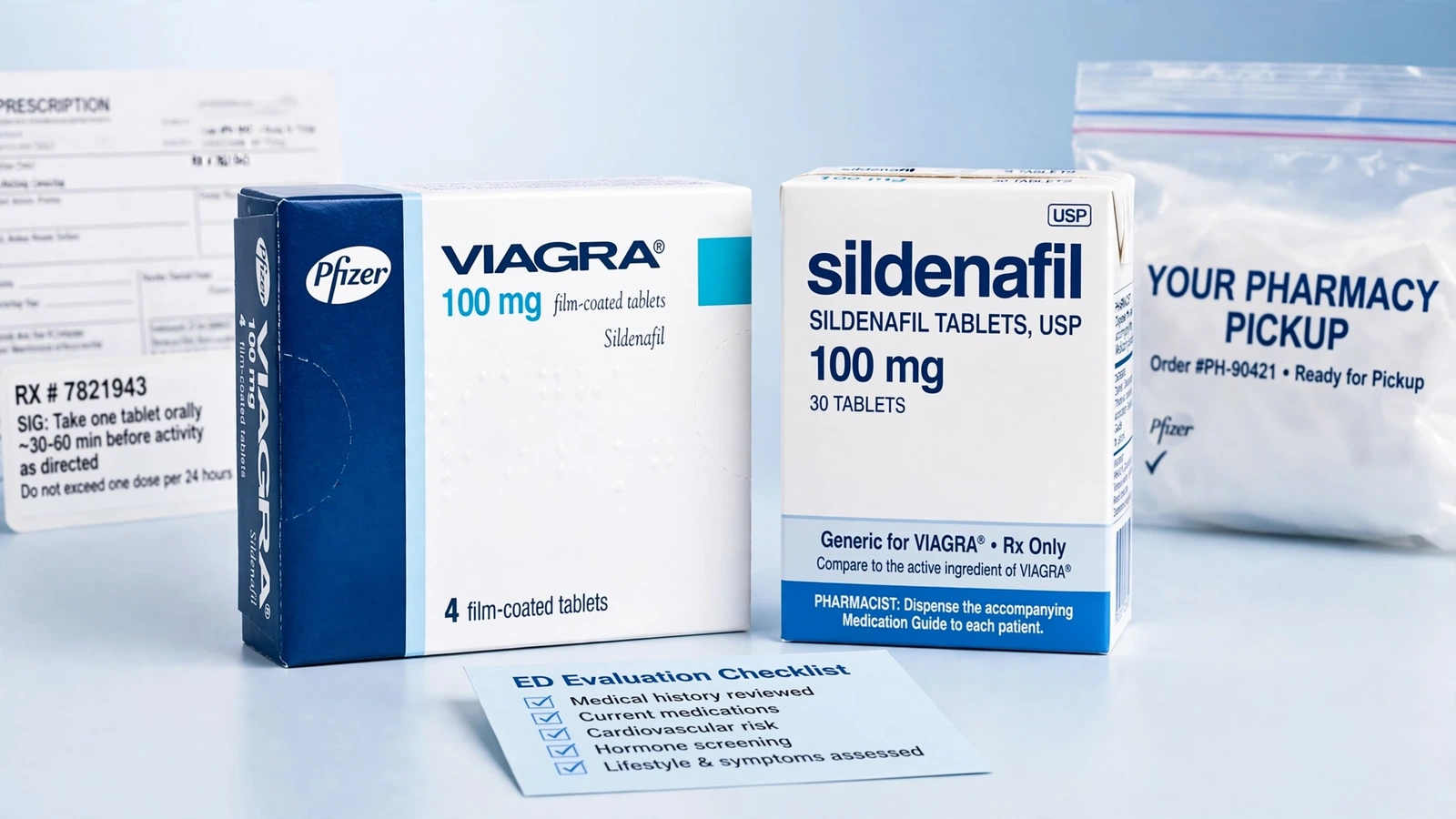
The same active ingredient is used in products for pulmonary arterial hypertension, but that is a different indication with different dosing and clinical management. This topic collection covers adult erectile dysfunction only. Patients should not interchange Viagra, generic sildenafil, Revatio, or other sildenafil products unless the prescriber and pharmacist have verified the exact indication and instructions. For more detail on this decision, review Review the existing sildenafil prescription article.
What affects the treatment discussion
The prescription decision includes cardiovascular fitness for sexual activity, blood pressure, kidney and liver function, age-related considerations, prior response, and concurrent medicines. Nitrates and riociguat are contraindicated. Alpha-blockers, antihypertensives, CYP3A inhibitors, and other erectile-dysfunction medicines can change risk or exposure. A complete medicine list is therefore part of the erectile-dysfunction evaluation, not administrative paperwork.
Some conditions increase concern about prolonged erections or vision problems. A history of sickle cell disease, multiple myeloma, leukemia, penile deformity, retinitis pigmentosa, or prior sudden vision loss should be disclosed. The clinician uses those details to interpret labeling and individual risk; a consumer checklist cannot make that decision.
| Review area | Examples | Possible next step |
|---|---|---|
| Symptom pattern | Onset and consistency | Clarify goals |
| Health context | Heart and metabolic health | Measure or test |
| Medicine review | Nitrates and interactions | Change plan safely |
| Response | Use and side effects | Reassess treatment |
Using a prescription as directed
Follow the exact label from the prescriber and pharmacy. MedlinePlus notes that sildenafil for erectile dysfunction is commonly taken as needed before sexual activity and should not be taken more often than directed. Food, particularly a high-fat meal, may delay onset. That general information is not permission to choose a dose, change timing, or repeat a tablet outside the prescription.
Allow for sexual stimulation and a realistic context. Anxiety about a clock can interfere with the experience, but taking extra medicine creates avoidable risk. If directions are unclear, ask the pharmacist. If several properly used attempts do not meet the treatment goal, return to the clinician with specific notes rather than silently escalating.
When response is incomplete
A disappointing response may reflect use, expectations, an underlying condition, medicine interactions, or a need to reconsider the diagnosis. Note meal timing, stimulation, side effects, erection quality, and whether the medicine was obtained from a licensed pharmacy. Counterfeit or degraded products are another reason not to buy from an unverified seller.
The next step may be education, a prescription adjustment, addressing a contributing condition, changing medicines that impair sexual function when clinically appropriate, counseling, a different PDE5 inhibitor, a device, or specialist evaluation. No alternative is automatically best. The decision should reflect safety, preferences, cost, and the reason the first plan fell short.
Prescription pathway
See how a clinician review and licensed pharmacy fit together before sildenafil is dispensed.
ED evaluation
Use the preserved evaluation article for a deeper discussion of history, examination, and testing context.
Response review
Learn which use and health factors can be reviewed when sildenafil does not work as expected. A related clinical question is covered in Understand erectile-dysfunction evaluation.
Sexual health and communication
Erectile dysfunction can create avoidance, embarrassment, and pressure for both partners. Clear communication can reduce the idea that every sexual encounter is a test of the medicine. Some people benefit from involving a partner in the treatment discussion, while others prefer privacy. The important point is that clinical care recognizes personal goals without promising a specific performance outcome.
Sildenafil does not protect against sexually transmitted infections or pregnancy. Safer-sex planning remains separate. Changes in desire, pain, mood, or relationship safety should be addressed directly rather than treated as an erection-only problem.
Know the urgent boundary
Chest pain, collapse, severe breathing difficulty, sudden vision loss, sudden hearing decrease or loss, or a painful erection lasting more than four hours requires urgent or emergency assessment. These are not symptoms to manage by changing the next dose. Tell emergency clinicians that sildenafil was used and when, because nitrate treatment for chest pain can be dangerous after sildenafil.
Common effects can still be disruptive. Headache, flushing, indigestion, nasal congestion, nausea, dizziness, light sensitivity, and color-vision changes should be discussed if severe or persistent. Do not assume that a new symptom is harmless because it appears on a common-effects list.
Prepare for an erectile-dysfunction review
- Write when the change began.
- Describe the pattern without guessing its cause.
- List all medicines and supplements.
- Record heart, blood-pressure, and eye history.
- Bring questions about goals and alternatives.
Questions people ask
Does sildenafil cure erectile dysfunction?
No. It can support erectile response during sexual stimulation but does not cure the underlying cause or increase desire.
Is an in-person examination always required?
Not always, but the need depends on symptoms, medical complexity, available measurements, and clinician judgment. Some findings require in-person assessment.
Can a poor response prove that the dose is too low?
No. Use, food, stimulation, expectations, medicine quality, interactions, and underlying health can all affect response. Discuss the pattern before changing a prescription.
Can sildenafil be used with another ED medicine?
Do not combine PDE5 inhibitors or other erectile-dysfunction treatments unless the prescribing clinician explicitly coordinates the plan.
Primary sources
- DailyMed prescribing information
- MedlinePlus sildenafil information
- AUA erectile dysfunction guideline
Sources were reviewed on August 27, 2026. External sources open in a new tab.
This educational page does not diagnose erectile dysfunction, determine whether sildenafil is appropriate, or replace individualized care. Sildenafil for erectile dysfunction is prescription medicine. A qualified clinician and licensed pharmacist should review your health history, current medicines, and the product you receive.