

Safety and tolerability guide
Metformin Safety Across Symptoms, Kidneys and Medicines
Metformin safety depends on more than stomach symptoms. The review must separate common gastrointestinal effects from urgent warning signs, check kidney function, account for acute illness and procedures, and examine every prescription, over-the-counter product and supplement. This guide routes each issue to a focused article without offering a personal dose change.

Medically reviewed by
General internal medicine and preventive medicine
Medical review completed August 27, 2026
A practical route through this decision
Pattern and timing
Describe when symptoms began, whether they recur and how they relate to meals or a product change.
Risk context
Add kidney results, dehydration, infection, alcohol, liver or heart problems, procedures and current medicines. For more detail on this decision, review Buy Metformin Online After a Prescription Safety Review.
Response level
Separate self-limited discomfort, same-day clinical questions and emergency warning signs. A related clinical question is covered in Metformin Side Effects and Tolerability Signals.
| Context | Review focus | Care route |
|---|---|---|
| New stomach symptoms | Timing, hydration, formulation | Prescriber or pharmacist |
| Kidney change | eGFR and acute illness | Prompt clinical review |
| Contrast procedure | Procedure and renal risk | Procedure team plan |
| Severe warning signs | Breathing, weakness, confusion | Urgent assessment |
Common does not mean irrelevant
Diarrhea, nausea, stomach discomfort, gas and indigestion appear in official patient information. Their timing and severity matter. Mild symptoms that settle are different from repeated vomiting, inability to keep fluids down, severe abdominal symptoms or signs of dehydration. A useful message gives the start date, formulation, recent changes, meals, fluid intake and effect on daily function.
The boxed warning needs calm, specific language
The metformin label carries a boxed warning for metformin-associated lactic acidosis, a rare but serious emergency. Risk factors include renal impairment, certain medicines, older age, contrast studies, surgery, hypoxic states, excessive alcohol intake and hepatic impairment. The warning is not a reason for panic or self-discontinuation. It is a reason to recognize symptoms and keep risk information current.
Kidney function is a moving safety variable
A historic normal result is useful but not permanent. Severe vomiting, diarrhea, fever, reduced fluid intake, serious infection, heart failure or another acute event can alter renal function and metformin risk. Current labeling uses eGFR for decisions. The prescriber interprets the number, its trend and the immediate clinical setting rather than relying on a single copied value.
Procedures can temporarily change the plan
Iodinated contrast imaging, surgery and restricted food or fluid intake are not routine missed-dose situations. Official information tells patients to inform the responsible clinician that they take metformin. The procedure team decides whether it should be held and when it can be restarted. Generic web instructions cannot account for kidney function, contrast route or procedural risk.
Interactions include effects on organs and physiology
A safety review is broader than searching for two drug names in an interaction checker. The label highlights medicines that affect kidney function, hemodynamics, acid-base balance or metformin accumulation. Carbonic anhydrase inhibitors and some other products may require closer review. Alcohol pattern also matters because excessive intake can increase lactic-acidosis risk.
Low blood glucose needs the whole regimen
Metformin used alone generally has a low hypoglycemia risk, but that statement cannot be applied to a person taking insulin or medicines that increase insulin release. Low readings or symptoms should be interpreted against the full diabetes regimen, meal pattern, activity and illness. Do not respond by randomly stopping one medicine without knowing which part of the regimen is driving the problem.
Common safety mistakes
Do not hide nonprescription products, ignore a planned scan, assume every stomach symptom is harmless, use an old kidney result after a major illness, or restart after a procedure without the responsible clinician’s instructions. Avoid treating “natural” supplements as interaction-free. The medication list should include vitamins, minerals and herbal products.
Focused pages reduce alarm and ambiguity
The linked articles separate gastrointestinal tolerability, kidney and contrast decisions, and interaction review. Each article provides the facts needed for a safer conversation. None replaces the clinician who can see laboratory results, diagnoses and the entire treatment plan.
Formulation and dispensing changes can mimic a new clinical problem
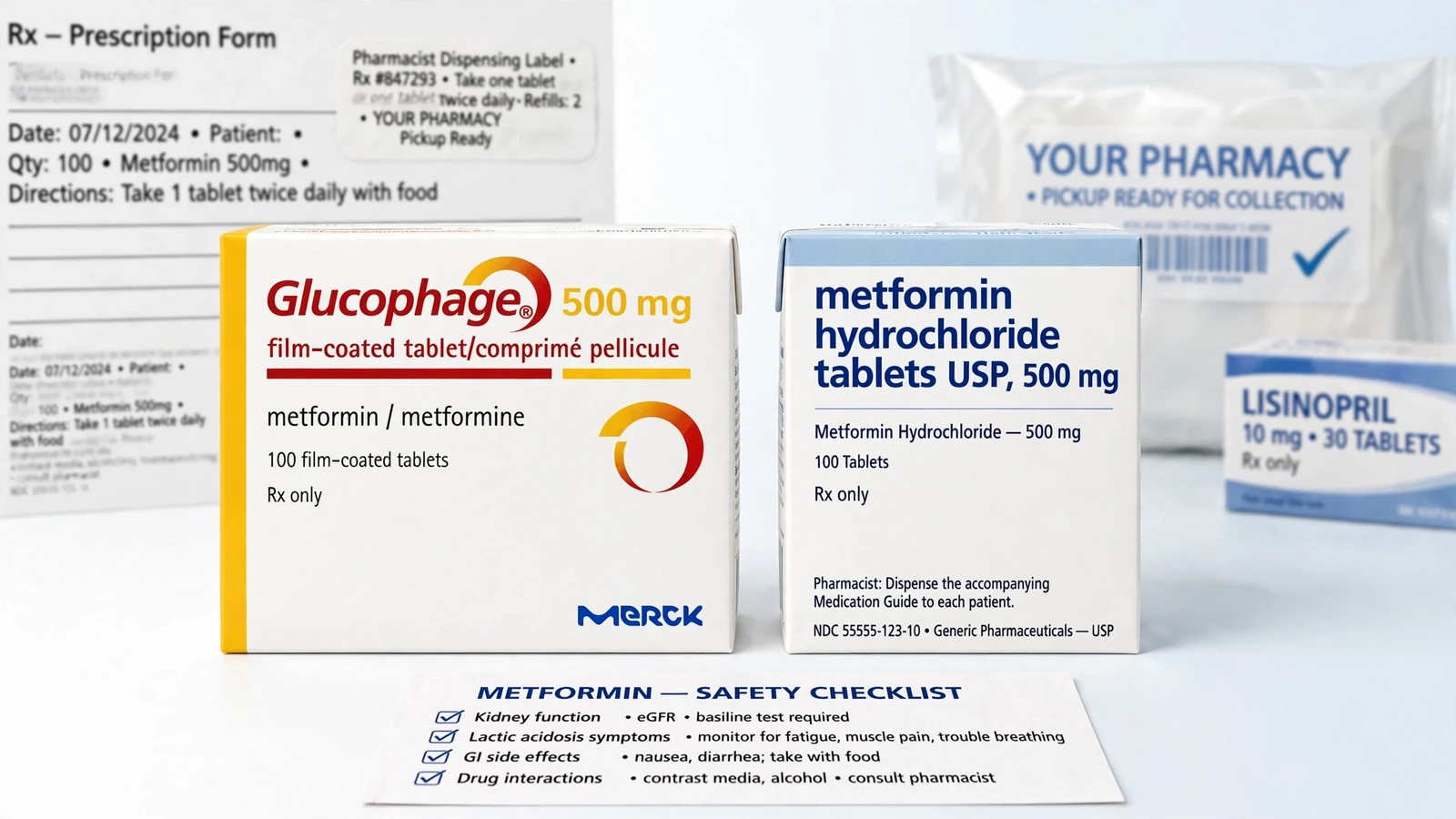
A refill may arrive from a different manufacturer or in a different release form only when the prescription and substitution rules support it. When symptoms change after a refill, compare the old and new labels, not tablet appearance alone. Confirm immediate-release versus extended-release, strength, directions and inactive ingredients with the pharmacist. This does not prove the product caused the symptom, but it gives the clinical team a concrete timeline to evaluate.
The safest advice matches the level of urgency
Routine questions include mild, stable effects that do not limit food or fluid intake. Prompt clinical contact is appropriate for persistent symptoms, new kidney concerns, reduced intake, repeated low readings in a combined regimen or uncertainty before a procedure. Emergency assessment belongs to breathing difficulty, fainting, confusion, profound weakness or another rapidly worsening systemic problem. Naming the route prevents both unsafe delay and unnecessary alarm.
Risk communication should not become a promise
Most users will not experience every warning in the label, yet no page can declare metformin safe for everyone. A balanced explanation names common effects, rare urgent risks, and the factors that increase concern. It also explains what information reduces uncertainty. The decision remains individualized because two people with the same symptom can have different kidney function, medicines, hydration and acute-illness context.
Document the advice that resolves the concern
After a safety question is reviewed, record whether treatment continues, changes, pauses for a specific reason or needs testing. Include the person responsible for follow-up. Clear documentation prevents an old temporary instruction from being reused during a different illness or procedure. Keep the final instruction with the current medicine list and pharmacy label.
Questions readers raise after the main review
Are all metformin side effects stomach-related?
No. Gastrointestinal effects are common, but official information also covers vitamin B12 reduction, skin reactions and the rare emergency of lactic acidosis. New or severe symptoms should be assessed in context.
Does normal kidney function remove every metformin risk?
No. It addresses one important factor. Acute illness, dehydration, certain medicines, contrast procedures, liver impairment, hypoxic states and excessive alcohol intake can still change the safety discussion.
Can an interaction checker replace a medication review?
No. A complete review considers prescription medicines, nonprescription products, supplements, kidney function, acid-base effects, current illness and the reason each product is used.
Is diarrhea a reason to stop metformin immediately?
Not always. Mild gastrointestinal effects can occur, but persistent or severe diarrhea can cause dehydration and needs clinical advice. Do not make a permanent treatment change without discussing severity, duration and other symptoms.
When should metformin symptoms be treated as urgent?
Seek urgent care for trouble breathing, profound weakness, marked sleepiness, feeling unusually cold, persistent vomiting, fainting, confusion, or a slow or irregular heartbeat. These symptoms need direct assessment, especially during dehydration, serious infection, kidney problems, or another acute illness.
Why can vitamin B12 appear in metformin follow-up?
The current prescribing information notes that metformin can lower vitamin B12 levels in some people. Symptoms and risk factors influence whether testing is appropriate. Fatigue, numbness, tingling, anemia, diet, and treatment duration deserve context rather than an automatic supplement recommendation.
Primary sources used for this page
- DailyMed: Metformin Hydrochloride Tablets prescribing information. Label updated January 29, 2025; checked August 27, 2026.
- MedlinePlus: Metformin drug information. Revised February 15, 2024; checked August 27, 2026.
- FDA Drug Safety Communication: metformin and reduced kidney function. Issued April 8, 2016; checked August 27, 2026.
Medical information is educational and does not replace diagnosis, prescribing, procedure instructions or emergency care from a clinician who knows the complete record.