
Pharmacy identity and fulfillment
A fluconazole prescription should be filled only after the pharmacy’s identity, license, prescription process, pharmacist access, and dispensing records have been checked. A polished website, low quote, or license logo is not enough. Verify the legal business in an official state record, then match that record to the pharmacy handling the prescription and package.
Pharmacy verification is one stage of fluconazole access after a prescribing decision, alongside cost, coverage and product-identity questions. This page begins after a clinician has decided that a fluconazole prescription is appropriate. It does not diagnose symptoms, select a regimen, or replace instructions from the prescriber and dispensing pharmacist.
The minimum record
Collect six facts before relying on the pharmacy
The FDA’s BeSafeRx program advises patients to use a pharmacy that requires a prescription, provides a way to contact a licensed pharmacist, and holds the appropriate state pharmacy license. Those facts should be collected from separate records rather than accepted as one website claim.
- Legal business name: copy the name shown in the official state board record, including any distinct operating or doing-business-as name.
- License status: confirm that the pharmacy license is current in the state where the pharmacy says it operates and note the board’s verification date.
- Physical address and telephone: compare the state record with the website, prescription communications, payment receipt, and package label.
- Prescription requirement: the pharmacy should obtain a valid prescription rather than offering to substitute a questionnaire, payment, or membership for a prescribing decision.
- Licensed pharmacist access: record how a patient can ask a medication or dispensing question and whether that route reaches the dispensing pharmacy.
- Order and label match: preserve the order confirmation, shipping record, pharmacy label, package identifiers, and counseling information for comparison.
A license search is strongest when it is performed independently. Navigate to the relevant state board of pharmacy through an official state government site, search the legal name, and save the result with the date. Do not rely on a badge that links only to a marketing page or on a screenshot supplied by the seller.
Match every pharmacy claim to independent evidence
The same business identity should continue from the license record through dispensing. Small wording differences can be legitimate, but a different company, address, telephone number, or pharmacy name needs an explanation before any medicine is used.
| Claim to verify | Independent record | What should match | Reason to pause |
|---|---|---|---|
| Licensed pharmacy | State board license lookup | Legal name, address, status, license number | No record, expired status, or another business |
| Prescription dispensing | Prescriber’s order and pharmacy intake | Patient, medicine, form, strength, quantity, directions | Medicine offered without a prescription or changed without confirmation |
| Pharmacist availability | Published contact route tested by the patient | Pharmacy identity and dispensing question | Only sales support answers or no pharmacist route exists |
| Payment recipient | Checkout and dated receipt | Licensed business or disclosed authorized processor | Unexplained individual, unrelated company, or changing payee |
| Dispensed package | Pharmacy label, sealed product, and order record | Dispensing pharmacy, prescription details, identifiers, condition | Missing label, broken seal, damage, or unexplained mismatch |
Confirm the full amount before payment
After confirming the pharmacy’s identity and license, the costs to confirm before payment help explain why a quoted amount may not be final.
Ask the licensed pharmacy to separate the medication charge from delivery, service, membership, or processing fees. Confirm which business will appear on the receipt, whether insurance will be submitted, and whether the quoted amount applies to the exact prescription. A payment request should not conceal the dispensing pharmacy or change the product details already approved.
Record the date and terms of the quote before paying. A refund policy cannot make an unlicensed dispenser safe, and a verified license cannot guarantee a particular price, stock level, or arrival date. Licensing evidence and total-cost evidence answer different questions.
Verify the business before checking the package
Following one sequence reduces the chance that a convincing website substitutes for evidence. Keep screenshots or downloaded records with dates, but repeat the official license lookup if substantial time passes or the business details change.
-
Identify the dispenser
Ask for the legal pharmacy name, physical address, state, telephone number, and license number before submitting payment. If another business operates the website or processes payment, record that relationship separately.
-
Search the state record
Use the official board of pharmacy lookup for the state in which the pharmacy claims to operate. Confirm active status and compare every available identifying field rather than stopping at a similar name.
-
Test the prescription process
Confirm that the pharmacy receives the valid prescription and offers access to a licensed pharmacist. A pharmacy may clarify dispensing details, but it should not invent or change the prescribing decision.
-
Inspect the fulfillment record
When the package arrives, compare the label, medicine details, dispensing pharmacy, order number, seal, and counseling information with the records already collected. Resolve discrepancies before use.
Match the product name and formulation
The DailyMed prescribing information identifies fluconazole as a prescription medicine and contains its contraindications, warnings, adverse reactions, interaction information, pregnancy information, and patient counseling content. That official label supports medication verification; it does not authorize a patient to select a dose or revise directions.
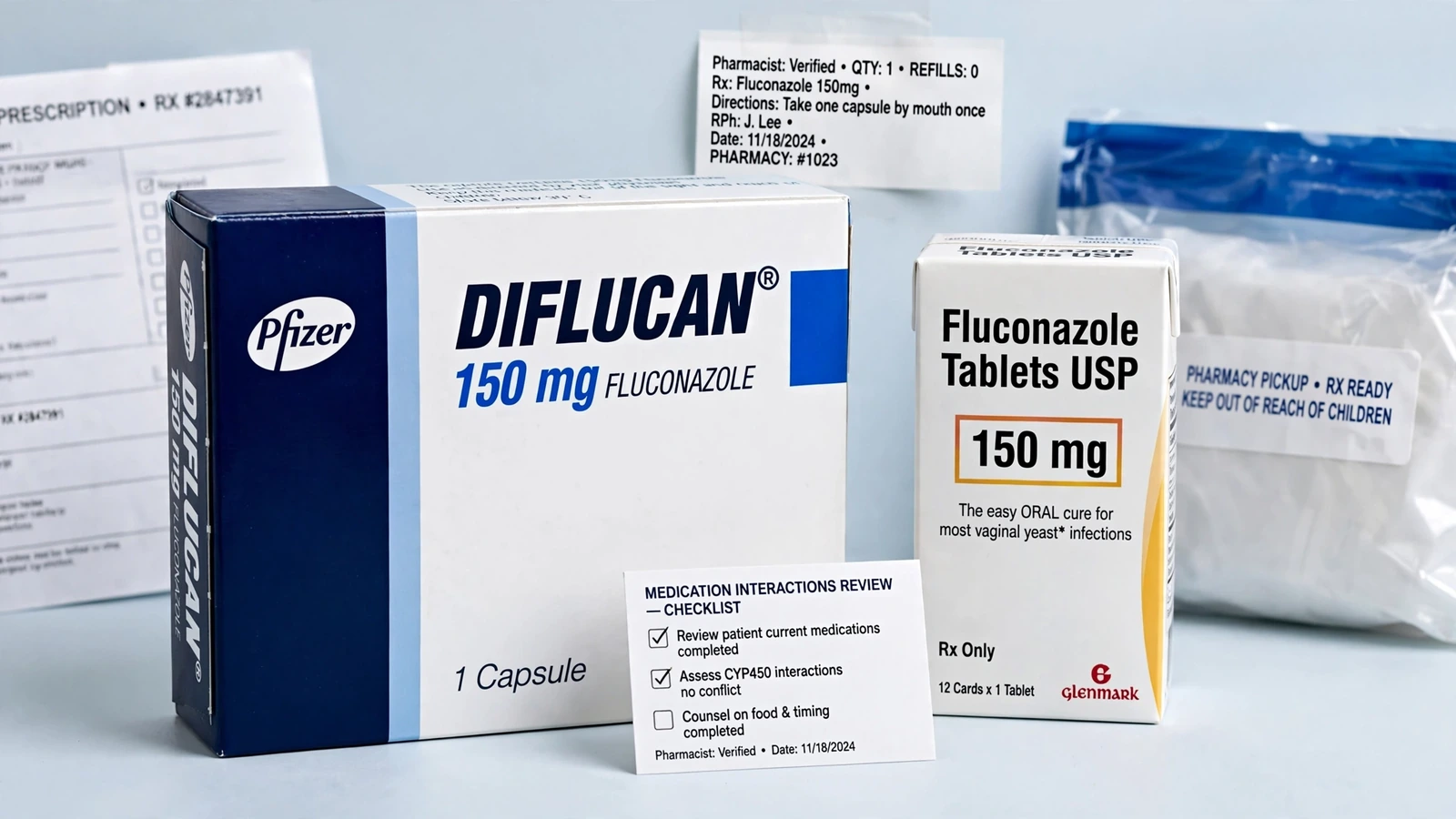
The pharmacy should also clarify Diflucan and generic fluconazole dispensing details when the product name or formulation differs.
Compare the patient name, medicine name, dosage form, strength, quantity, directions, prescriber, dispensing pharmacy, prescription number, and fill date with the prescription and order record. The package should be intact, and the label should provide a route back to the dispensing pharmacy. If a generic product is supplied, the pharmacist can explain the product identifiers and substitution record.
Save photographs of an unexplained discrepancy and keep the package. Contact the dispensing pharmacist using a telephone number independently matched to the licensed pharmacy. Avoid taking a questionable medicine merely because the shipment is delayed, nonreturnable, or already paid for.
Pharmacy verification cannot confirm the diagnosis
A legitimate pharmacy can accurately dispense a valid prescription, yet it cannot prove that the original symptoms were caused by the condition the medicine was intended to treat. The CDC notes that vulvovaginal itching, burning, irritation, odor, and discharge can have different causes and that history alone is insufficient for accurate diagnosis. Examination and laboratory testing may be needed.
Continue the fulfillment check
The prescription and pharmacy records agree
Proceed with the pharmacist’s counseling when the clinician’s decision is current, the state license is verified, the prescription is required, the pharmacist is reachable, and the label and package match the order. Keep the pharmacy contact information in case a question appears after dispensing.
Return to clinical care
The symptoms or treatment context have changed
Pause the transaction and contact the responsible clinician when symptoms are persistent, recurrent, unusual, or worsening, or when pregnancy may affect the treatment decision. The CDC distinguishes uncomplicated from complicated vulvovaginal candidiasis and describes evaluation and testing needs for persistent or recurrent symptoms.
Pharmacy staff should receive the information needed for safe dispensing, including allergies, current medicines and supplements, and relevant pregnancy information. The prescriber and pharmacist can use the official label and the patient’s actual record to address contraindications and interactions. A website checklist cannot perform that individualized assessment.

Know which problem belongs to the pharmacy and which needs urgent care
A missing shipment, temperature concern, damaged seal, incorrect label, or unexplained product difference belongs first with the dispensing pharmacy. Keep the packaging, receipt, and order record. Ask the pharmacist whether the product should be used, replaced, or returned; do not rely on general customer service for a medication-safety decision.
Symptoms such as trouble breathing, facial or throat swelling, fainting, a severe or blistering rash, or other signs of a serious reaction require urgent medical attention rather than routine order support. The DailyMed label contains detailed warnings and patient counseling information. Follow the prescriber’s instructions and seek emergency help when symptoms may be life-threatening.
A pharmacy complaint does not replace clinical follow-up. If the medicine was dispensed correctly but symptoms continue or return, the CDC’s vulvovaginal candidiasis recommendations support reassessment rather than automatically repeating the same treatment. Keep dispensing records available so the clinician knows exactly what product was supplied.
Questions about online pharmacy checks for fluconazole
Does a pharmacy seal or verification badge prove licensure?
No. Treat a badge as a claim until the pharmacy’s legal name and address match an active record in the relevant state board of pharmacy lookup. Perform the lookup independently and note the date, because a seller-controlled image or link can be incomplete or outdated.
What if the site offers fluconazole without a prescription?
Stop. The FDA’s BeSafeRx materials identify the prescription requirement as a basic legitimacy check for an online pharmacy. Do not treat a payment form, brief questionnaire, or customer-service exchange as a substitute for a valid prescribing decision.
Which details should match when the package arrives?
Compare the patient, medicine, form, strength, quantity, directions, prescriber, dispensing pharmacy, prescription number, and fill date with the prescription and order record. Also inspect the seal and package condition. Ask the dispensing pharmacist to resolve any mismatch before use.
Can a verified pharmacy decide whether fluconazole is appropriate?
No. Licensure and accurate dispensing do not establish the diagnosis or individual treatment choice. The CDC notes that vaginal symptoms can overlap across causes and may require examination or testing. The prescriber makes the clinical decision; the pharmacist checks safe and accurate dispensing.
What should I do if the label or medicine looks different?
Do not use it until the difference is explained. Keep the package and take clear photographs, then contact the dispensing pharmacist through a telephone number matched to the licensed pharmacy record. The pharmacist can compare the prescription, product identifiers, substitution record, and package supplied.
Does pharmacy verification remove the need for follow-up?
No. Verification addresses the dispenser and fulfillment record. Persistent, recurrent, worsening, or unusual symptoms still need clinical attention, and pregnancy can change treatment considerations. Contact the responsible clinician rather than repeating a prior plan based only on an earlier shipment.
Primary sources used on this page
- FDA BeSafeRx online pharmacy information (accessed August 27, 2026)
- DailyMed fluconazole prescribing information (accessed August 27, 2026)
- CDC vulvovaginal candidiasis recommendations (July 22, 2021)
- CDC information on conditions associated with vaginal symptoms (July 22, 2021)