

Finasteride Safety and Monitoring: Questions to Review
Finasteride safety and monitoring begin before the first tablet. A useful review documents baseline symptoms, other medicines, reproductive and handling precautions, expectations, and the route for reporting changes. It does not assume that every symptom is caused by finasteride, and it does not dismiss new concerns because they are uncomfortable to discuss.

Medically reviewed by
Urology and men’s health · medication safety and reproductive considerations
Medical review completed August 27, 2026
A practical decision pathway
Before treatment
Review symptoms, medicines, allergies, health history, pregnancy handling risks in the household, and prostate-related testing.
During treatment
Keep a dated record of adherence, sexual or mood changes, breast symptoms, allergic symptoms, and other new health events.
At follow-up
Separate persistent trends from isolated events and decide whether diagnosis, treatment, or monitoring should change.
Urgent situations
Severe allergic symptoms, difficulty breathing, or immediate danger require emergency care rather than waiting for an online reply.
| Observation | Routine response | Escalate when |
|---|---|---|
| New sexual symptom | Document timing and contact the prescriber | It is persistent, distressing, or changes the treatment decision |
| Mood change | Take it seriously and seek clinical advice | There is suicidal thinking, immediate danger, or severe deterioration |
| Breast change | Arrange prompt medical review | There is a lump, nipple discharge, or marked change |
| Possible exposure in pregnancy | Avoid handling damaged tablets and seek professional advice | A crushed/broken tablet was handled or exposure is uncertain |
Why baseline questions improve safety
A symptom recorded only after treatment begins can be difficult to interpret. Baseline documentation gives the prescriber a clearer comparison. Relevant questions may include sexual function, mood, breast symptoms, fertility concerns, urinary or prostate evaluation, allergies, and other medicines or supplements. The purpose is not to exclude everyone with a concern. It is to make the decision informed and create a plan for change.
The diagnosis should also be revisited. Exposing someone to medication risk is hard to justify when the hair-loss pattern is uncertain. If the history suggests rapid shedding, inflammatory scalp disease, scarring, or another condition, the next step may be examination rather than a finasteride decision.
Sexual and mood symptoms deserve direct reporting
The finasteride label includes sexual adverse reactions and postmarketing reports that include sexual dysfunction and depression. A report does not by itself prove cause, and another health condition, medicine, relationship factor, or stressor may contribute. That uncertainty is a reason for clinical review, not a reason to hide or dismiss the symptom.
Record what changed, when it began, whether it is constant or intermittent, and whether anything else changed at the same time. Contact the prescriber when a symptom is troubling, persistent, or affects the treatment decision. Severe depression, suicidal thinking, or immediate danger needs urgent help through emergency or crisis services.
Pregnancy precautions are about exposure and handling
Finasteride is not indicated for use in women in the 1 mg hair-loss label. The labeling warns that women who are or may be pregnant should not handle crushed or broken tablets because finasteride can be absorbed through the skin and may affect development of a male fetus. Intact tablets are coated, which prevents contact during normal handling when they are not broken or crushed.
Store medicine in its labeled container, do not split or crush tablets unless a pharmacist specifically addresses the product and safety, and keep medication away from children and anyone for whom it was not prescribed. A damaged tablet or possible pregnancy exposure should be discussed with a pharmacist or clinician rather than managed from general web advice. For more detail on this decision, review Prescription access.
Monitoring should answer a defined question
Monitoring is more than watching for a side-effect list. It asks whether the diagnosis still fits, whether the routine is being followed, whether benefits are measurable, and whether new symptoms change the balance. Baseline and follow-up photographs should use consistent conditions. Symptom notes should be dated and specific enough to support a conversation.
Finasteride can affect prostate-specific antigen values, so clinicians interpreting that test need to know about current use. The appropriate test and interpretation depend on age, indication, history, and clinical context. A hair-loss article should not provide a personalized laboratory schedule.
Topical compounding introduces a separate risk discussion
FDA’s April 2025 alert states that there is no FDA-approved topical finasteride formulation. The agency described reports of adverse events with compounded topical products and noted local reactions and risk of transfer to other people. A topical route should not be advertised as risk free merely because it is applied to the scalp.
People considering a compounded formulation should ask why it is recommended, what evidence applies, how dosing consistency is managed, what handling steps reduce transfer, and how adverse effects are reported. FDA-approved oral labeling cannot simply be treated as a complete label for a compounded topical product. A related clinical question is covered in Side effects overview.
Use a simple safety record
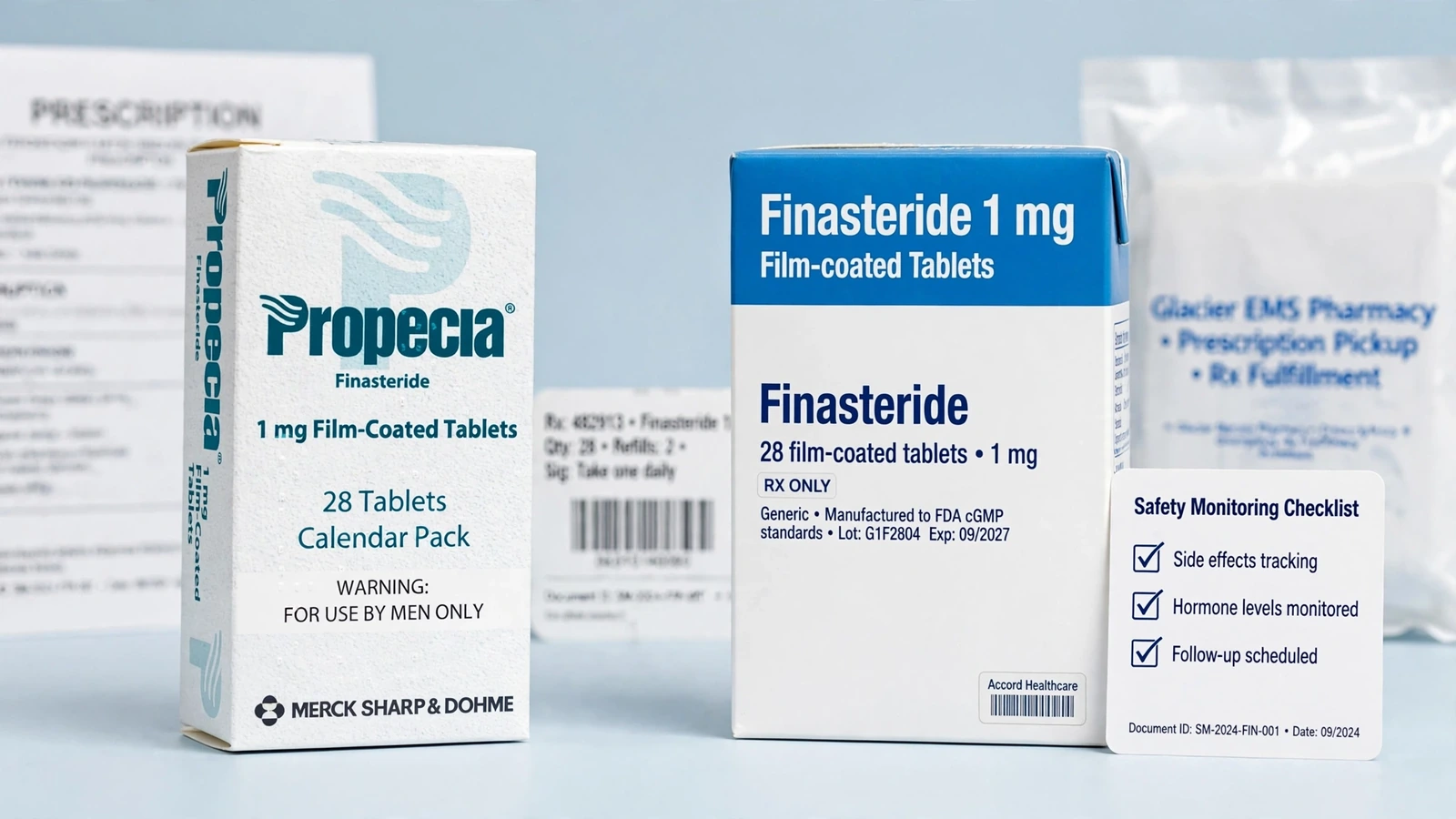
A useful record can fit on one page: treatment start date, product and pharmacy, current medicines, baseline symptoms, new symptoms with dates, interruptions, and questions for the next contact. Avoid copying long lists of every possible symptom into a daily diary. The goal is to notice meaningful change and communicate it clearly, not to create constant surveillance.
Bring the same record to other clinicians. Emergency, primary care, mental-health, urology, dermatology, and pharmacy professionals may each need to know that finasteride is being used. Do not assume that a medicine prescribed online automatically appears in every health system. An updated medication list reduces that gap.
Report suspected adverse events through the treating team and, when appropriate, FDA MedWatch. Reporting is not the same as proving causation; it contributes information that regulators and clinicians can assess. Preserve the product label, lot information when available, dispensing pharmacy, dates, and a factual description. Avoid altering the medicine or packaging before a pharmacist has answered a product-quality question.
Questions for the reviewing clinician
Ask which baseline symptoms are most useful to document, how to report a change, what constitutes an urgent concern, and whether other clinicians need to know about finasteride use. Clarify pregnancy handling precautions for the actual product and household. Ask how prostate-related test results should be communicated.
Also ask what evidence would change the treatment decision. A good answer connects benefit, burden, and safety rather than focusing only on a single symptom or photograph. Write down the contact route and review interval. If instructions conflict between a product label, pharmacy message, and care plan, contact the prescriber or dispensing pharmacist instead of choosing the most convenient version. Keep the final instructions with the medication record.
Frequently asked questions
What should be recorded before taking finasteride?
Document relevant baseline symptoms, medicines, health history, treatment goals, and any household pregnancy-handling concerns.
Should sexual side effects be reported?
Yes. Troubling or persistent changes should be discussed directly with the prescriber so timing and other possible causes can be assessed.
Can a pregnant person handle finasteride tablets?
The label warns against handling crushed or broken tablets. Intact tablets are coated; ask a pharmacist about any damaged-tablet exposure.
Does finasteride affect PSA?
Finasteride can affect prostate-specific antigen values. Tell the clinician interpreting the test that you use it.
Is topical finasteride automatically safer?
No. FDA has warned about risks with compounded topical finasteride and states that no topical formulation is FDA approved.
When is emergency care appropriate?
Severe allergic symptoms, difficulty breathing, suicidal crisis, or immediate danger requires urgent or emergency help.
Primary and clinical sources
- DailyMed / U.S. National Library of Medicine: Finasteride 1 mg prescribing information — Label updated November 23, 2022; checked August 27, 2026.
- U.S. Food and Drug Administration: Potential risks associated with compounded topical finasteride products — Published April 22, 2025; checked August 27, 2026.
Educational information only. This page does not diagnose hair loss, provide individualized dosing, guarantee a prescription, or replace urgent or in-person care when needed.