

Finasteride and Sexual Side Effects: A Clinician Discussion Guide
Sexual symptoms associated with finasteride deserve clear, nonjudgmental reporting. A clinician needs baseline function, timing, persistence, other health changes, and concurrent medicines to assess the symptom and discuss options; an article cannot determine cause for an individual.

Medically reviewed by
Urology and men’s health · medication safety and reproductive considerations
Medical review completed August 27, 2026
A practical decision pathway
Prepare
Record relevant baseline and medicines.
Describe
State timing, persistence, and impact.
Review
Consider other health and treatment factors.
Plan
Agree on follow-up or referral.
| Question | Helpful detail | Purpose |
|---|---|---|
| When did it begin? | Relation to treatment and other changes | Supports timing assessment |
| How often? | Constant or intermittent | Clarifies pattern |
| How disruptive? | Distress and daily impact | Guides urgency |
| Any fertility goals? | Near-term plans and prior concerns | Supports appropriate counseling |
Why baseline information matters
Sexual function can change for many reasons, including health conditions, stress, mood, relationship factors, sleep, and other medicines. Recording baseline desire, erections, ejaculation, fertility concerns, and relevant treatment helps the clinician interpret a later report. It does not predict who will experience an adverse effect.
A respectful evaluation asks only what is clinically relevant and explains why. Patients should be able to report concerns without embarrassment or dismissal.
Describe timing and impact clearly
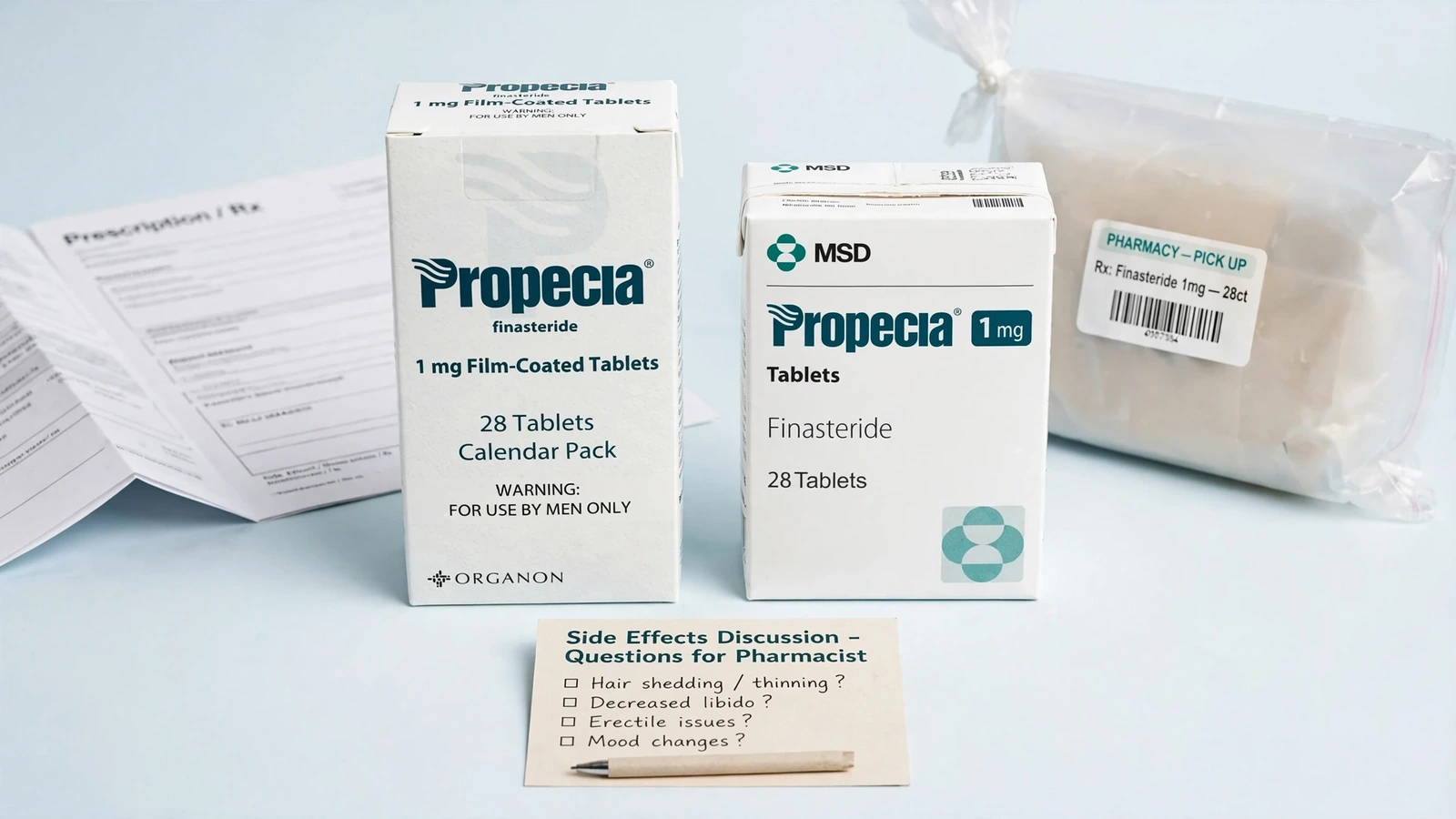
When a change occurs, note when it began relative to treatment, whether it is constant or intermittent, and how much it affects wellbeing or relationships. List new medicines, illness, and major stressors. Contact the prescriber rather than changing the schedule independently.
The finasteride label includes sexual adverse reactions and postmarketing reports. Those sources describe reported events; they do not determine causation in one person. For more detail on this decision, review Finasteride Safety and Monitoring: Questions to Review.
Persistence deserves follow-up, not internet diagnosis
A persistent symptom should be reviewed even when the cause is uncertain. The clinician may reassess the medicine, dose instructions, health history, other treatments, and need for evaluation. An online forum cannot distinguish medication effects from endocrine, vascular, neurologic, psychological, or relationship contributors.
Do not purchase unverified supplements marketed as antidotes. They can introduce new adverse effects, interactions, cost, and confusion.
Include fertility goals in the conversation
Finasteride questions may intersect with fertility concerns. Michael L. Eisenberg, MD, reviews this package within his documented urology and male reproductive health scope. Individual fertility evaluation, semen testing, and treatment decisions still require a clinician who knows the person’s history.
State near-term family-building plans and prior fertility concerns during the prescribing discussion. This allows the clinician to decide what information or referral is appropriate. A related clinical question is covered in Finasteride Side Effects: What to Record and Report.
Keep the discussion specific and private
Terms such as “sexual side effects” can hide several different experiences. Desire, erection quality, ejaculation, orgasm, discomfort, and fertility concerns are not interchangeable. Naming the actual change helps the clinician ask relevant questions and avoid assumptions. The conversation should occur through a private clinical channel, not a public review or social-media comment.
A clinician may need to review blood pressure, vascular risk, endocrine symptoms, mood, sleep, substance use, or other medicines depending on the report. That broader review is not an attempt to dismiss finasteride. It is how an individualized assessment distinguishes possible contributors.
Partners may notice changes, but the patient controls consent for sharing health information. If a partner joins a visit, agree in advance what can be discussed. When fertility is a concern, ask whether evaluation by an appropriate reproductive-health professional would add useful information rather than relying on speculative internet claims.
Prepare four sentences for the visit
A concise report can begin: “This was my baseline. This changed on this date. This is how often it happens and how it affects me. These other medicines or health events changed at the same time.” That structure gives the clinician a useful starting point without requiring the patient to decide the cause.
Bring specific questions: whether further evaluation is needed, which symptoms alter urgency, how treatment changes would be handled, and when to follow up. If communication feels dismissive or unsafe, seek appropriate clinical review rather than turning to an unverified seller or supplement. Keep the dispensing label and complete medication list readily available so a second clinician can review the same facts without guessing.
A calm, precise report supports shared decision-making and keeps the discussion focused on the patient’s actual experience and priorities.
Frequently asked questions
Are sexual symptoms part of finasteride counseling?
Yes. They should be discussed before treatment and reported if they arise.
Does a symptom prove finasteride caused it?
No. Timing and alternative contributors require assessment.
Should fertility goals be mentioned?
Yes. They may affect counseling or referral.
Should I stop on my own?
Contact the prescriber for guidance unless emergency care is required.
Primary and clinical sources
- DailyMed / U.S. National Library of Medicine: Finasteride 1 mg prescribing information — Label updated November 23, 2022; checked August 27, 2026.
Educational information only. This page does not diagnose hair loss, provide individualized dosing, guarantee a prescription, or replace urgent or in-person care when needed.