

Finasteride Side Effects: What to Record and Report
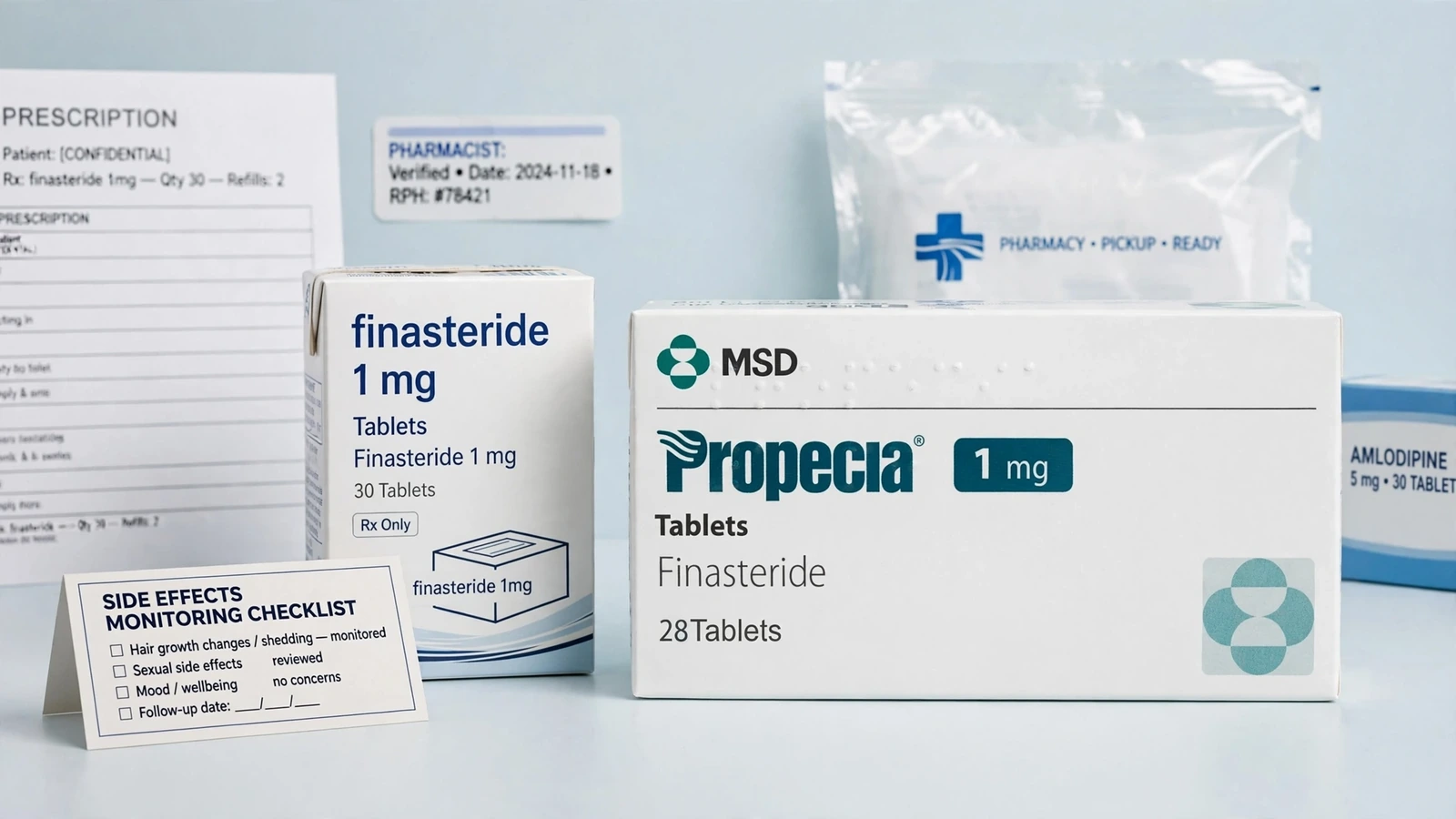
Finasteride side effects should be discussed with a clinician using a dated record, not hidden, dismissed, or diagnosed from a checklist. Baseline symptoms, timing, other medicines, and the effect on daily life help a prescriber assess what changed and whether the plan should be revised.

Medically reviewed by
Urology and men’s health · medication safety and reproductive considerations
Medical review completed August 27, 2026
A practical decision pathway
Before
Record relevant baseline symptoms.
Notice
Describe onset, pattern, and severity.
Discuss
Contact the prescriber without self-diagnosing.
Decide
Change treatment only with appropriate guidance.
| Concern | Information to record | Next step |
|---|---|---|
| Sexual change | Timing, persistence, impact | Contact prescriber |
| Mood change | Severity and safety | Prompt advice; urgent help if dangerous |
| Breast change | Lump, pain, discharge | Prompt medical review |
| Allergic symptom | Swelling, breathing, rash | Urgent/emergency care as appropriate |
Start with a baseline, not a checklist after the fact
Before treatment, document relevant sexual function, mood, breast symptoms, medicines, supplements, and other health changes. This is private clinical information, but it gives the prescriber a meaningful comparison. A symptom that predates treatment requires different reasoning from one that begins after a change.
The baseline should also include treatment goals and the hair-loss pattern. Medication exposure is difficult to justify when the diagnosis remains uncertain.
How to describe a new symptom
Record the onset date, frequency, severity, effect on daily life, and whether anything else changed. Avoid trying to prove or disprove causation before reporting it. A clinician can consider timing, baseline health, other medicines, and alternative explanations.
Sexual symptoms and mood changes can be difficult to discuss, but minimizing them weakens the safety record. Persistent or distressing changes deserve contact. Severe depression, suicidal thinking, or immediate danger requires urgent help. For more detail on this decision, review Finasteride Safety and Monitoring: Questions to Review.
Other changes that deserve attention
The labeling includes breast-related warnings and postmarketing reports. A breast lump, pain, enlargement, or nipple discharge should be reported promptly. Allergic symptoms such as swelling or difficulty breathing can require urgent or emergency care.
Do not use a general article to decide that a symptom is harmless. The right level of care depends on severity, timing, and the whole clinical picture.
What monitoring can and cannot establish
A symptom log supports a conversation; it cannot diagnose cause. Likewise, progress photographs show a visible trend but cannot prove biological response. Monitoring should help decide whether to continue, investigate, or change the plan under clinical guidance.
Tell clinicians about finasteride use when prostate-specific antigen is measured because it can affect interpretation. The timing and meaning of testing are individualized. A related clinical question is covered in Finasteride Pregnancy Precautions and Safe Tablet Handling.
Plan the contact before symptoms occur
Know whether concerns are handled by secure message, telephone, scheduled visit, or the dispensing pharmacist. Ask which symptoms require same-day contact and which can wait for routine follow-up. Save the verified contact information outside the portal in case access fails.
When contacting the team, use a factual sequence: medicine and start date, symptom and onset, severity, pattern, other changes, and what help is needed. Avoid stopping and restarting repeatedly before the clinician can evaluate the pattern. Rechallenge decisions carry their own uncertainty and should not be improvised.
If a product looks different, is damaged, or came from an unexpected dispenser, preserve the package and contact the licensed pharmacy. A product-quality issue is separate from an adverse-effect assessment, but both can matter. Do not send medicine to an unverified address or rely on a seller that cannot identify the pharmacist.
Keep benefit and burden in the same review
A treatment review should not discuss adverse effects in isolation from the reason the medicine was chosen. Bring the original goal, progress record, current burden, and symptom log together. This helps the clinician discuss whether continued treatment, more evaluation, or another approach makes sense.
Do not let fear of losing hair prevent prompt reporting, and do not let a frightening list substitute for an assessment of the actual symptom. Informed care can hold both realities: hair loss may be distressing, and medication concerns still deserve direct attention. Preserve the dated record for the next review and update it when another medicine changes.
Frequently asked questions
Are sexual effects listed?
Yes. The checked labeling describes sexual adverse reactions and postmarketing reports.
Should mood changes be reported?
Yes, especially when marked, persistent, or dangerous.
Can I diagnose the cause myself?
No. Timing and other factors require clinical assessment.
Why tell a clinician before PSA testing?
Finasteride can affect the value and its interpretation.
Primary and clinical sources
- DailyMed / U.S. National Library of Medicine: Finasteride 1 mg prescribing information — Label updated November 23, 2022; checked August 27, 2026.
- U.S. Food and Drug Administration: Potential risks associated with compounded topical finasteride products — Published April 22, 2025; checked August 27, 2026.
Educational information only. This page does not diagnose hair loss, provide individualized dosing, guarantee a prescription, or replace urgent or in-person care when needed.