
Finasteride Pregnancy Precautions and Safe Tablet Handling
Finasteride labeling warns that women who are or may be pregnant should not handle crushed or broken tablets because the medicine can be absorbed through the skin and may affect development of a male fetus. Intact tablets are coated; damaged tablets and uncertain exposure require professional advice.

Medically reviewed by
Urology and men’s health · medication safety and reproductive considerations
Medical review completed August 27, 2026
A practical decision pathway
Keep intact
Do not crush or break tablets.
Control storage
Use the labeled child-resistant container.
Handle exposure
Contact a professional with exact product details.
Ask about topicals
Get explicit transfer and cleanup instructions.
| Situation | Safer action | Why |
|---|---|---|
| Intact coated tablet | Keep in container | Coating limits normal contact |
| Crushed/broken tablet | Pregnant person should not handle | Skin absorption is possible |
| Uncertain exposure | Contact pharmacist/clinician | Risk depends on circumstances |
| Compounded topical | Follow transfer precautions | Product may spread to others |
What the label says about damaged tablets
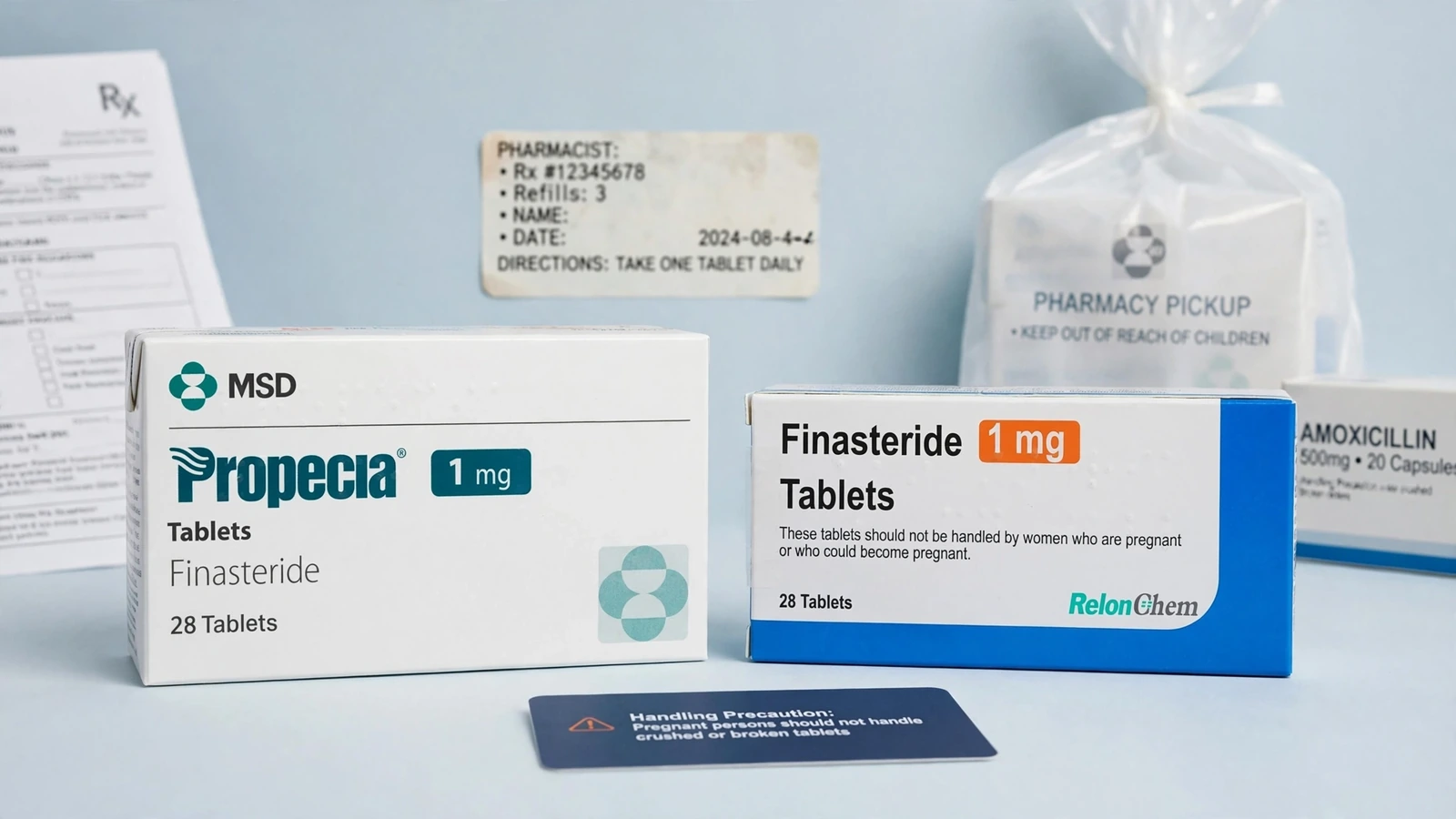
The 1 mg finasteride label warns that women who are or may be pregnant should not handle crushed or broken tablets because finasteride may be absorbed through the skin and poses a potential risk to a male fetus. Intact tablets are coated to prevent contact with the active ingredient during normal handling, provided they have not been broken or crushed.
This distinction is why damaged tablets should not be placed loosely in a shared pill organizer or left on a counter. Keep them in the labeled container and contact a pharmacist when a tablet is chipped, crushed, or otherwise compromised.
Household storage reduces avoidable exposure
Store medication where children and other household members cannot access it. Keep the label legible and do not transfer tablets to an unlabeled container. Do not share finasteride with another person. If a caregiver organizes medicines, tell them about the handling warning before they touch damaged tablets.
Ordinary contact with an intact coated tablet is different from contact with exposed medication. A pharmacist can answer product-specific questions without encouraging unnecessary alarm. For more detail on this decision, review Finasteride Safety and Monitoring: Questions to Review.
What to do after possible exposure
Do not rely on a web page to quantify an individual pregnancy risk. Wash exposed skin as directed by a healthcare professional and contact a pharmacist, clinician, or appropriate pregnancy care professional promptly with the product name, form, and circumstances. Keep the container available so the exact medicine can be identified.
If the exposure involved a compounded topical product, provide the formulation and instructions. FDA notes greater potential for inadvertent transfer to others with topical formulations.
Topical products create different handling problems
A compounded topical product can remain on hands, applicators, surfaces, fabric, or the scalp and may transfer to another person. FDA’s 2025 alert specifically highlights this concern and states that no topical finasteride formulation is FDA approved.
Ask the prescriber and compounder for explicit application, handwashing, drying, storage, spill, and contact precautions. “Topical” is not synonymous with “no exposure.” A related clinical question is covered in Finasteride Side Effects: What to Record and Report.
Keep instructions product specific
Finasteride tablets from different manufacturers may look different, but the pharmacy label identifies the dispensed product. Do not infer handling instructions from color or shape. Ask the dispensing pharmacist before splitting any tablet; for pregnancy precautions, the key label distinction is whether the coating remains intact.
Household members should know whom to contact if a container spills or a tablet is damaged. A simple plan is more useful than alarming everyone: avoid direct contact with exposed medication, keep others away from the area, retain the label, and obtain professional cleanup or exposure advice.
Disposal should follow current pharmacy or FDA guidance, not flushing or household improvisation unless the product instructions specifically direct it. A medicine take-back option can reduce accidental access. Remove personal information from discarded packaging while keeping the medicine identifiable until disposal is complete.
Communicate without stigma
Pregnancy precautions are a property of the medicine and exposure route, not a judgment about who belongs in a household. State the handling rule plainly, keep medication controlled, and make professional advice easy to obtain. This supports safety without asking family members to disclose more than is necessary.
If travel, caregiving, or shared storage changes the routine, repeat the instructions. Do not leave loose tablets in luggage or shared containers. A current pharmacy label helps emergency and healthcare professionals identify the medicine if the owner is unavailable.
Frequently asked questions
Why are crushed tablets different?
They expose the active ingredient that the intact coating normally contains.
Can intact tablets be handled?
The label explains that intact coated tablets prevent contact during normal handling when not broken or crushed.
What if exposure may have happened?
Contact a pharmacist or clinician with the exact product and circumstances.
Can topical finasteride transfer?
Yes. FDA specifically warns about potential inadvertent transfer to others.
Primary and clinical sources
- DailyMed / U.S. National Library of Medicine: Finasteride 1 mg prescribing information — Label updated November 23, 2022; checked August 27, 2026.
- U.S. Food and Drug Administration: Potential risks associated with compounded topical finasteride products — Published April 22, 2025; checked August 27, 2026.
Educational information only. This page does not diagnose hair loss, provide individualized dosing, guarantee a prescription, or replace urgent or in-person care when needed.