

Furosemide for Edema: Evaluation and Monitoring
Furosemide may be prescribed for edema linked to certain heart, liver, or kidney conditions, but swelling must first be interpreted in context. Location, timing, breathing symptoms, weight trend, kidney function, electrolytes, and other medicines help determine whether a diuretic fits the problem.

Medically reviewed by
Internal medicine · drug safety · pharmacoepidemiology
Medical review completed August 27, 2026
The pattern of swelling guides the evaluation
Clinicians ask when swelling began, whether it is one-sided or symmetric, whether it changes through the day, and whether there is pain, redness, skin breakdown, shortness of breath, abdominal swelling, or rapid weight change. Recent travel, immobility, surgery, pregnancy, infection, and medication changes matter. These details can point away from routine fluid retention and toward a cause that needs different or urgent evaluation.
Match the medicine to the underlying condition
The furosemide label includes edema associated with congestive heart failure, cirrhosis, and renal disease, including nephrotic syndrome. That does not mean every patient with one of these diagnoses should receive the same regimen. The degree of congestion, kidney response, blood pressure, prior diuretic exposure, and broader treatment plan shape the prescription. Swelling from venous disease, lymphatic problems, or a clot may require another approach.
Track meaningful response
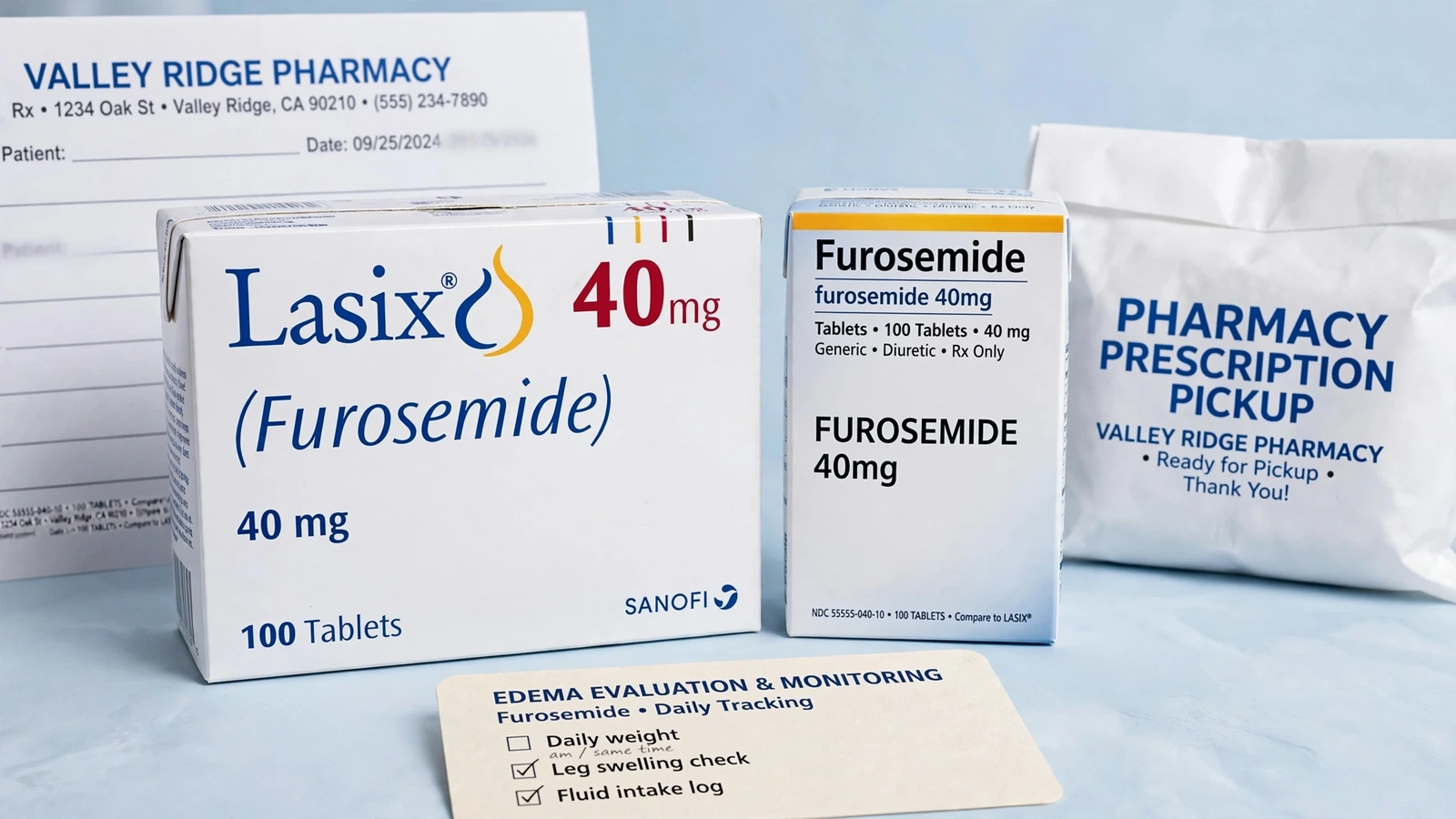
A clinician may ask about shoe or ring fit, leg tension, breathing, activity tolerance, abdominal symptoms, and a consistent weight trend. The goal is not simply the fastest possible weight loss. Dizziness, low blood pressure, reduced urination, cramps, confusion, or marked weakness may suggest excessive fluid loss or another problem. Use the same scale and timing when weight is part of the plan. For more detail on this decision, review Furosemide Uses and Treatment DecisionsReturn to the parent guide..
Do not improvise an extra dose
Some people receive an explicit action plan tied to symptoms or weight. If you do not have such a plan, contact the treating team before changing the schedule. A single swollen day can reflect salt intake, posture, heat, missed medicine, a new condition, or measurement variation. Taking extra furosemide can complicate kidney function, electrolytes, and blood pressure without treating the cause.
Protect skin and mobility while the cause is addressed
Edematous skin may be fragile. Follow condition-specific advice about skin care, movement, compression, and elevation because those measures are not appropriate in every circulatory situation. Report weeping, open areas, spreading redness, fever, severe pain, or sudden asymmetry. Furosemide should be one part of an identified treatment plan, not the only response to unexplained swelling.
Use follow-up to test the explanation for swelling
At reassessment, compare the original edema pattern with current symmetry, skin findings, breathing, activity, weight trend when requested, blood pressure, kidney function, and response to the prescribed plan. Improvement may support the working explanation, while a new one-sided pattern, pain, redness, fever, breathing change, or poor response may point toward another cause. Record the comparison instead of reporting only that swelling is better or worse. A related clinical question is covered in Furosemide in Heart Failure: Congestion and Follow-UpRead a related guide in this same topic branch..
Keep supportive measures condition-specific
Elevation, movement, compression, sodium advice, and fluid instructions are not interchangeable for every cause of edema. Follow the plan given for the diagnosed condition and ask before adding a measure from a general guide. If the care team provided a written action threshold, keep it with the medicine instructions; otherwise contact them before changing the dose in response to a single measurement.
A practical decision pathway
Describe
Record location, timing, symmetry and associated breathing, pain or skin symptoms.
Evaluate
Confirm the cause and review blood pressure, kidneys, electrolytes and medicines.
Treat
Follow the prescribed regimen and any condition-specific non-drug measures.
Reassess
Compare symptoms and monitoring results with the agreed targets.
Decision table
| Observation | Why it helps | Escalation clue |
|---|---|---|
| Symmetry | Distinguishes patterns of swelling | New one-sided swelling with pain or redness |
| Breathing | May reflect congestion or another acute problem | New or rapidly worsening breathlessness |
| Weight trend | Adds context when measured consistently | Rapid change outside the action plan |
| Urination and dizziness | Can signal response or excessive fluid loss | Very low output, fainting or confusion |
Frequently asked questions
Does furosemide treat all swelling?
No. It is used for specific fluid-retention conditions, while other causes of swelling need different evaluation and treatment.
What should I track at home?
Follow the clinician’s plan, which may include swelling, breathing, weight, blood pressure and symptoms of dehydration.
Can I take an extra tablet for worse swelling?
Only if your treating clinician has given a specific action plan. Otherwise contact the team before changing the dose.
When is swelling urgent?
Seek prompt care for new one-sided swelling with pain or redness, chest pain, sudden breathing difficulty, fainting, or rapidly worsening symptoms.
Why are blood tests needed?
Kidney function and electrolytes help clinicians judge whether treatment is producing excessive fluid or salt loss and whether the plan remains safe.
Primary sources
Medical content reviewed August 27, 2026. References were checked on the dates shown.
- Furosemide tablet — prescribing information — U.S. National Library of Medicine, DailyMed. Updated June 23, 2026.
- Furosemide — U.S. National Library of Medicine, MedlinePlus. Accessed August 27, 2026.