

Furosemide Uses and Treatment Decisions
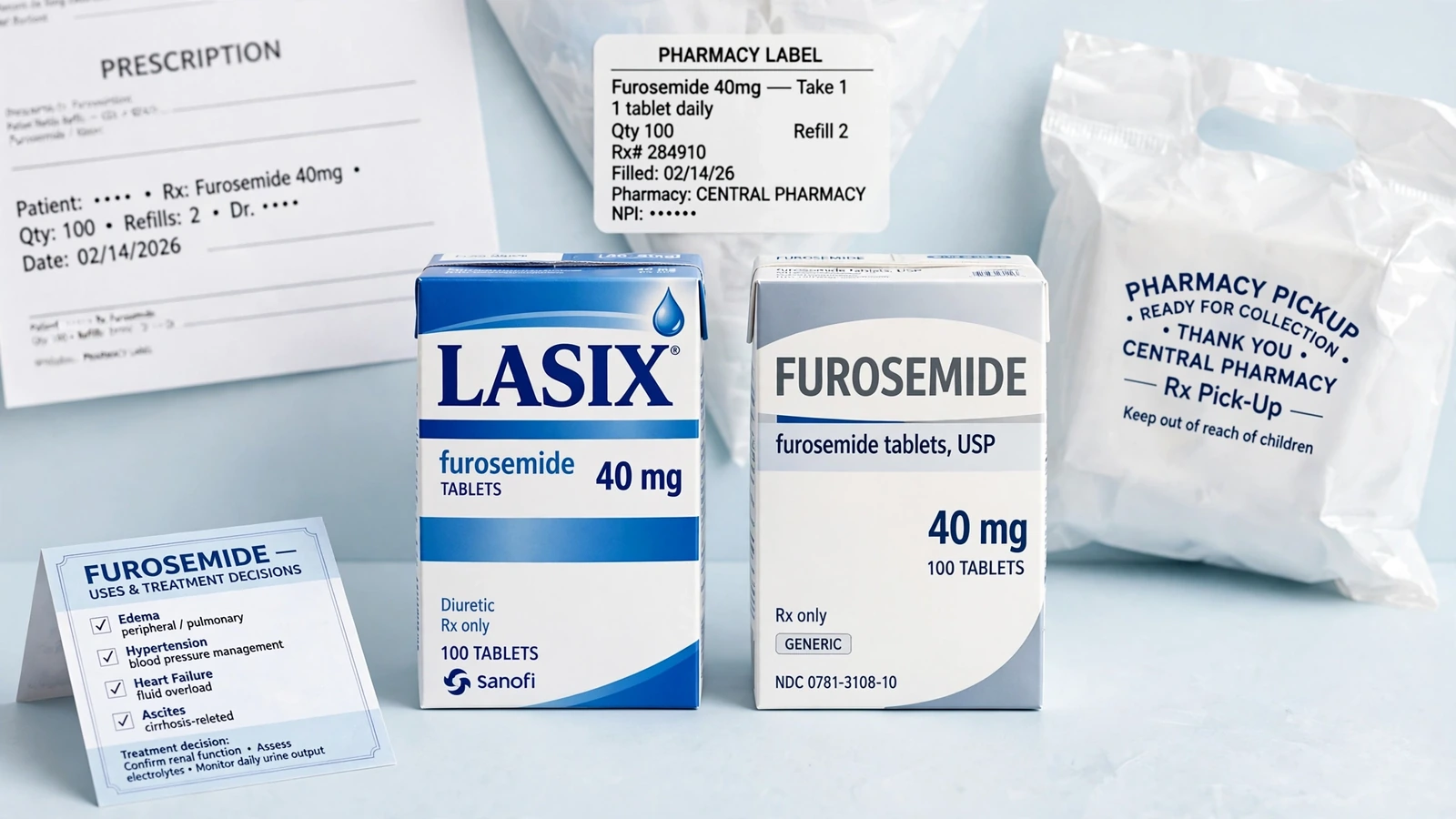
Furosemide is a prescription loop diuretic used in specific fluid-overload settings and, in adults, for hypertension. The diagnosis alone does not determine the plan: symptoms, examination findings, kidney function, electrolytes, blood pressure, other medicines, and response to prior treatment all matter.

Medically reviewed by
Internal medicine · drug safety · pharmacoepidemiology
Medical review completed August 27, 2026
Start with the reason for treatment
Furosemide is not a general remedy for any swelling or any high blood-pressure reading. Edema can reflect heart, liver, kidney, venous, medication, or other causes, and each context changes the risk-benefit discussion. The prescribing information includes edema associated with congestive heart failure, cirrhosis, and renal disease, including nephrotic syndrome, as well as hypertension in adults. A clinician connects the label to the individual diagnosis and checks whether the symptom pattern points to a different or urgent problem.
What improvement should be measured
A useful plan defines what success looks like before the next refill. Depending on the condition, clinicians may follow breathing, exercise tolerance, swelling, weight trend, blood pressure, urine output, or the ability to complete ordinary activities. A rapid change is not automatically better: excessive fluid loss can cause dizziness, low blood pressure, kidney stress, or electrolyte problems. Tracking the same measures consistently is more informative than reacting to a single number or changing the dose after one difficult day.
Why the cause of edema changes the plan
Lower-leg swelling is a sign rather than a diagnosis. Symmetry, timing, pain, skin changes, breathing symptoms, recent travel or immobility, and medicine changes can redirect the evaluation. Furosemide may be appropriate when the clinician has identified a fluid-retention condition, but it does not treat every cause of leg swelling. New one-sided swelling, chest pain, or shortness of breath requires prompt assessment rather than an unsupervised diuretic adjustment.
Heart failure treatment is broader than one medicine
In heart failure, a loop diuretic may help manage congestion, but the overall plan can also include other disease-directed medicines, sodium guidance, daily observations, and follow-up. The furosemide dose may change with clinical status, kidney function, and response. Patients should know which changes trigger a call and which trigger urgent care. A refill review should reconcile the discharge plan with the current bottle because transitions between hospital and home are a common point of confusion. For more detail on this decision, review Prescription access overviewReturn to the safe Lasix and furosemide access pathway..
Hypertension requires context and repeated measurement
For adult hypertension, clinicians consider repeated blood-pressure readings, technique, other conditions, and the complete regimen. A single home value is not enough to determine whether furosemide should be started, stopped, or increased. Dizziness on standing, dehydration, kidney-function changes, or interacting medicines can change the plan. Home readings are most useful when recorded with time, posture, symptoms, and medication timing and then reviewed with the clinician.
Treatment choices are individualized
The same diagnosis does not produce the same dose or schedule for every person. Age, kidney and liver function, fluid intake, recent illness, other blood-pressure medicines, and prior response all matter. The prescribing information emphasizes individualized dosing and close medical supervision because furosemide is a potent diuretic. Never borrow another person’s tablets or use an old regimen after a major health change without confirming that the instructions still apply.
Compare the treatment goal with the underlying condition
A useful treatment review begins by naming the problem furosemide is intended to manage and the change the care team expects to see. Congestion, edema, and hypertension require different context, so the same symptom or scale reading cannot be interpreted in isolation. Record breathing, swelling, activity, blood pressure, weight when requested, kidney function, electrolytes, and the other medicines that affect the same condition.
Define what a successful response means
The goal is not simply more urination. Ask which symptoms, functional changes, measurements, or laboratory trends will show that the plan is helping without causing excessive fluid loss or another complication. A clear goal prevents a patient from judging treatment only by bathroom frequency and gives the clinician a consistent basis for comparing follow-up with the starting point. A related clinical question is covered in Furosemide for Edema: Evaluation and MonitoringFurosemide may be prescribed for edema linked to certain heart, liver, or kidney conditions, but swelling must first be interpreted in context..
Keep dose changes inside the written plan
Some patients receive condition-specific instructions for responding to symptoms or measurements. Those instructions must come from the treating clinician and should state the exact situation in which they apply. Without such a plan, a changed weight, swollen day, or isolated blood-pressure reading should prompt review rather than an improvised extra dose. Acute illness and new medicines can make an old adjustment rule unsuitable.
Assign responsibility for reassessment
Before leaving the visit, confirm when monitoring is due, who will review it, and how worsening symptoms should be reported. Keep specialist, primary-care, discharge, and pharmacy instructions reconciled in one current record. If two sources disagree, pause and ask the responsible clinician to identify the active direction instead of combining schedules or choosing the instruction that is easiest to follow.
Review the plan after a change in care setting
A hospital stay, specialist consultation, emergency visit, or new diagnosis can alter the treatment goal even when the medicine name remains the same. At the first follow-up, compare the new record with the previous plan and identify what changed, why it changed, and which clinician now owns monitoring. Check whether the pharmacy received updated directions and whether older refills or portal entries should no longer guide use. This reconciliation is especially important when symptoms have improved but kidney function, blood pressure, or another medicine has changed. Record the date of reconciliation and keep it beside the active label. Share that update with every prescribing clinician.
A practical decision pathway
Identify
Confirm the condition causing fluid retention or the basis for hypertension treatment.
Baseline
Review symptoms, blood pressure, weight, kidney function, electrolytes and medicines.
Plan
Define the prescribed schedule, expected response and limits for self-monitoring.
Reassess
Compare symptoms, measurements, laboratory results and adverse effects before changing course.
Decision table
| Clinical context | What the plan may track | Reason to contact a clinician |
|---|---|---|
| Edema | Swelling pattern, weight and breathing | Rapid worsening or a new one-sided pattern |
| Heart failure | Congestion symptoms, weight trend and function | Worsening breathlessness or fainting |
| Hypertension | Repeated blood pressure and symptoms | Very low readings, dizziness or confusion |
| Any use | Kidney function, electrolytes and medicine list | Reduced urination, severe weakness or acute illness |
Frequently asked questions
What is furosemide used for?
Its labeling includes edema associated with congestive heart failure, cirrhosis, and renal disease, including nephrotic syndrome, and hypertension in adults. The prescriber decides whether it fits the individual situation.
Is Lasix the same medicine as furosemide?
Lasix is a brand name for furosemide. Product, strength, directions and pharmacy labeling should still be checked carefully.
Does furosemide treat every type of leg swelling?
No. Swelling has many causes, and some need a different treatment or urgent assessment. The cause should be evaluated before relying on a diuretic.
How quickly should symptoms improve?
Response varies with the indication, route, dose, kidney function and clinical status. The prescriber should define what to monitor and when to report inadequate or excessive response.
Can I change the dose when my weight changes?
Only follow a dose-adjustment plan that your treating clinician has explicitly provided. Otherwise, contact the clinical team before changing the schedule.
Primary sources
Medical content reviewed August 27, 2026. References were checked on the dates shown.
- Furosemide tablet — prescribing information — U.S. National Library of Medicine, DailyMed. Updated June 23, 2026.
- Furosemide — U.S. National Library of Medicine, MedlinePlus. Accessed August 27, 2026.