

Furosemide for Hypertension: Readings and Review
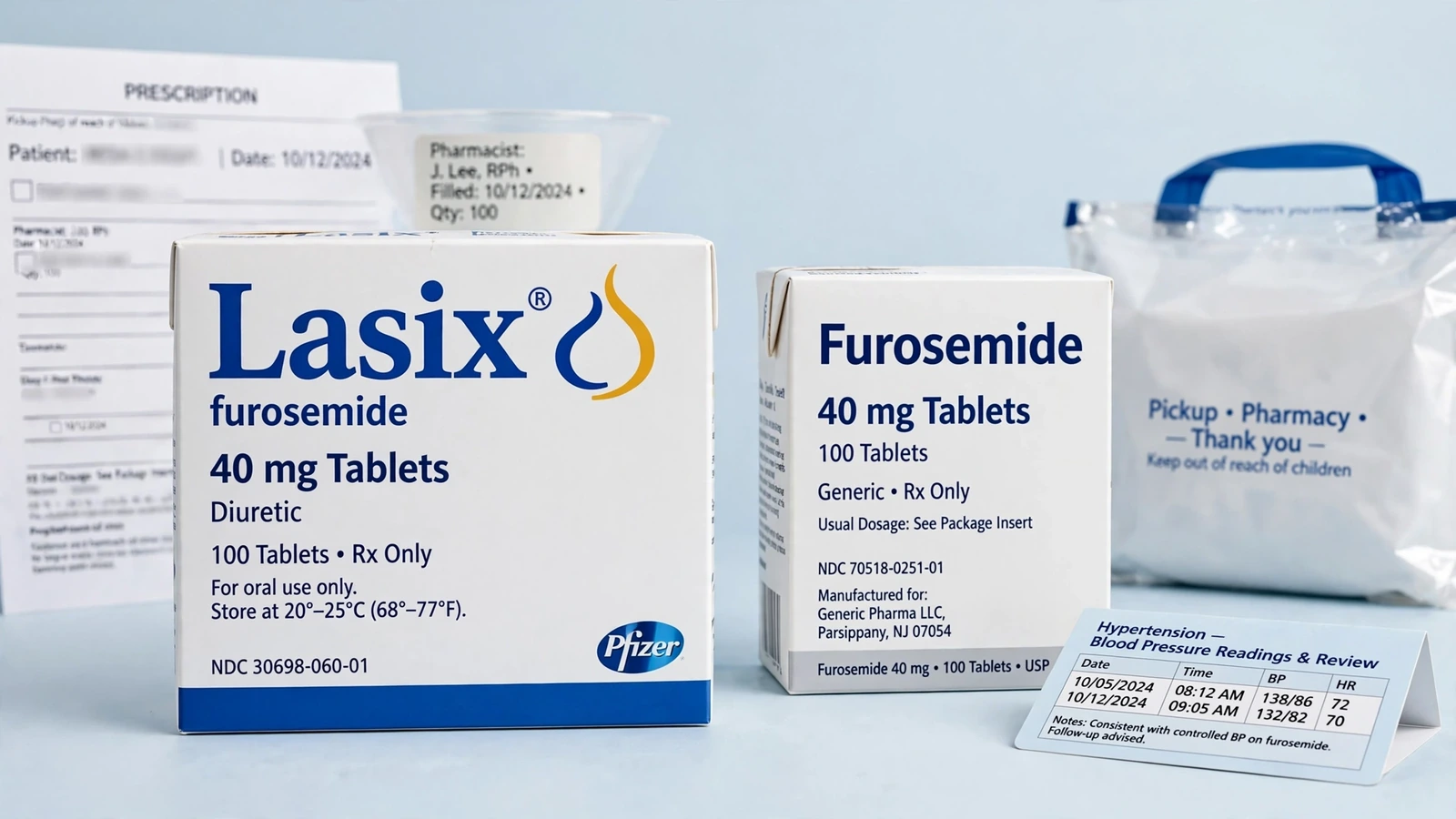
Furosemide is labeled for hypertension in adults, but its role depends on the individual’s conditions, kidney function, fluid status, other medicines, and blood-pressure pattern. A single home reading should not trigger an unsupervised dose change.

Medically reviewed by
Internal medicine · drug safety · pharmacoepidemiology
Medical review completed August 27, 2026
Blood pressure is a pattern, not one number
Technique, cuff size, posture, recent activity, caffeine, pain, stress, and timing can affect a reading. When home monitoring is requested, sit quietly, position the arm as instructed, and record the time, value, symptoms, and medication timing. Bring the cuff to a visit if the care team wants to compare it with office equipment. Repeated measurements help distinguish a sustained pattern from a single outlier.
Furosemide may be one part of the regimen
Adult hypertension can be treated with different medicine classes depending on conditions and risk. Furosemide may be selected in particular clinical contexts, including when fluid management is also relevant. The complete regimen matters because combined medicines can lower blood pressure or alter kidney function and electrolytes. Do not compare doses with another person or assume that a stronger diuretic effect means better long-term control.
Low readings require symptom context
A lower value without symptoms may be interpreted differently from dizziness, fainting, weakness, confusion, or a fall. Dehydration, acute illness, blood loss, new medicines, and dosing errors can contribute. Sit or lie down safely if lightheaded, avoid driving, and follow the care team’s instructions. Fainting, chest pain, severe weakness, or neurologic symptoms need prompt evaluation rather than a routine portal message. For more detail on this decision, review Furosemide Uses and Treatment DecisionsReturn to the parent guide..
Kidney and electrolyte checks remain relevant
Blood-pressure treatment can affect renal perfusion and electrolytes, particularly when several medicines act on the kidneys or fluid balance. Laboratory timing is individualized. Report vomiting, diarrhea, fever, poor intake, or use of over-the-counter pain relievers because these may change risk. Do not start potassium, salt substitutes, or hydration strategies solely from online advice.
Review before adjusting the schedule
A high reading can reflect technique, a missed dose, pain, illness, or an evolving problem. Recheck according to the clinician’s instructions and use the provided urgent threshold. Doubling furosemide may cause excessive diuresis without addressing the cause. If readings remain outside the target, the clinician can review adherence, regimen, secondary causes, and measurement quality.
Make the blood-pressure log interpretable
Record readings with time, posture, symptoms, medication timing, and any recent illness or missed dose. Use the technique recommended by the care team and note when a value was repeated. A pattern collected consistently is more useful than a selection of the highest numbers and helps the clinician decide whether the issue is measurement, adherence, the wider regimen, fluid status, or a change that needs prompt assessment. A related clinical question is covered in Furosemide for Edema: Evaluation and MonitoringRead a related guide in this same topic branch..
Review the whole regimen before changing one medicine
Furosemide may be only one part of blood-pressure treatment. Bring every prescription, over-the-counter product, supplement, and recent change, plus kidney and electrolyte results when requested. If dizziness, fainting, weakness, confusion, chest pain, or neurologic symptoms occur, follow the urgent plan. Do not use an unplanned extra tablet to chase one reading or stop several medicines at once.
A practical decision pathway
Measure
Use the recommended cuff, posture and timing, then record symptoms and dose timing.
Compare
Look for a repeated pattern rather than reacting to one value.
Review
Reconcile all medicines, illness changes, kidney function and electrolytes.
Act
Follow the individualized call or emergency threshold.
Decision table
| Situation | Useful response | Avoid |
|---|---|---|
| Unexpected high reading | Rest and recheck as instructed; note symptoms | Taking an unplanned extra dose |
| Dizziness with low reading | Sit safely and contact the care team | Driving or standing quickly |
| Repeated out-of-range readings | Share the log for regimen review | Changing several medicines at once |
| Severe symptoms | Seek prompt medical evaluation | Waiting for a routine refill response |
Frequently asked questions
Is furosemide used for high blood pressure?
Yes, the prescribing information includes hypertension in adults. The clinician determines whether it fits the person’s conditions and complete regimen.
How should I record home blood pressure?
Use the recommended technique and record the time, value, posture, symptoms, and medication timing so the clinician can interpret the pattern.
Can I take more furosemide for a high reading?
Do not change the dose unless your clinician has given a specific instruction for that situation. Recheck and follow the call threshold.
What if furosemide makes me dizzy?
Sit or lie down safely and contact the clinical team. Fainting, chest pain, severe weakness, or neurologic symptoms need prompt care.
Why review over-the-counter medicines?
Some products can affect blood pressure, kidney function, fluid balance, or the response to prescribed medicines.
Primary sources
Medical content reviewed August 27, 2026. References were checked on the dates shown.
- Furosemide tablet — prescribing information — U.S. National Library of Medicine, DailyMed. Updated June 23, 2026.
- Furosemide — U.S. National Library of Medicine, MedlinePlus. Accessed August 27, 2026.