

Furosemide in Heart Failure: Congestion and Follow-Up
In heart failure, furosemide may be used to relieve congestion, but it does not replace the rest of the heart-failure plan. Symptoms, weight trend, blood pressure, kidney function, electrolytes, and other medicines guide dose and follow-up decisions.

Medically reviewed by
Internal medicine · drug safety · pharmacoepidemiology
Medical review completed August 27, 2026
Congestion is assessed through a pattern
Breathlessness, waking at night short of breath, needing more pillows, leg or abdominal swelling, reduced exercise tolerance, and weight change can provide evidence of congestion. None is perfectly specific, so clinicians interpret them together with examination and testing. A person can also feel dizzy or weak from too much fluid loss. Reporting both congestion symptoms and possible dehydration helps the team avoid treating only one side of the balance.
The broader regimen still matters
Heart-failure treatment may include several medicines with different purposes. Furosemide can help control fluid symptoms, while other therapies may address the disease process, blood pressure, rhythm, or associated conditions. Starting, stopping, or changing one medicine can affect kidney function, potassium, and blood pressure. Medication reconciliation is particularly important after hospitalization, when temporary and long-term instructions can be confused.
Daily weight is useful only with an action plan
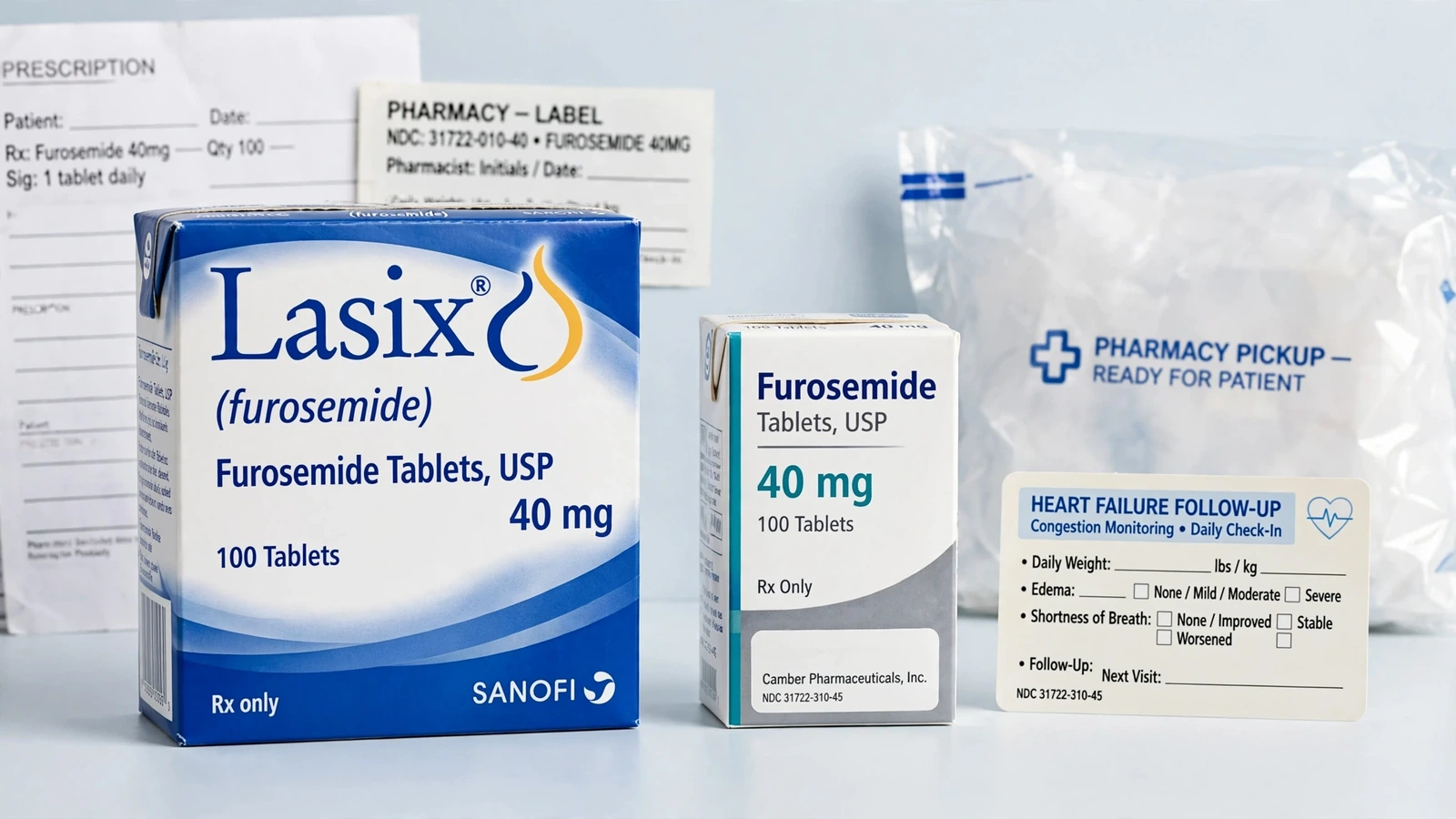
If the care team requests daily weights, use the same scale at a consistent time and similar clothing, and record symptoms alongside the number. Ask what change should prompt a call and whether any dose adjustment is explicitly authorized. Do not create a universal threshold from someone else’s plan. A rapid increase or decrease has different implications depending on symptoms, intake, and recent treatment. For more detail on this decision, review Furosemide Uses and Treatment DecisionsReturn to the parent guide..
Kidney and electrolyte monitoring supports safe decongestion
Changing fluid balance can change creatinine, blood urea nitrogen, sodium, potassium, blood pressure, and symptoms. The clinician considers the trend and overall heart-failure status rather than one isolated result. Acute vomiting, diarrhea, fever, poor intake, or a new medicine can shift risk and may require earlier contact. Do not add potassium or a salt substitute without confirming that it belongs in the plan.
Know the emergency boundary
Severe or rapidly worsening shortness of breath, chest pain, fainting, confusion, blue lips, or inability to speak comfortably because of breathing difficulty requires urgent help. A routine refill channel is not designed for acute decompensation. If symptoms are less severe but clearly worsening, contact the heart-failure team promptly rather than waiting for the next scheduled visit.
Keep congestion review connected to the full heart-failure plan
Furosemide decisions should be interpreted beside breathing, swelling, activity tolerance, blood pressure, kidney function, electrolytes, and the rest of the heart-failure regimen. Bring the current discharge or specialist instructions and mark any difference from the bottle or portal list. A change in diuretic response can reflect illness, adherence, kidney function, another medicine, or progression of the condition, so it deserves clinical interpretation rather than an isolated extra dose. A related clinical question is covered in Furosemide for Edema: Evaluation and MonitoringRead a related guide in this same topic branch..
Write down the escalation route before symptoms worsen
The care team should define which weight or symptom pattern uses the written action plan, which change requires a same-day call, and which symptoms require emergency assessment. Keep the responsible clinic and pharmacy contacts with the plan. Severe breathlessness, chest pain, fainting, or rapid deterioration should not be managed through a routine refill request or by waiting for the next scheduled laboratory check.
A practical decision pathway
Baseline
Know the usual breathing, swelling, activity, blood pressure and weight pattern.
Record
Track the requested measures consistently and note medicine or illness changes.
Respond
Use the written call and emergency thresholds from the treating team.
Review
Reconcile the dose and monitoring plan after every care transition.
Decision table
| Change | Possible meaning | Next step |
|---|---|---|
| Gradual symptom improvement | Congestion may be responding | Continue the prescribed plan and monitoring |
| Dizziness with falling weight | Possible excessive fluid loss or low pressure | Contact the clinical team |
| Worsening breathlessness and swelling | Possible increasing congestion or another cause | Prompt clinical review |
| Chest pain, fainting or severe breathlessness | Potential emergency | Seek urgent medical help |
Frequently asked questions
What does furosemide do in heart failure?
It may help reduce congestion by increasing salt and water excretion. The overall heart-failure plan usually includes other monitoring and treatments.
Should everyone with heart failure weigh daily?
Follow the individual care plan. When daily weights are recommended, use a consistent method and know the team’s call threshold.
Can I change my dose for a weight increase?
Only if your clinician has provided a specific written adjustment plan. Otherwise contact the team before changing the dose.
Why can kidney tests change during treatment?
Fluid balance, illness, other medicines and heart-failure status can all affect kidney-function results. Clinicians interpret the trend in context.
When should I seek urgent care?
Severe or rapidly worsening breathlessness, chest pain, fainting, confusion, or blue lips warrants urgent evaluation.
Primary sources
Medical content reviewed August 27, 2026. References were checked on the dates shown.
- Furosemide tablet — prescribing information — U.S. National Library of Medicine, DailyMed. Updated June 23, 2026.
- Furosemide — U.S. National Library of Medicine, MedlinePlus. Accessed August 27, 2026.